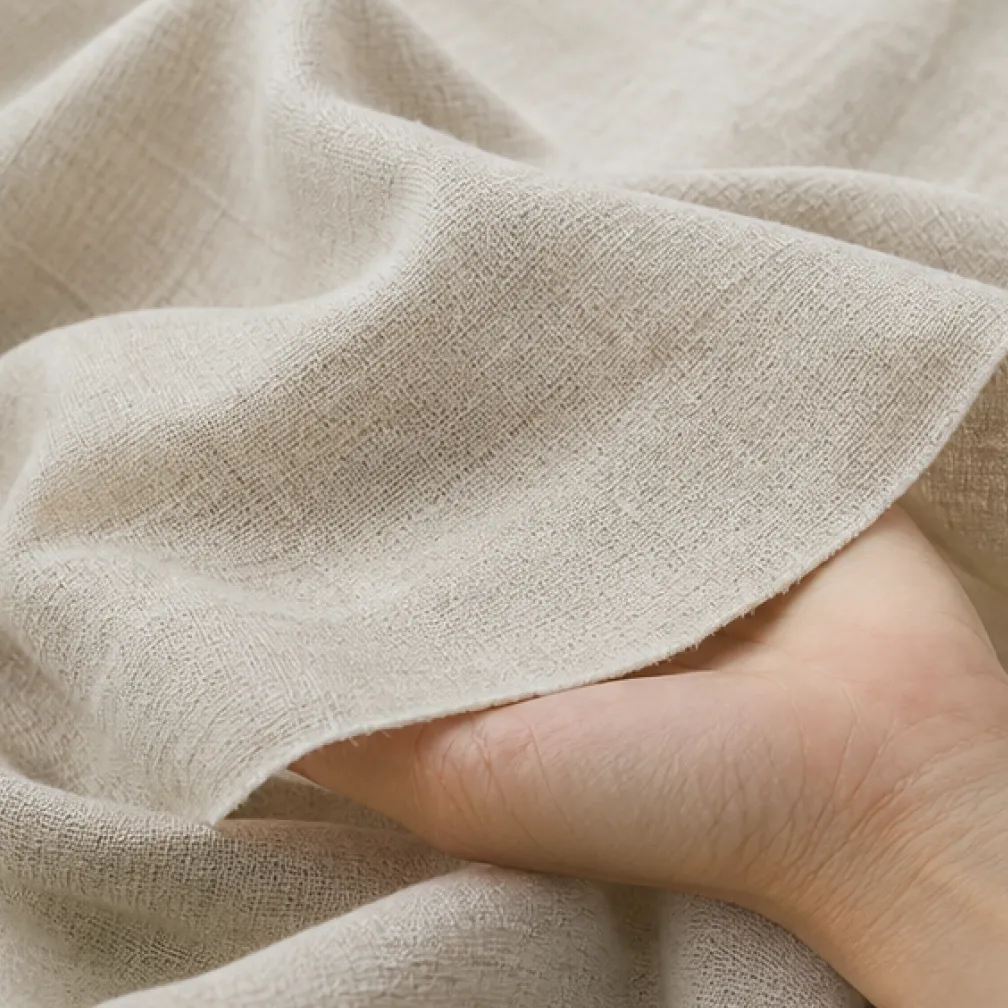
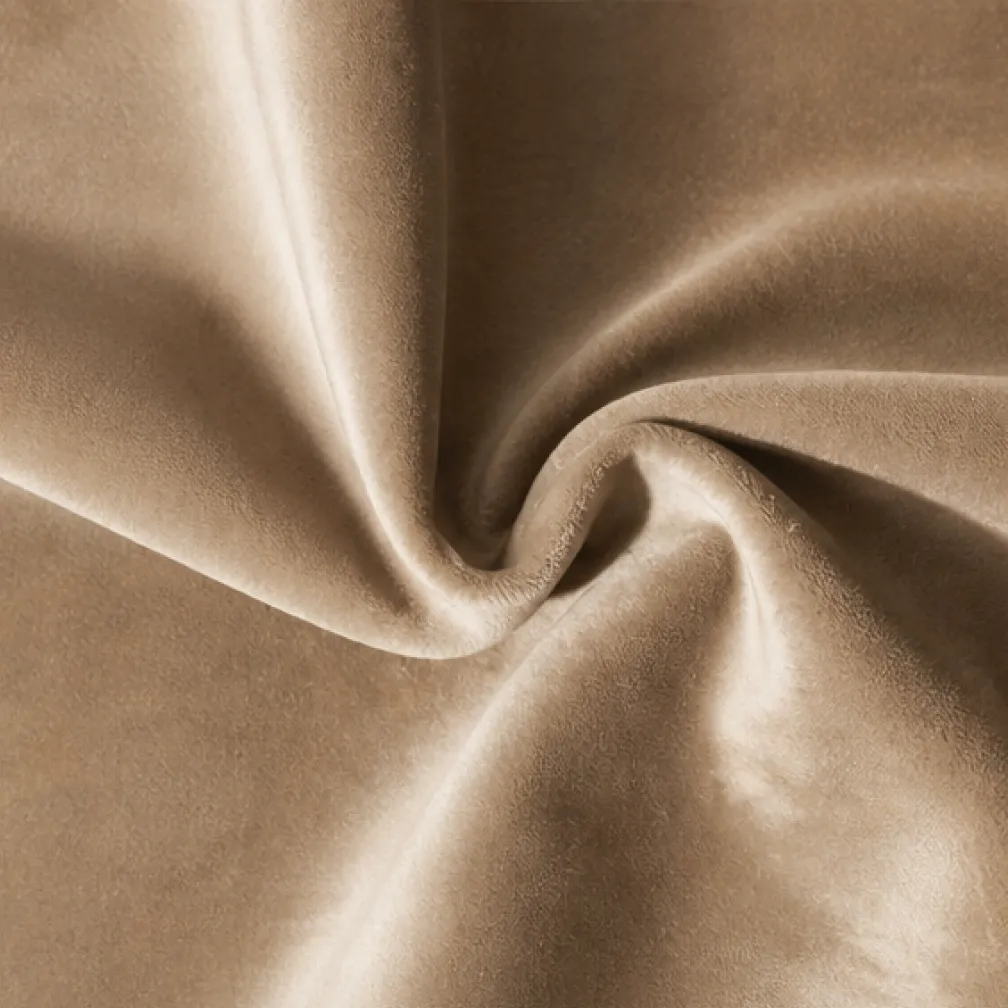
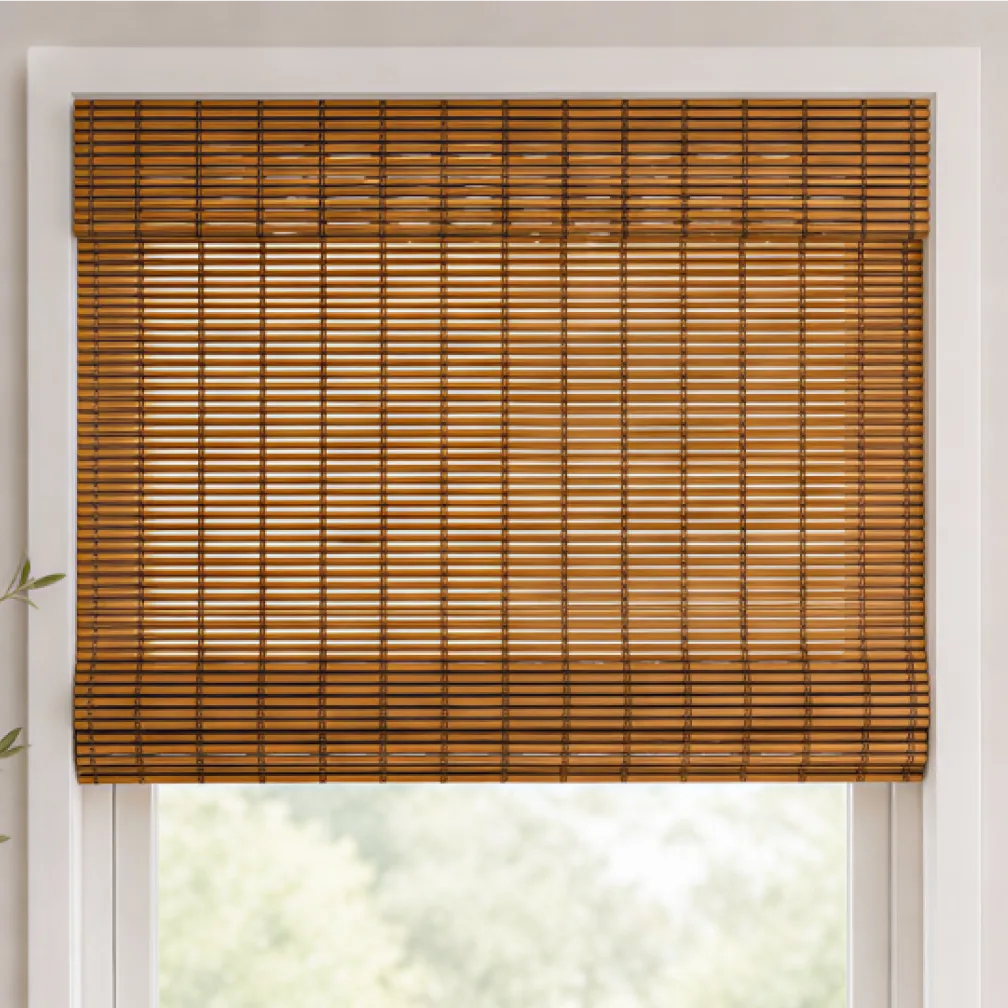
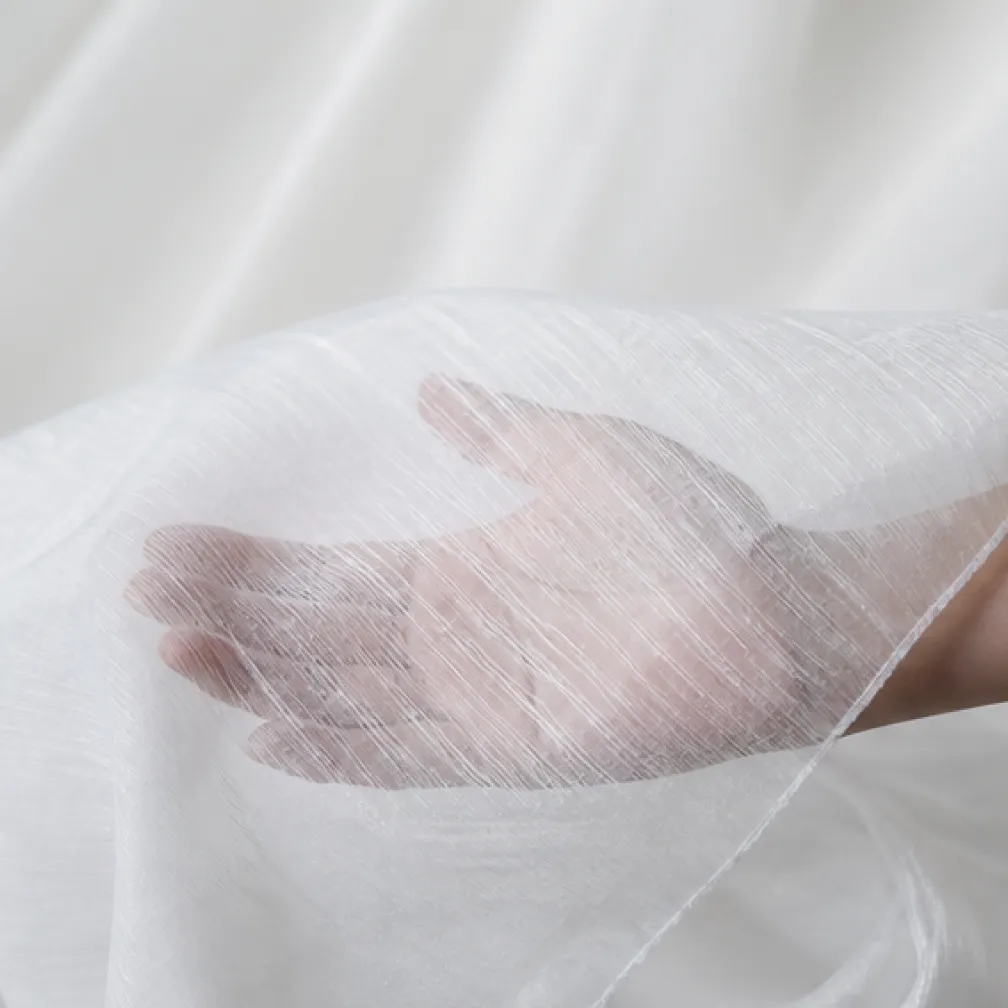
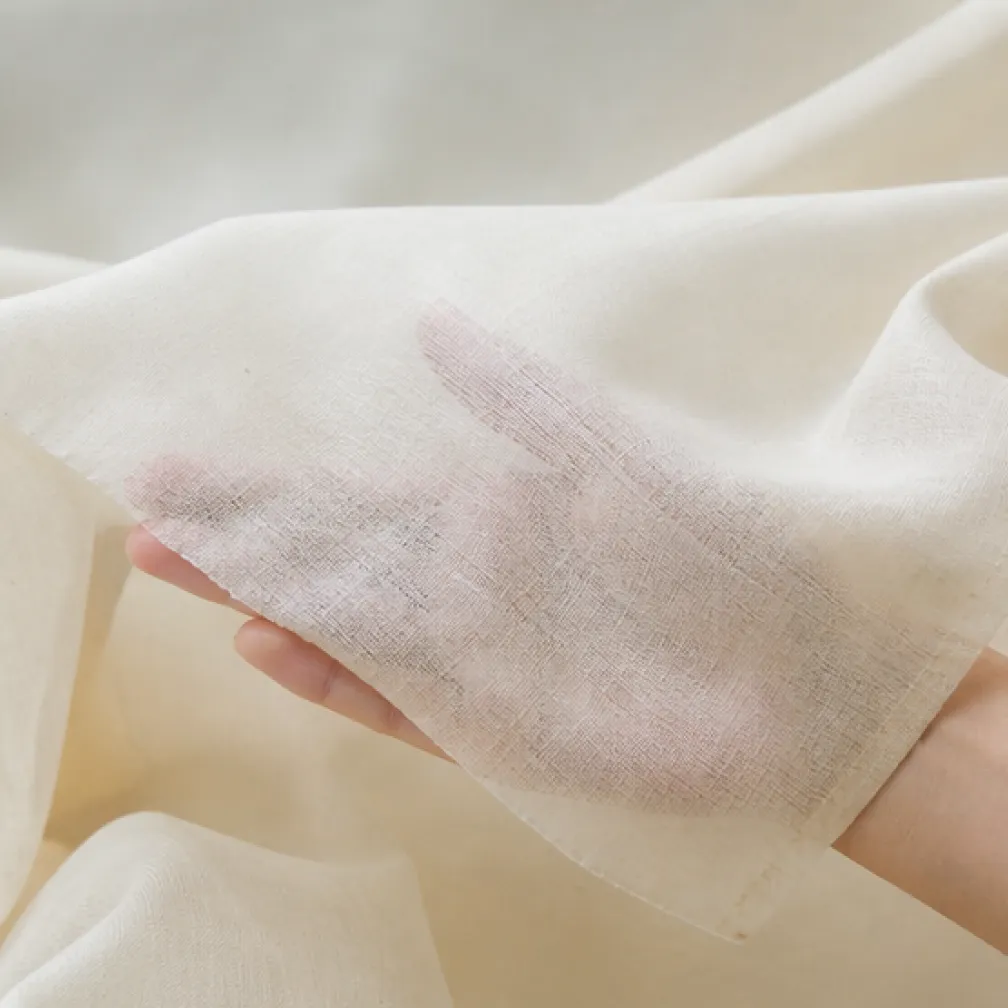
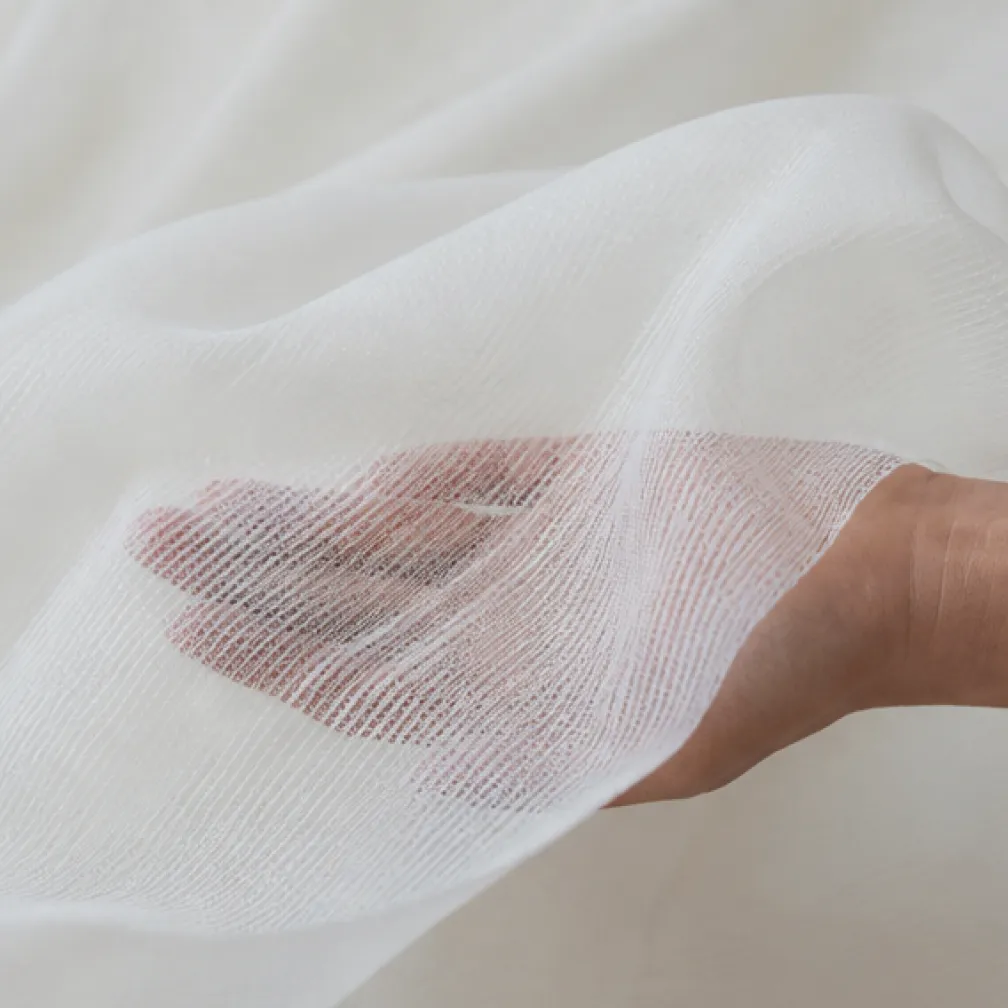
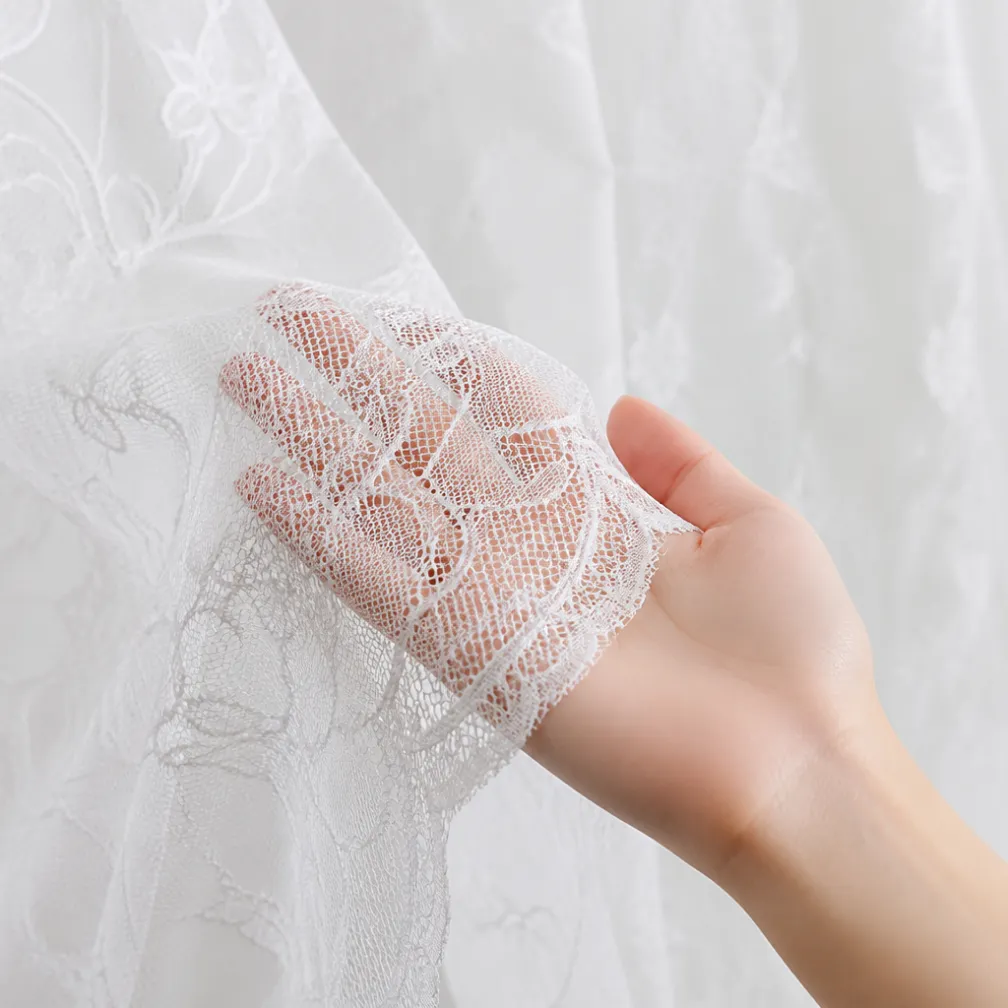
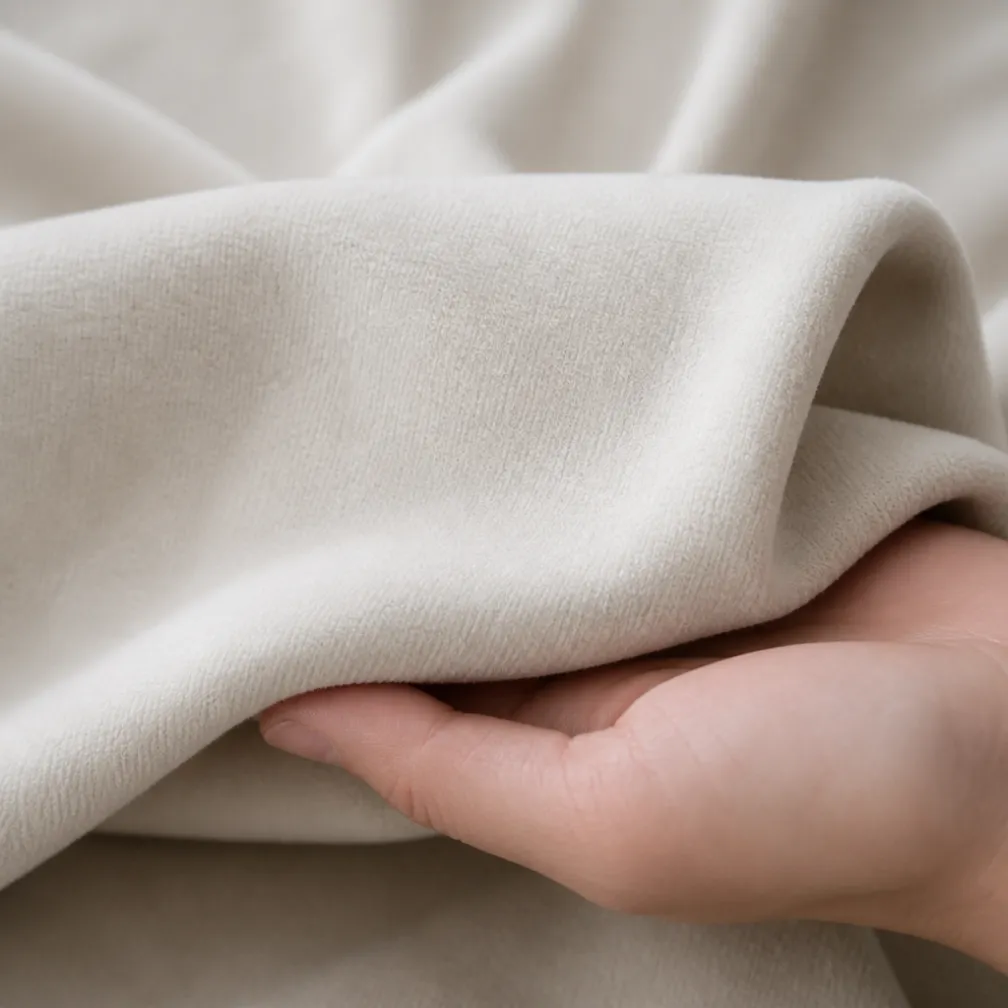
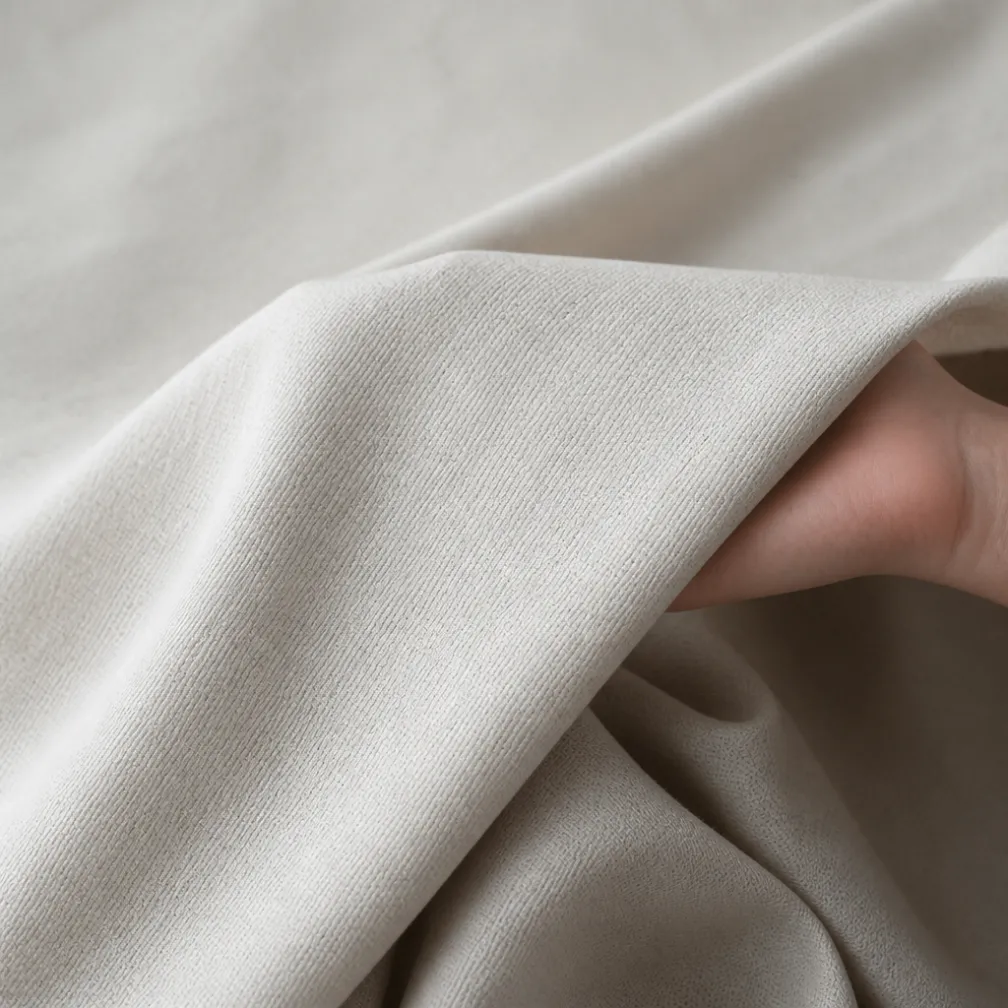
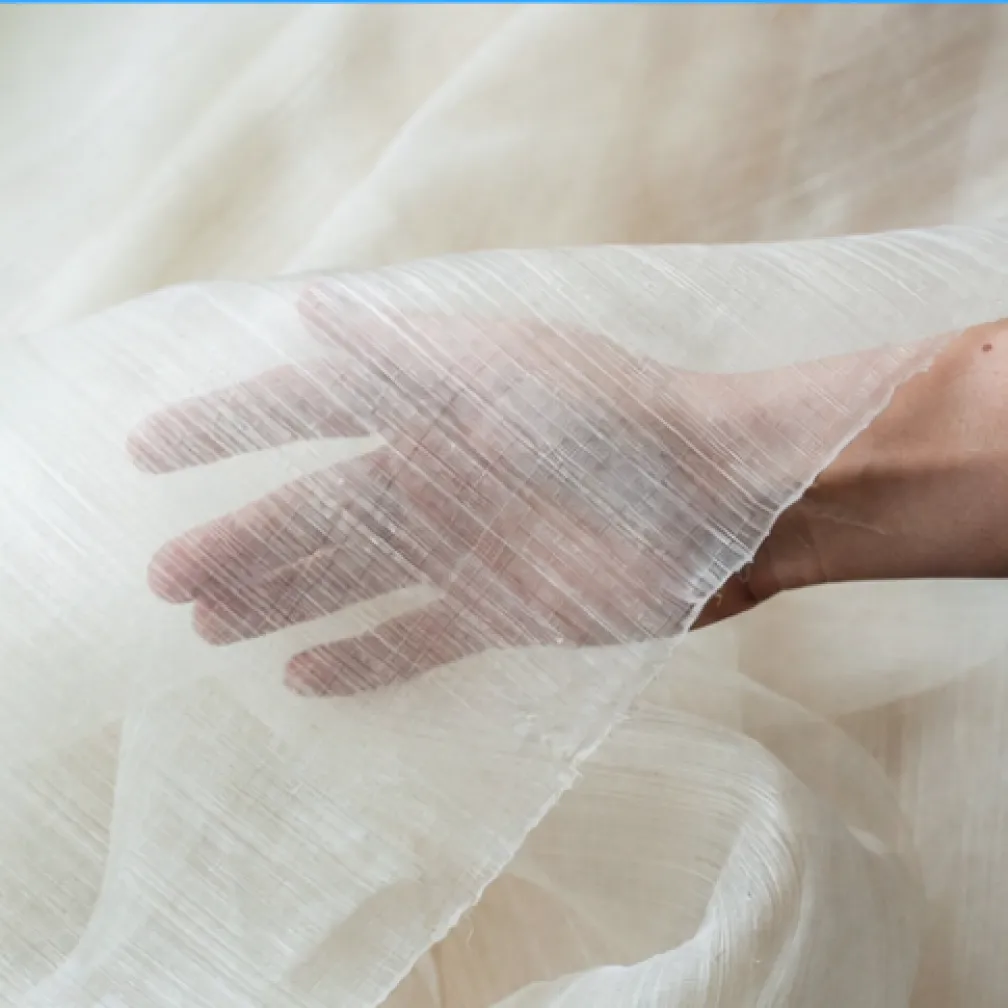
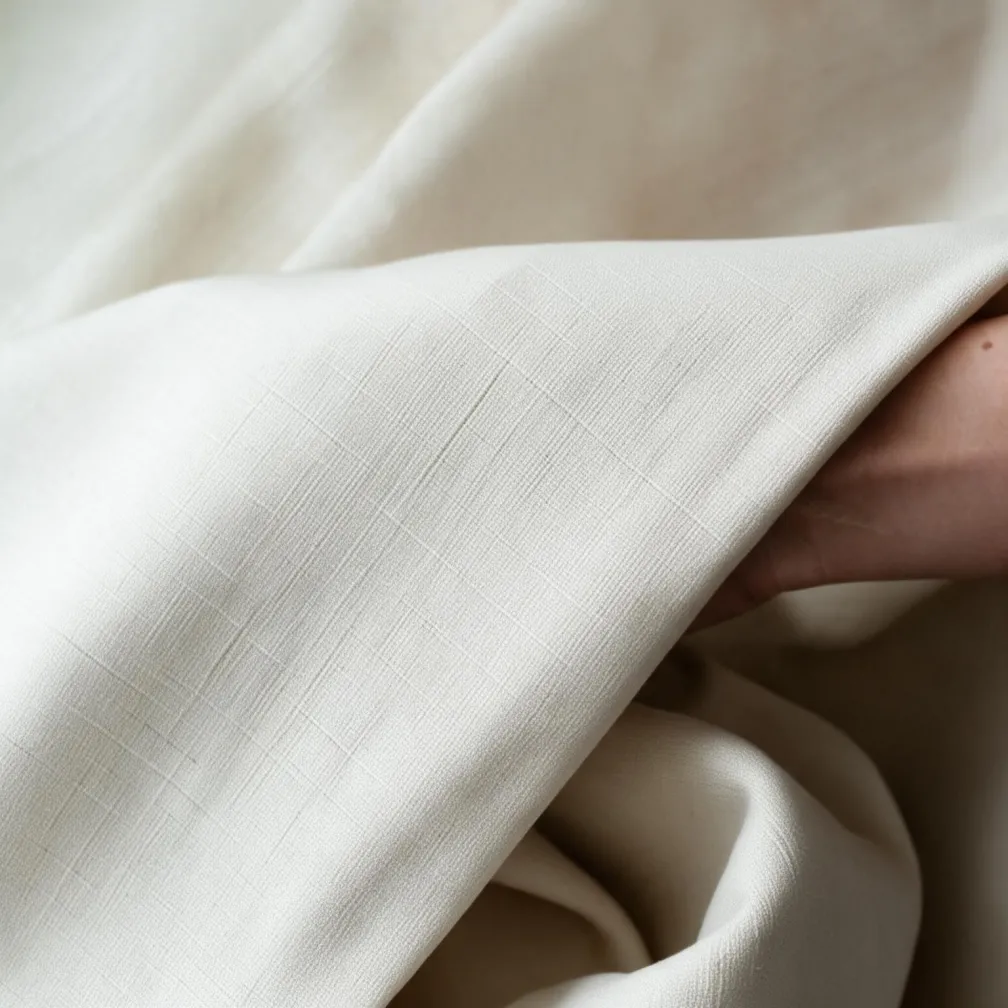
Tricot Warp Knitted Fabric

Wide-Width Tulle Rolls

Pink Tulle Curtain Panels

Hexagonal Mesh Sheers

Black Rail Tulle Curtains

Tulle Window Valance Material
Lightweight tulle easily warps when laid on flat cutting tables. We utilize our Vertical Cutting Machine to suspend the fabric, ensuring perfectly straight, gravity-aligned cuts without diagonal skewing.
Sewing highly elastic mesh often causes severe seam puckering. Our production lines integrate the Automatic backwards tension hemming machine. This system dynamically adjusts thread tension to guarantee flat, ripple-free edges.
We process all tulle rolls through a Single-Sided Inspection Machine. The LED backlighting clearly highlights skipped stitches or knitting inconsistencies, ensuring only flawless A-grade material proceeds to cutting.
To ensure sharp and uniform drape memory across bulk orders, we process the finished panels using our Automatic Pleating Machine, which precisely calculates and stitches complex pleats without stretching the mesh.
To lock in the final dimensions safely, we utilize a specialized Horizontal Iron Setting Machine with regulated steam control. This stabilizes the open-mesh structure without melting the delicate synthetic yarns.


| Technical Category | Available Options & Specifications |
|---|---|
| Fabric Composition | 100% Polyester, Nylon-Polyester Blends |
| Knit Structures | Tricot, Raschel, Hexagonal Mesh, Diamond Mesh |
| Fabric Weight (GSM) | 20g/㎡ - 80g/㎡ |
| Roll Width | Standard 140cm, Wide-Width 280cm / 330cm |
| Header Styles | Rod Pocket, Pinch Pleat, S-Fold, Eyelet |
| Primary Applications | Hospitality Sheers, Event Drapery, Residential Curtains |
We build the machines that make curtains — and use them on our own production line. That means every process, from cutting to pleating, runs on equipment we engineered ourselves.
learn more about us


Our MOQ is flexible based on the product specifications. Standard models support lower minimums, typically starting from 1 unit or roll for testing. Custom OEM/ODM knitting or specific dyeing orders require a higher baseline volume to initiate production.
Delivery times depend on order volume and material availability. Standard in-stock fabric orders are typically processed within 7 to 15 days. Custom manufacturing, OEM processing, and specific color matching generally require 15 to 30 days.
Woven sheer fabrics use interlaced warp and weft yarns, which can fray or run easily if snagged. Warp knitted tulle interlocks yarns in a zigzag pattern along the length of the fabric. This creates a run-resistant, highly durable mesh that will not unravel when cut.
Yes. We manufacture and process wide-width tulle fabric rolls, commonly available at 280cm or 330cm. Utilizing these wide-width materials allows us to fabricate large, continuous commercial window treatments without vertical joining seams.
We address edge curling through both fabric engineering and processing equipment. We knit stabilizing selvedges directly into the tulle roll. During fabrication, we use tension-controlled sewing machinery to stitch the hems flat without stretching the elastic mesh.
Procuring open-mesh curtain fabrics for commercial, event, or residential projects involves evaluating the specific knit structure and thermoplastic properties of the material. Tulle and warp knitted fabrics are highly valued for their delicate appearance and superior light diffusion. Understanding the engineering variables behind these textiles ensures that procurement decisions align closely with the functional durability required for the installation site.
The defining characteristic of tulle is its warp knitted construction. Unlike traditional woven voiles, where yarns cross at right angles, warp knitting loops the yarns vertically and diagonally. This interlocking hexagonal or tricot structure creates a material that is highly resistant to runs. If a single yarn is snagged or broken in a commercial setting, the hole will remain localized and will not unravel down the length of the curtain. This intrinsic durability makes warp knitted sheers ideal for high-traffic hospitality environments.
The mesh density, measured in Grams per Square Meter (GSM), directly impacts the curtain's light-filtering capabilities and physical drape. Lightweight tulle (20-40 GSM) provides maximum air circulation and a soft, ethereal aesthetic, making it suitable for decorative overlays or event backdrops. Denser warp knitted fabrics (50-80 GSM) offer structured light diffusion, effectively reducing UV glare while providing enhanced daytime privacy for hotel windows.
Processing elastic, open-mesh fabrics into finished drapery requires highly specialized equipment. Standard sewing machines easily stretch the tulle, causing permanent distortions and severe seam puckering. Furthermore, lightweight mesh is highly susceptible to static cling and weft skewing during manual cutting. Sourcing from a vertically integrated facility equipped with gravity-assisted vertical cutting machines, intelligent tension-controlled hemming units, and active anti-static treatments ensures flawless seam integrity and exact dimensional stability across bulk commercial orders.