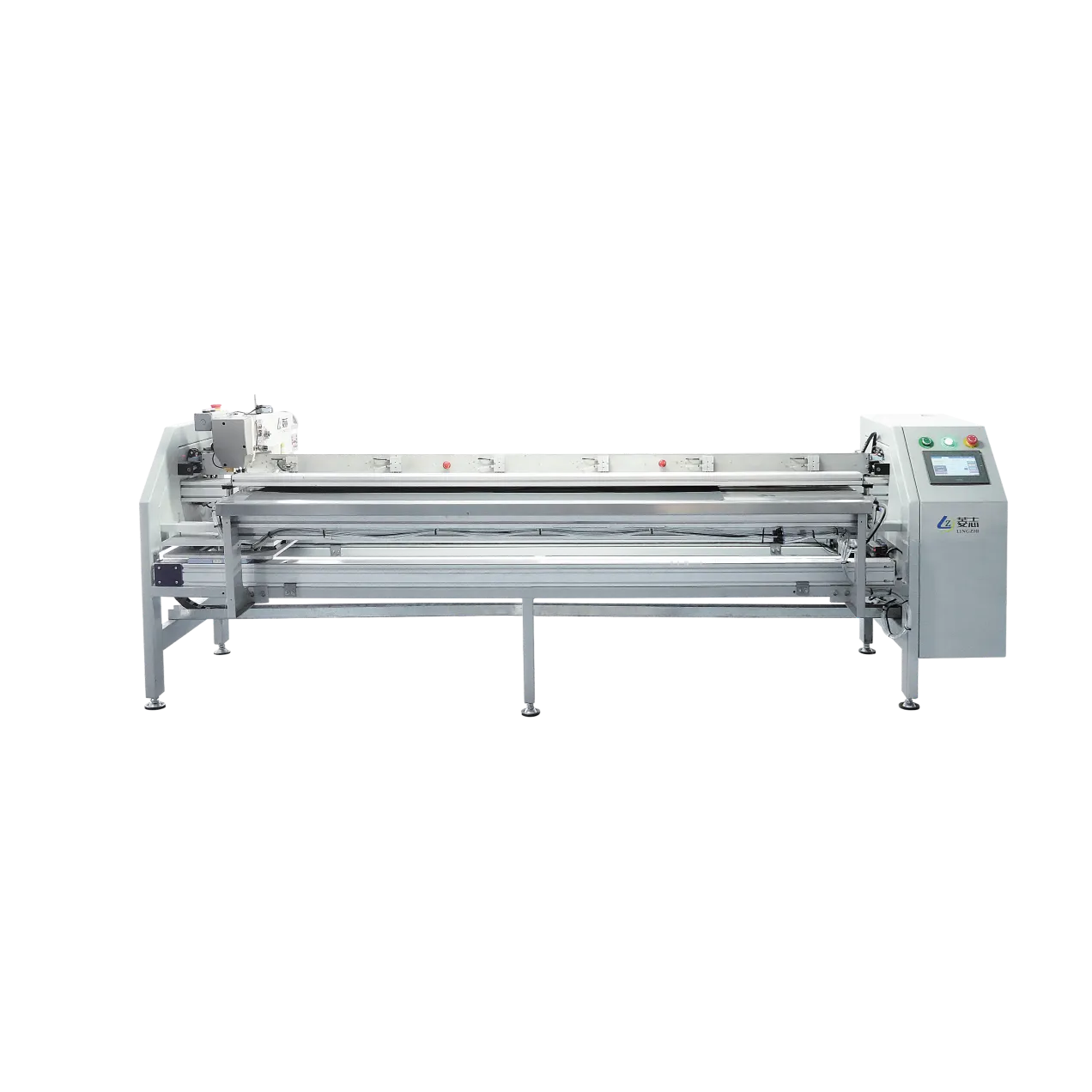
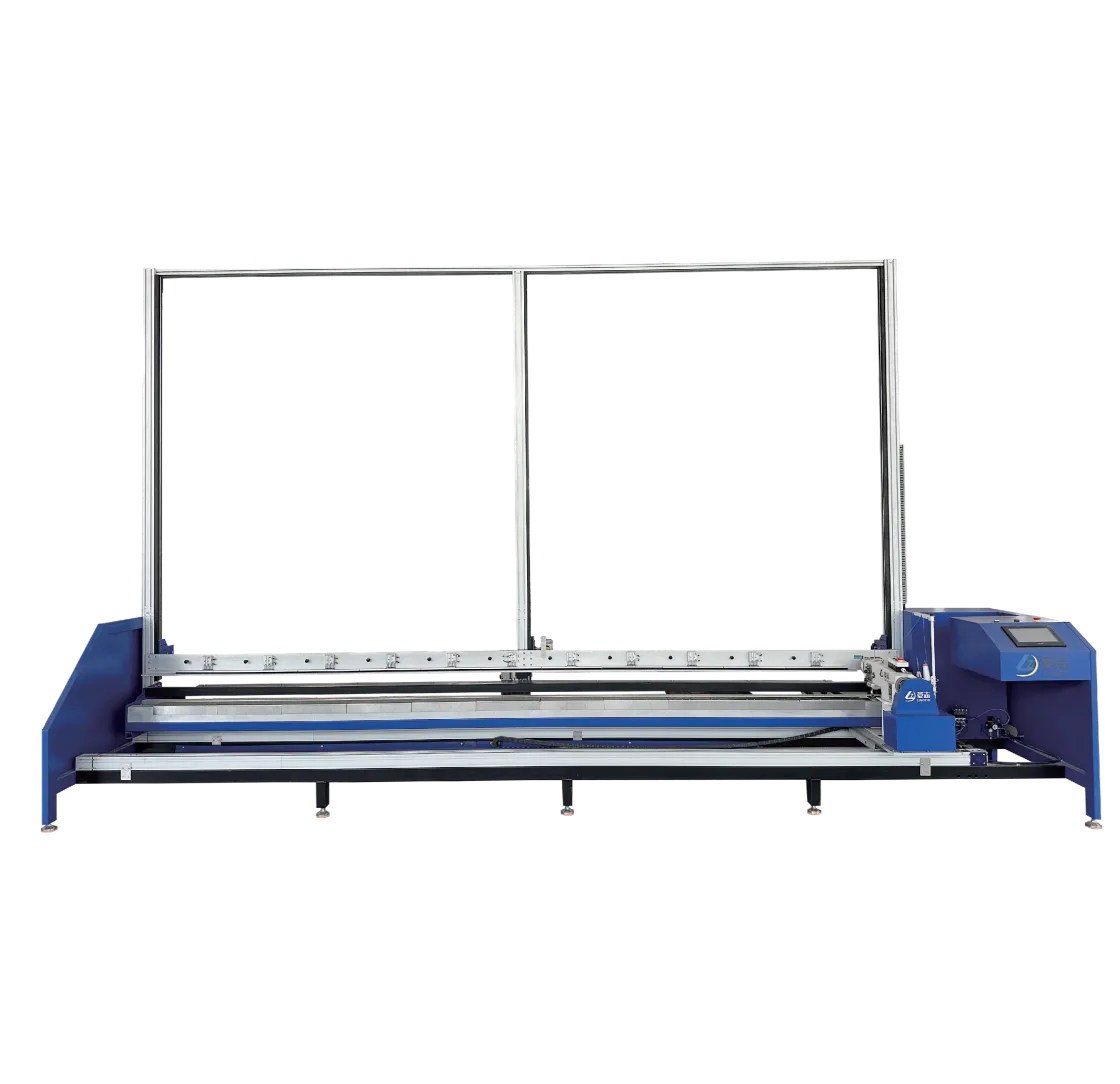
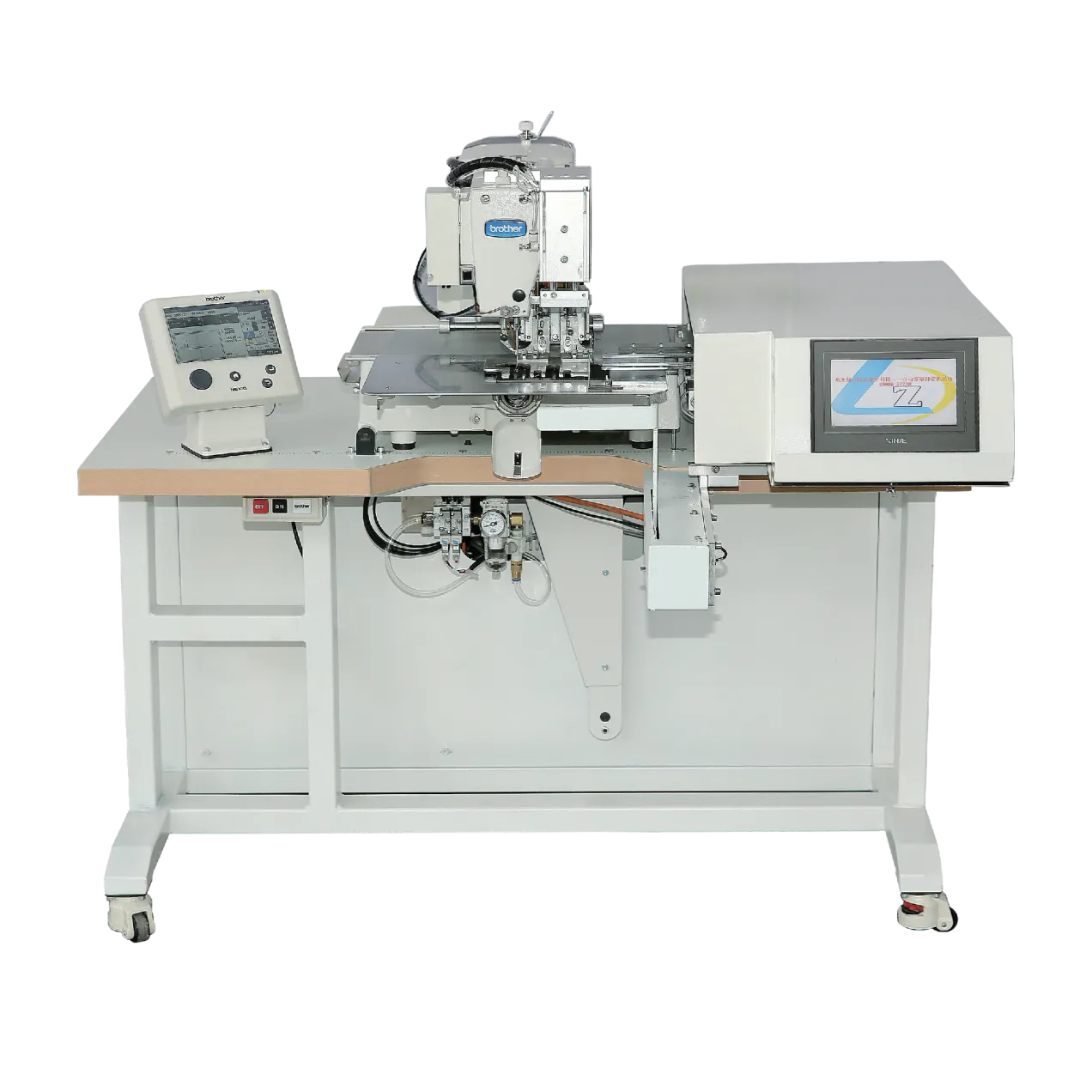
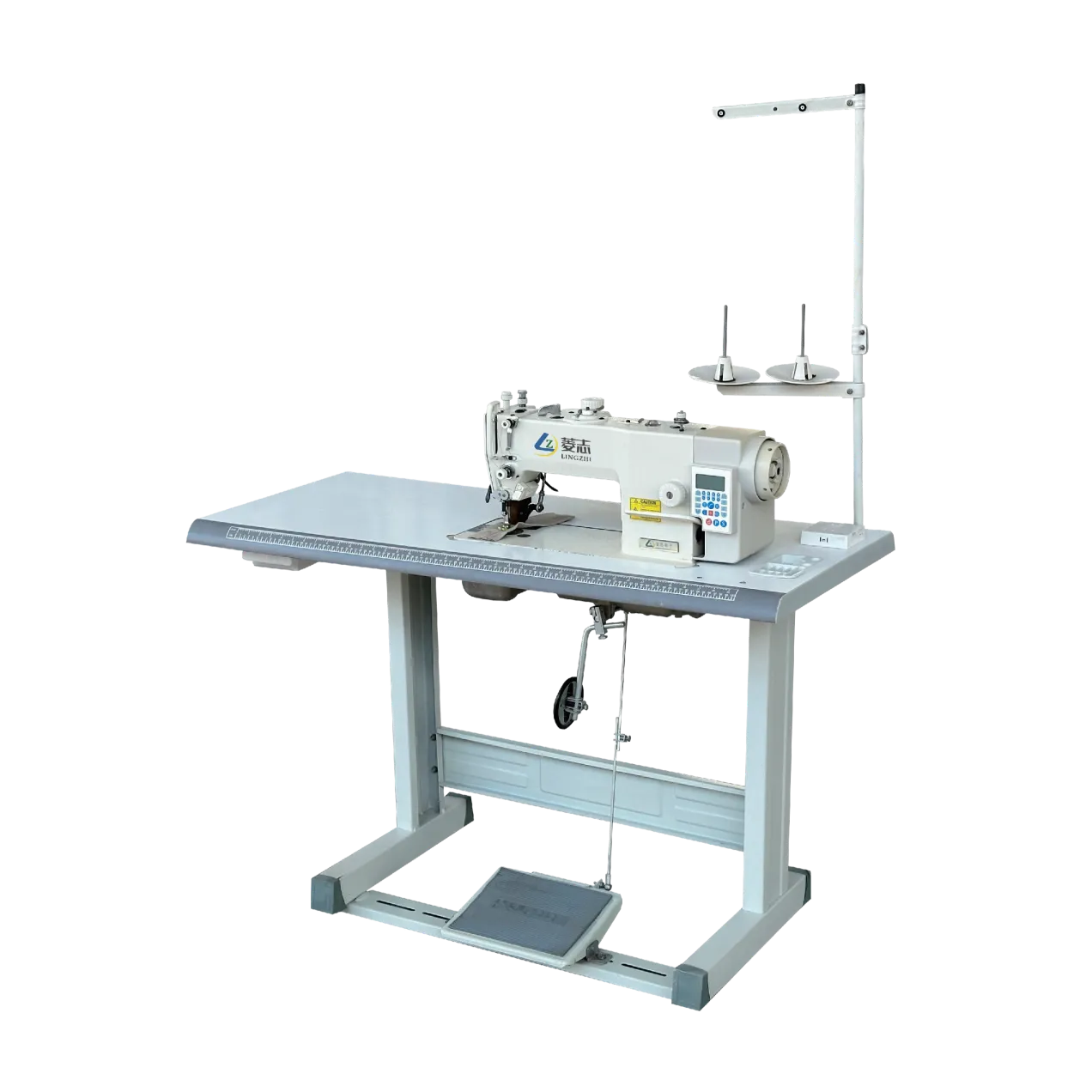
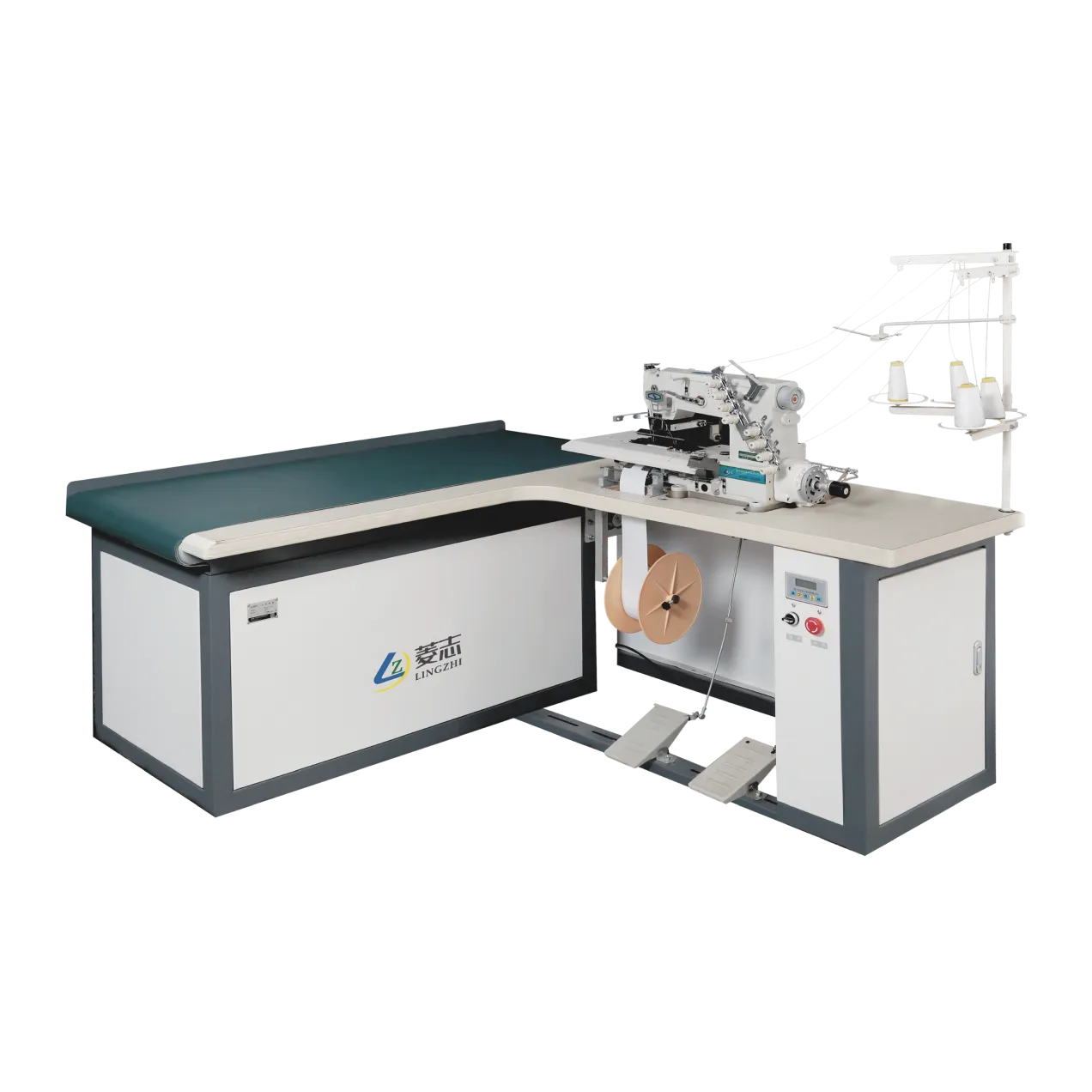
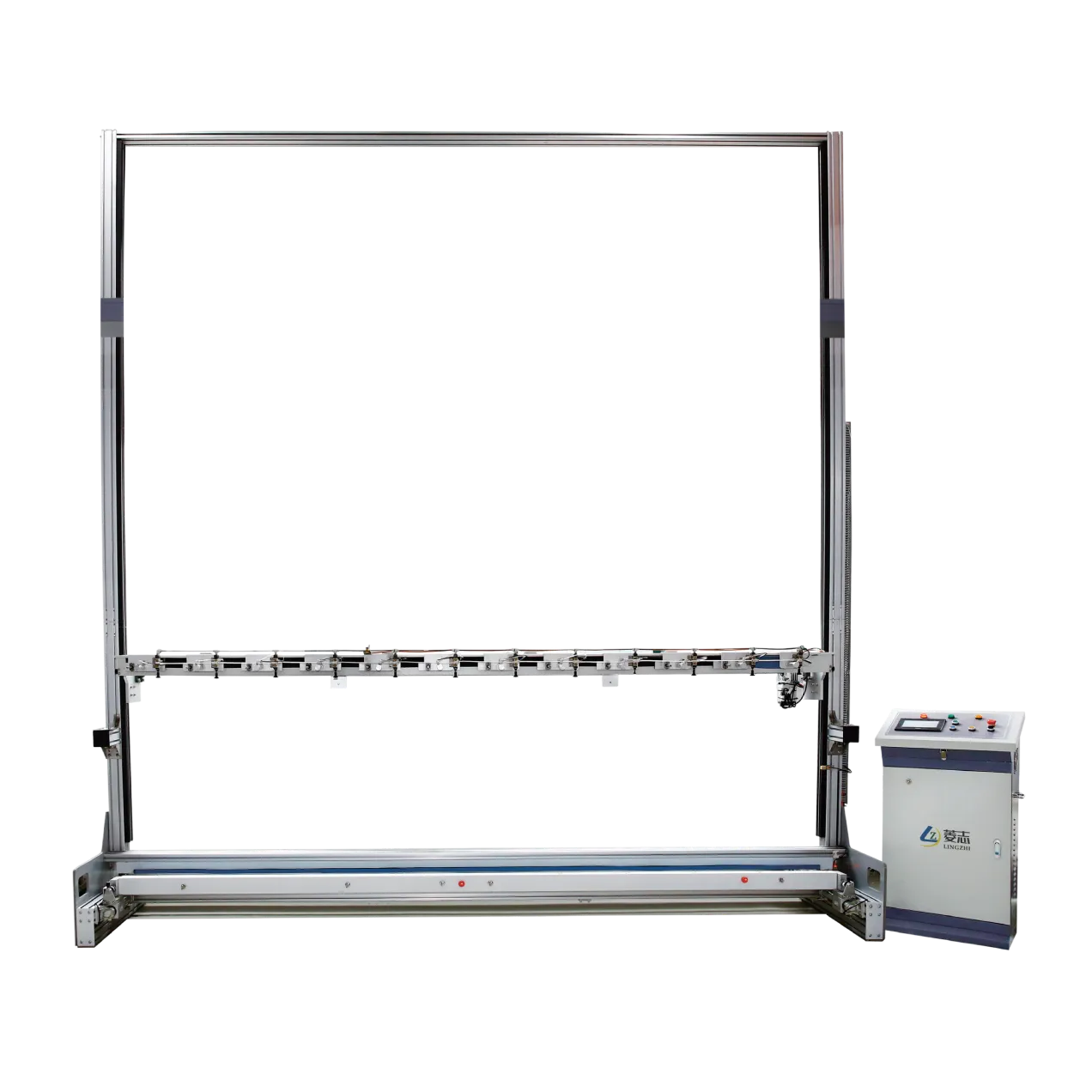
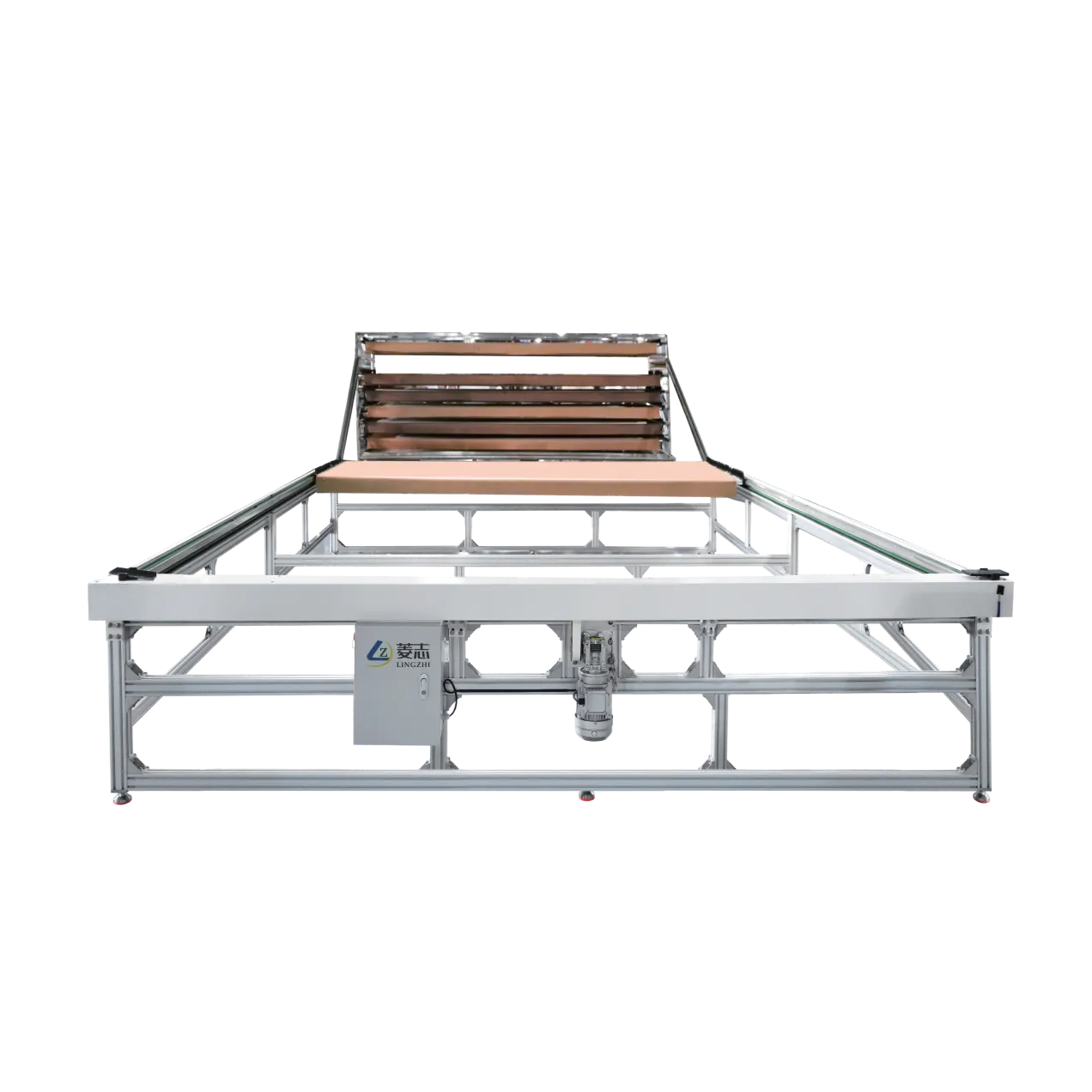
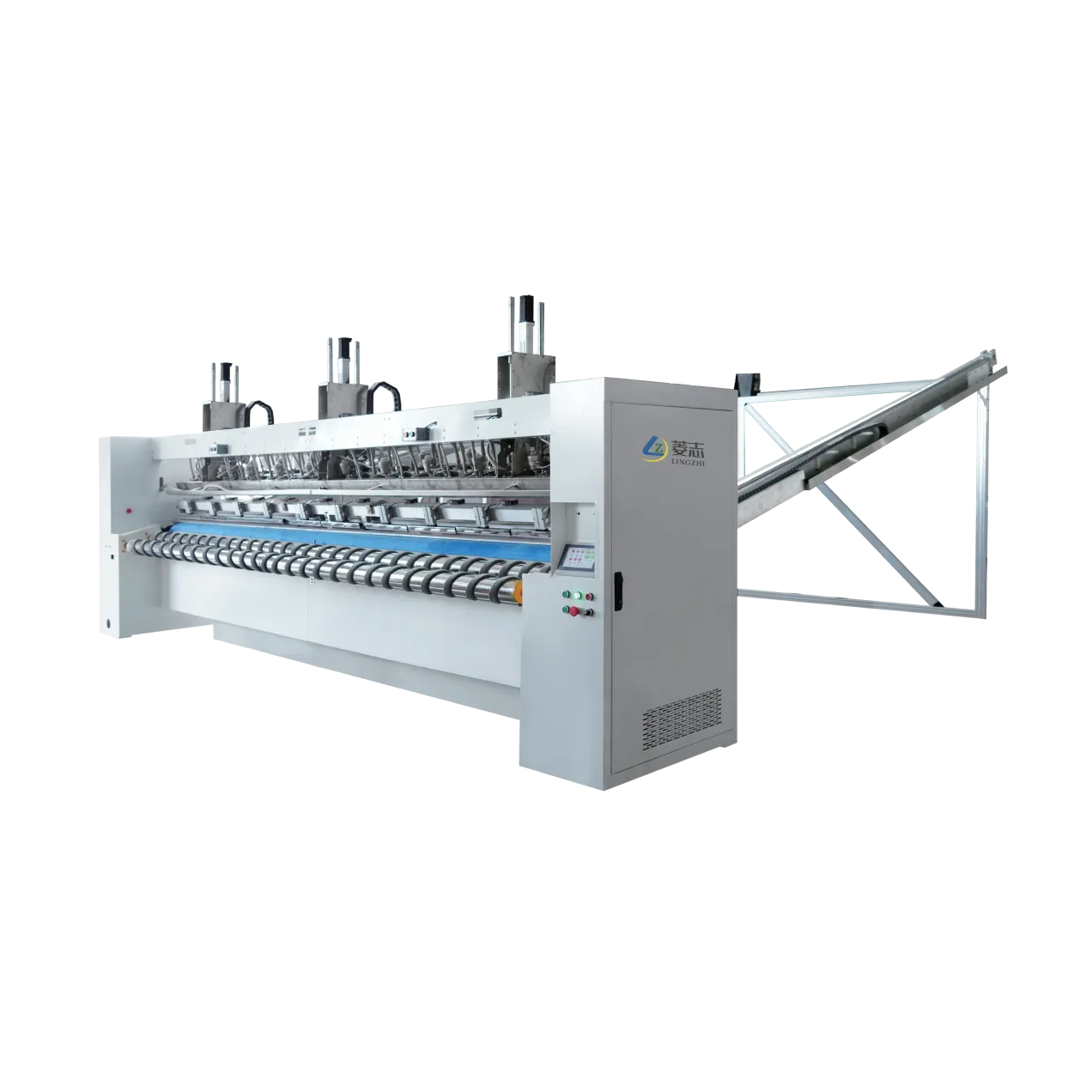
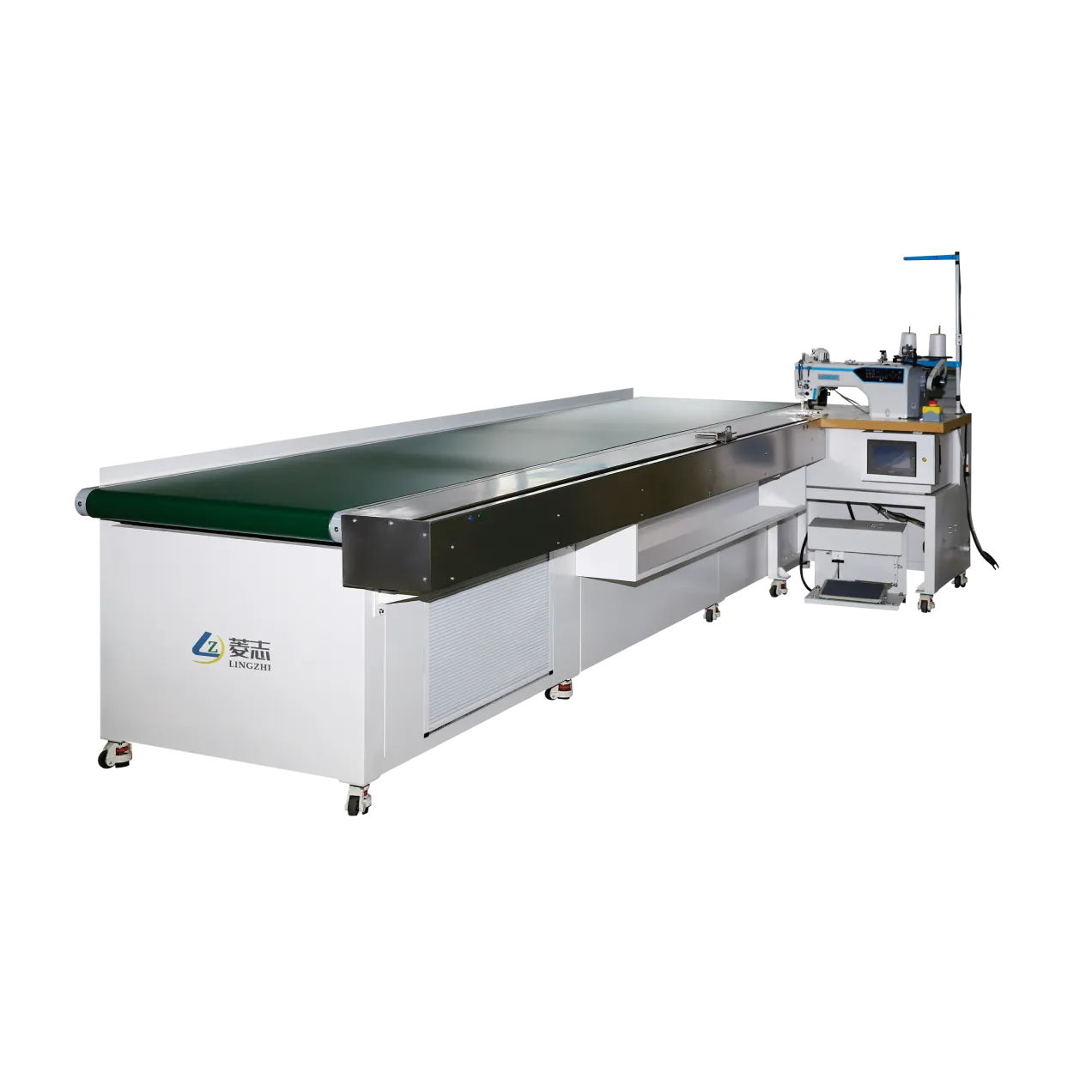
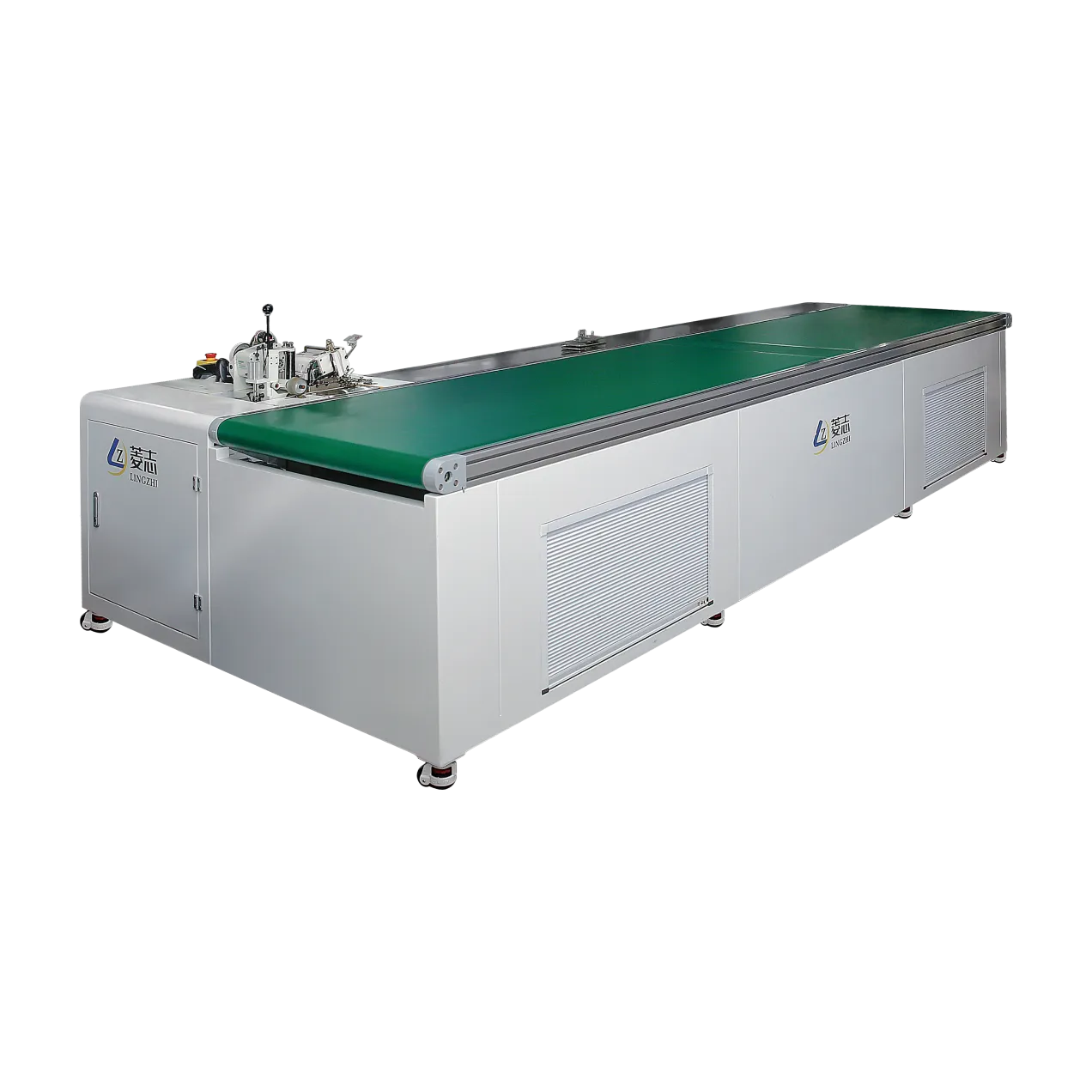
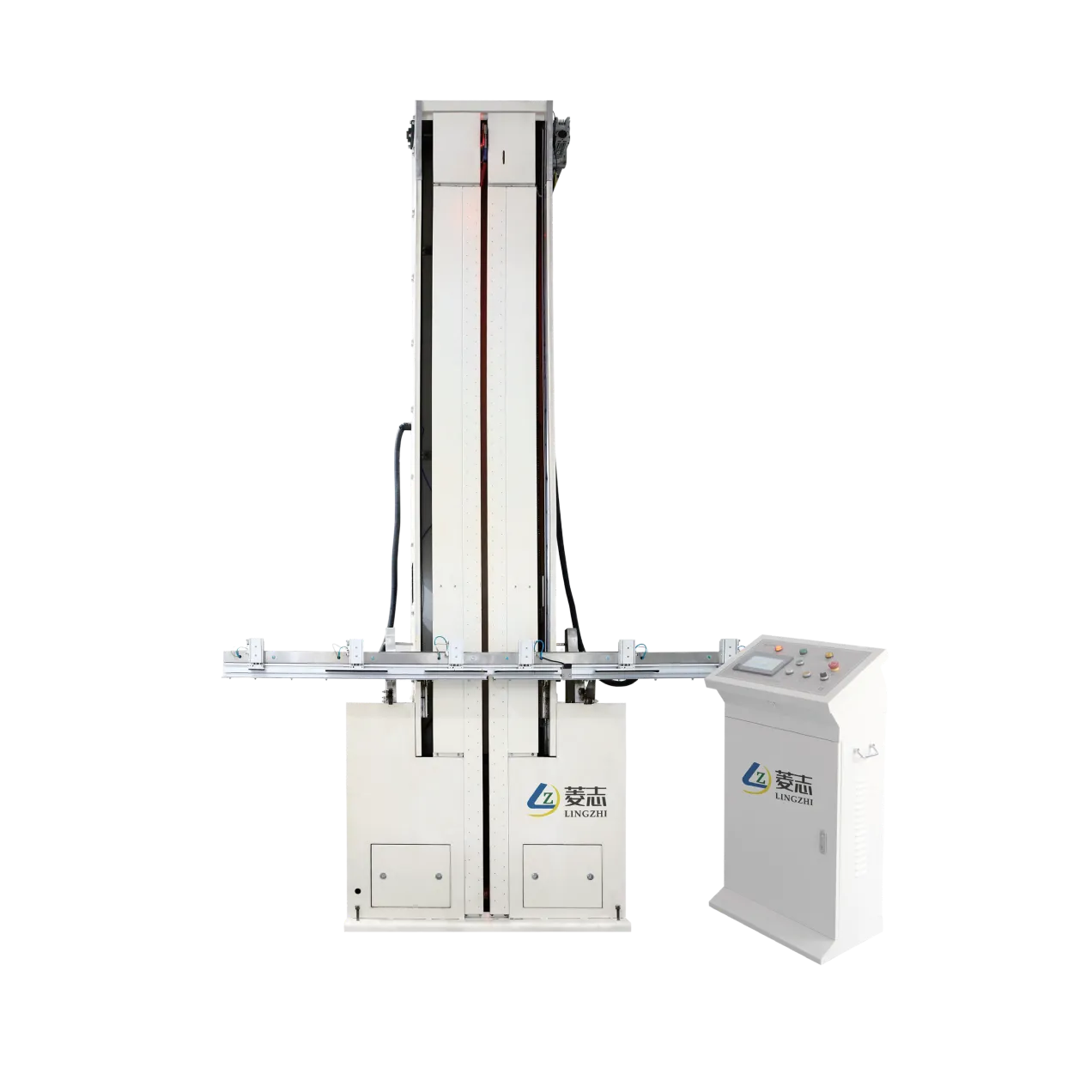
The LZ-JLZB-01 roller blind hemming machine is engineered to automate the bottom pocket fabrication of roller shades. By replacing manual folding and stationary sewing, this equipment integrates a moving-head design that completes the folding, pressing, and securing phases in a single automated sequence. This mechanical control eliminates fabric twisting and prevents the feed dog marks typically left by conventional sewing machines.

| Product Name | Model | Voltage | Power | Dimensions (L*W*H) | Weight |
|---|---|---|---|---|---|
| Roller Blind Hemming Machine | LZ-JLZB-01 | 220V/50HZ | 1.4 kW | 2500 * 800 * 1400 mm | 300 KG |

As a vertically integrated manufacturer with 23 years of industry expertise, we deliver precision-engineered automated curtain sewing equipment and commercial-grade fabrics worldwide — ensuring factory-direct quality, stable performance, and comprehensive technical support for your production lines.
learn more about us


In traditional sewing, the operator manually pushes large, stiff blind fabrics through the machine, which frequently causes the hem to twist or curve. The moving-head design secures the fabric flat on the table while the sewing head travels along a precision rail, guaranteeing a perfectly straight and square hem.
No. Standard sewing machines rely on aggressive metal feed dogs to pull the material, which permanently scores stiff roller blind fabrics. This machine utilizes a specialized clamping and moving-head system that completely eliminates feed teeth marks, preserving the pristine aesthetic of the textile.
Yes. The wide operational table accommodates both single wide-format shades and multiple narrower shades side-by-side. The moving head will sew across all aligned panels in a single continuous track, maximizing production throughput.
The automation of the folding, pressing, and sewing phases eliminates the need for manual fabric manipulation. General factory workers can operate the equipment proficiently after a brief orientation, allowing a single person to manage multiple machines.
The LZ-JLZB-01 model requires a 220V/50HZ power supply and draws 1.4kW of power. The workstation has physical dimensions of 2500mm in length, 800mm in width, and 1400mm in height, with a weight of 300KG.
In the fabrication of roller blinds and shades, the bottom pocket hem serves a critical functional purpose: it houses the weighted bottom bar that ensures the blind hangs flat and operates smoothly. If this bottom hem is sewn with a slight curve, twist, or tension imbalance, the entire roller blind will exhibit a "V" shape or edge curling when deployed. Securing a perfectly parallel, distortion-free hem requires shifting from manual fabric feeding to mechanized tracking architectures.
Standard flatbed sewing machines remain stationary while the operator physically pushes the fabric through the needle. Roller blind fabrics—particularly multi-pass blackouts, PVC-coated fiberglass, and dense sunscreens—are inherently rigid. Attempting to maneuver a 2-meter wide, stiff fabric panel through a stationary sewing head invariably results in uneven feeding. As the operator struggles to keep the heavy material aligned, the hem deviates, causing tension ripples across the width of the blind. Furthermore, the metal feed dogs required to grip such heavy fabrics leave permanent teeth marks or perforations visible on the surface of the shade.
The roller blind hemming machine resolves these physical limitations by reversing the dynamic. The LZ-JLZB-01 utilizes a moving-head architecture. The operator places the fabric onto the workstation where pneumatic or mechanical clamps secure it entirely flat. The machine then automatically folds the edge to the specified pocket depth and applies uniform pressing force. Finally, the sewing head itself traverses horizontally along a fixed, rigid rail to execute the stitch. Because the fabric remains completely stationary and under uniform tension, the resulting seam is mathematically straight. This process guarantees that the bottom bar will sit perfectly level, ensuring the final blind rolls up without telescoping or edge fraying.
Automating the complex handling of rigid fabrics fundamentally alters the labor requirements of a blind manufacturing facility. The machine's capacity to process multiple narrow blinds simultaneously in one pass exponentially increases output compared to single-piece manual sewing. More importantly, because the machine dictates the straightness of the seam rather than the operator's hands, facilities are no longer reliant on highly experienced sewing technicians. A single standard operator can load one machine, initiate the automated moving-head cycle, and proceed to load an adjacent machine, optimizing factory labor allocation and stabilizing product quality.