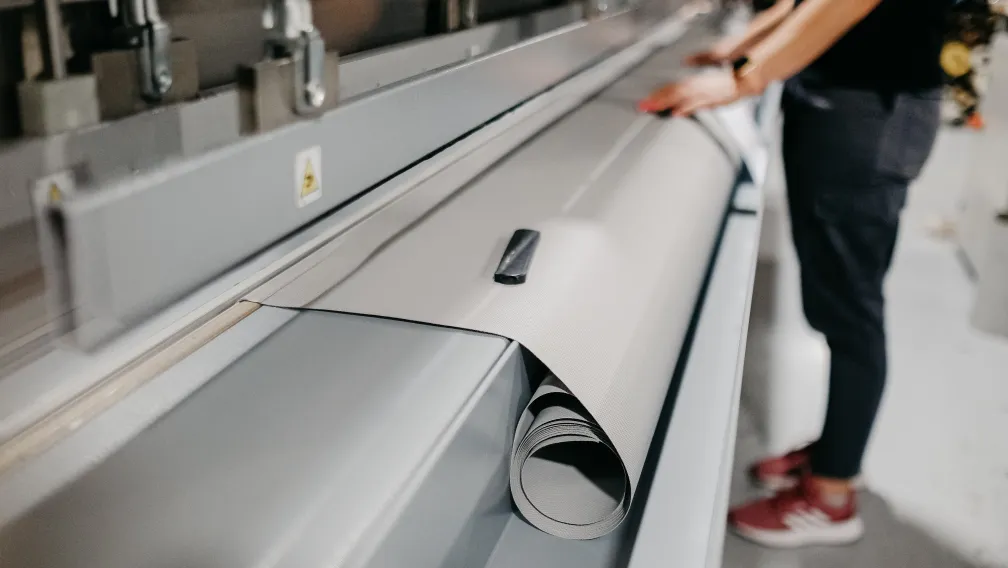
In the competitive landscape of commercial home-textile manufacturing, the precision of a roller blind’s hem is a non-negotiable metric of quality. The hemming process provides structural integrity, securely houses the bottom weight bar, and ensures the fabric rolls symmetrically around the tube. If a hem is slightly skewed, puckered, or unevenly tensioned, the entire blind becomes susceptible to "telescoping"—a critical defect where the fabric shifts to one side during operation, damaging the edges and rendering the product unusable. Overcoming these manufacturing challenges requires the implementation of purpose-built roller blind hemming machines.
With over 23 years of dedicated experience in smart home-textile manufacturing, LINGZHI has observed that many production bottlenecks stem from utilizing inadequate sewing equipment. Upgrading from standard domestic or light-commercial machines to automated heavy-duty solutions is the definitive pathway to maximizing throughput and maintaining exacting quality standards. This technical guide outlines the critical criteria for selecting the optimal machinery for your facility, focusing extensively on technical specifications, material handling capabilities, and the critical distinctions between standard and heavy-duty infrastructure.
Heavy Duty vs. Standard Sewing: Core Structural and Mechanical Differences
When engineering a production line for roller blinds, understanding the mechanical disparity between standard sewing equipment and heavy-duty industrial machinery is paramount. Standard machines are engineered for garment construction using lightweight, highly flexible materials. Commercial roller blinds utilize multi-layered blackout fabrics, fiberglass-cored screens, and heavy PVC-coated materials that impose immense resistance on the needle, motor, and feeding mechanisms.
Motor Power, Amperage, and High-Torque Penetration
The primary differentiator lies within the motor architecture. Standard sewing machines typically employ motors rated under 1 amp, optimized for speed on light fabrics rather than piercing power. When these standard motors encounter thick, rigid roller blind materials, they struggle to generate sufficient torque, leading to hesitation, overheating, and skipped stitches. Conversely, a heavy duty sewing machine utilizes industrial servo motors or direct-drive systems ranging from 1 to 5 amps. This elevated amperage translates directly into high torque—the raw rotational force required to punch a thick gauge needle through dense, tightly woven fibers continuously. This high-torque capability ensures consistent stitch formation and eliminates the risk of motor burnout during continuous, multi-shift production cycles.
Internal Frame Construction and Vibration Mitigation
High-speed sewing generates substantial kinetic energy. Standard machines often incorporate plastic or composite internal gearing and lightweight aluminum frames to reduce production costs and weight. Under the strain of heavy fabrics, these components flex, causing the needle to deflect and strike the throat plate, resulting in thread breakage and hardware damage. Industrial hemming machines are constructed with cast-iron beds and fully machined steel internal components. This rigid, all-metal architecture acts as a dampener, absorbing the intense vibrations produced when operating at speeds upwards of 3,000 stitches per minute (SPM). The dimensional stability of a heavy-duty frame ensures that the needle bar remains perfectly aligned, extending the lifespan of the equipment and guaranteeing straight, uniform hems across thousands of units.
Specialized Material Feeding Mechanisms
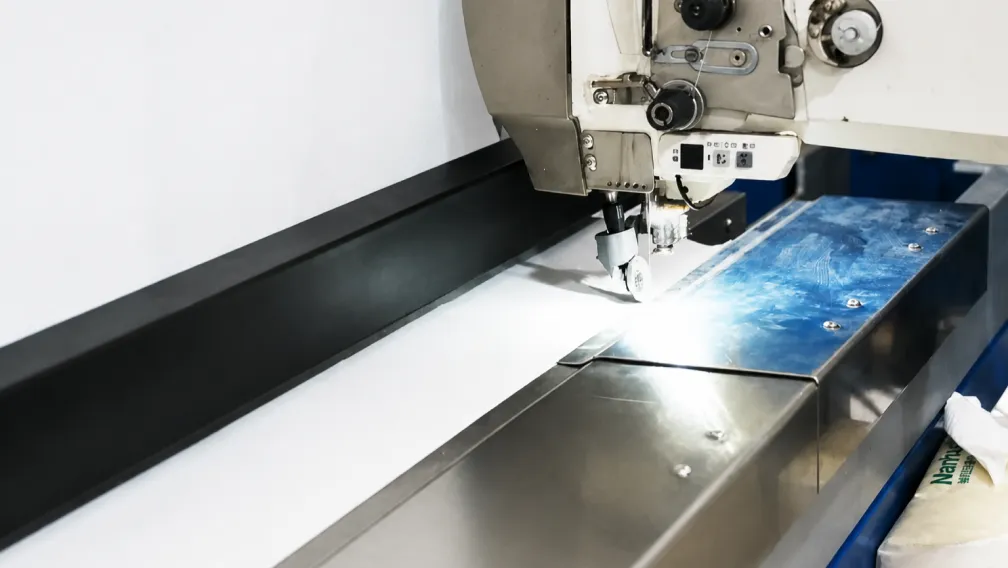
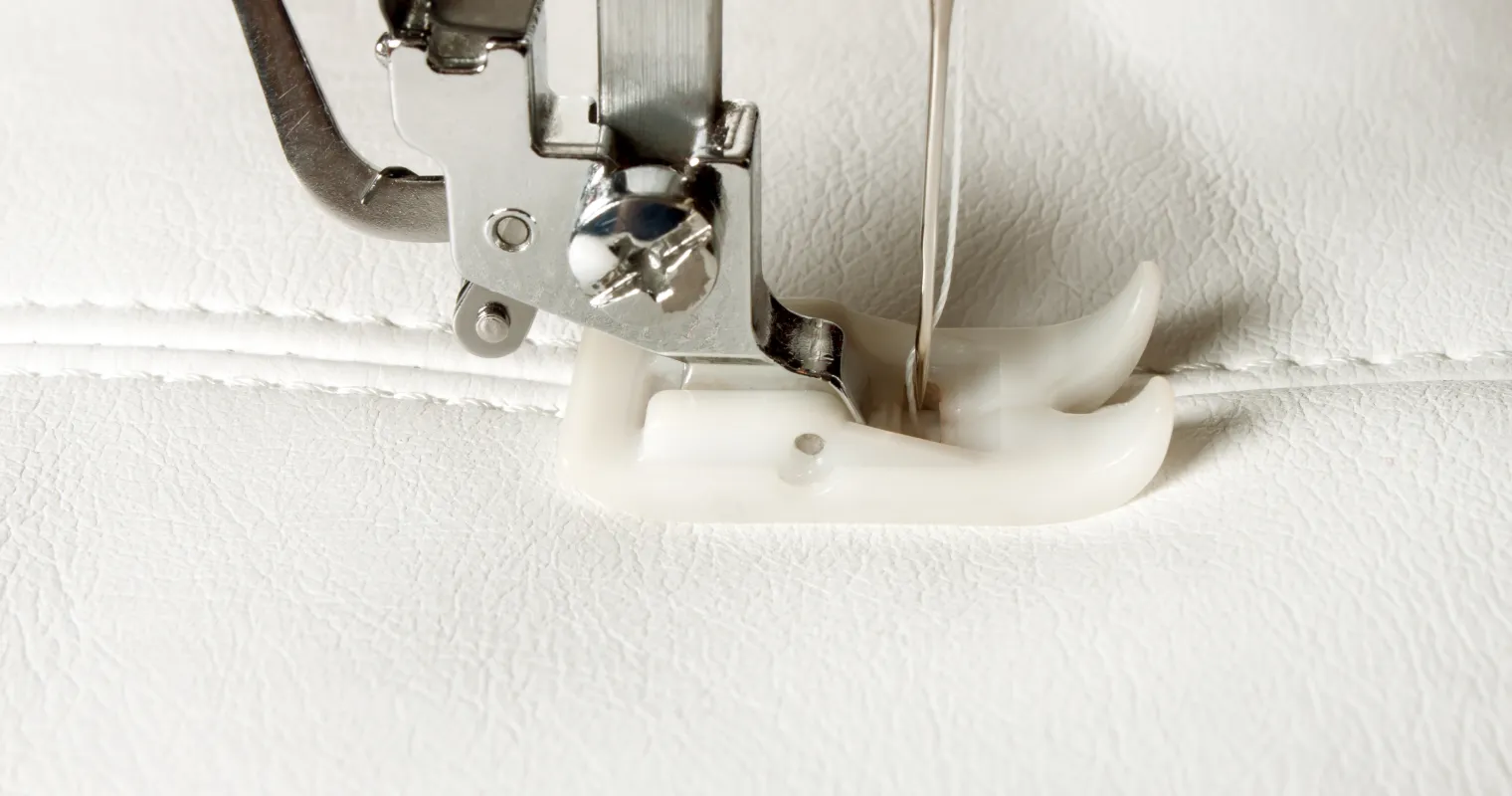
Roller blind fabrics are notoriously difficult to transport through a sewing head due to their rigidity and high friction coefficients. Standard drop-feed systems rely solely on bottom feed dogs, which often fail to grip coated fabrics, causing the upper and lower layers of the hem to feed at different rates. This discrepancy results in puckering and distorted pockets. Heavy-duty machines resolve this through advanced compound feeding systems, prominently the "walking foot." A walking foot incorporates a secondary set of feed dogs on the presser foot that work in synchronous motion with the lower feed dogs. This mechanism clamps the material from both the top and bottom, advancing all layers of the folded hem at the exact same speed. For extremely long or sticky materials, additional rear close-coupled pullers are often integrated to apply continuous, even tension, preventing material drag across the table surface.
Essential Technical Specifications to Evaluate for Roller Blind Production
Evaluating machine specifications requires matching the equipment’s capabilities with the specific tolerances and dimensions of your production orders. Production managers must look beyond headline speeds and focus on material handling capabilities, thermal management, and digital integration.
Conveyor Track Length and Table Dimensions
The physical footprint and material support infrastructure are as critical as the sewing head itself. When processing wide-format commercial blinds, standard flatbed sewing tables are insufficient, as they allow the overhanging fabric to drag and pull the seam out of alignment. A high-performance automatic fabric hemming machine should feature a synchronized conveyor track system. A 6-meter conveyor track is a benchmark specification for industrial facilities, as it accommodates the full width of most commercial blinds in a single, uninterrupted pass. The conveyor belt moves in perfect synchronization with the sewing speed, providing zero-tension material transport that eliminates operator handling and ensures a perfectly straight hem.
Thermal Management and Needle Cooling Systems
A frequently overlooked technical specification in roller blind manufacturing is thermal management. Sewing through PVC coatings, dense acrylics, and fiberglass materials generates extreme localized friction. At high speeds, the needle temperature can easily exceed the melting point of synthetic sewing threads, leading to constant thread snapping and structural weakness in the seam. Heavy-duty automated machinery combats this through integrated pneumatic needle cooling systems. These systems direct a continuous, concentrated micro-blast of compressed air directly onto the needle shaft during operation, dissipating heat instantly. Combined with titanium-coated industrial needles, this feature drastically reduces machine downtime associated with re-threading and ensures the integrity of the stitch remains uncompromised over long production runs.
Programmable Logic Controllers (PLC) and Recipe Memory
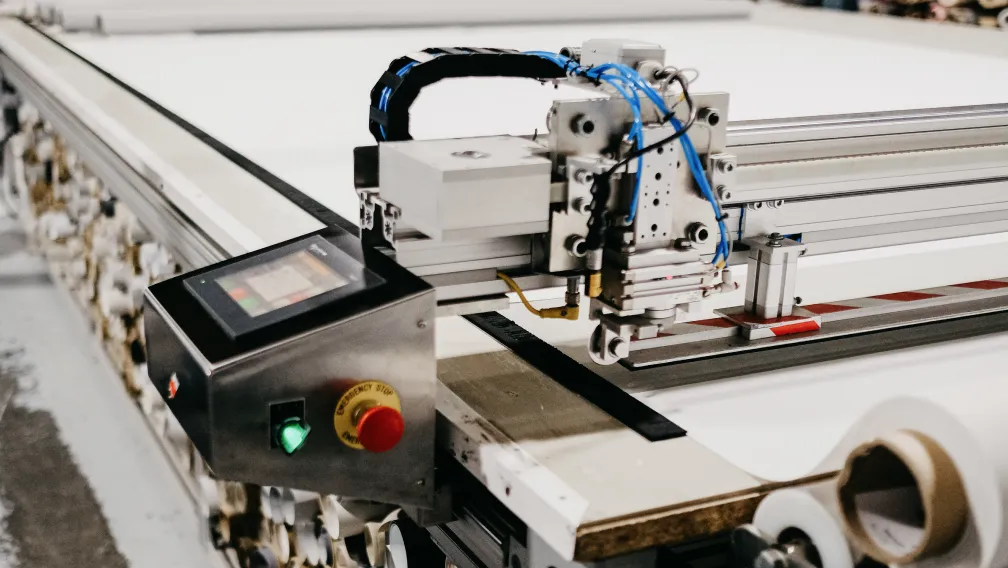
Modern manufacturing demands agility. Facilities rarely produce a single size or type of roller blind continuously. Transitioning between different fabric weights, stitch lengths, and hem configurations can consume hours of valuable production time if done mechanically. State-of-the-art hemming machines are equipped with advanced Programmable Logic Controllers (PLC) accessed via digital touchscreens. These systems allow production managers to save dozens of specific operational "recipes." An operator can instantly recall the exact speed profile, back-tacking settings, thread tension parameters, and conveyor synchronization rates for a specific blackout fabric with a single tap. This digital integration eliminates trial-and-error adjustments, ensuring standardized quality across all shifts and drastically reducing operator training time.
Electronic Thread Tension Control
Standard machines utilize mechanical tension dials that are highly susceptible to vibration and gradual loosening, resulting in irregular bobbin loops and unsightly seams on the reverse side of the blind. High-end industrial equipment incorporates electronic tensioners. These closed-loop systems continuously monitor thread delivery and make micro-adjustments in real-time, ensuring perfectly balanced stitches regardless of fluctuations in sewing speed or sudden changes in fabric thickness at cross-seams.
Closed-Loop Lubrication Systems
Textile manufacturing environments must remain immaculately clean. Oil stains on a premium white blackout roller blind render the product an instant rejection. Standard industrial machines often rely on open oil pans and splash lubrication, which creates a high risk of oil misting and dripping onto the work surface. Premium roller blind equipment utilizes fully enclosed, micro-drip lubrication systems. These closed-loop systems deliver precise amounts of oil only to critical moving parts and vacuum away excess, ensuring a completely dry external sewing head. This specification is vital for maintaining high yield rates and preventing costly material spoilage.
Advanced Automation and Workflow Optimization
To maximize Return on Investment (ROI) and maintain a competitive edge, modern textile facilities must look beyond the sewing process itself and consider the entire automated workflow of the workstation.
Pneumatic Clamping and Squaring
Before the sewing cycle initiates, the fabric must be perfectly squared. Advanced hemming stations feature full-length pneumatic clamping bars. The operator aligns the fabric against a laser guide or mechanical stop, and with the press of a dual-hand safety switch, the pneumatic clamps lock the material in place. This guarantees that the hem is perfectly parallel to the top cut of the blind. Mathematical squareness is the single most important factor in mitigating any risk of telescoping during final consumer installation.
Automated Folding and Pocketing Attachments
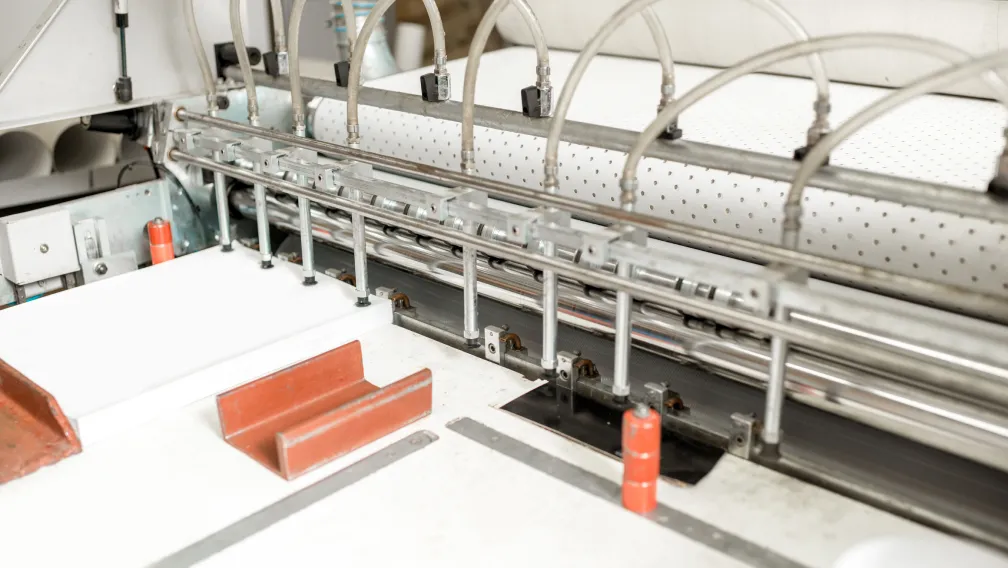
Creating the pocket for the bottom bar involves folding the fabric precisely before it reaches the needle. Manual folding is highly susceptible to human error and significantly slows down cycle times. Industrial hemming machines utilize engineered metal folders. A single fold folder is standard for basic pockets, but double fold folders are critical for creating clean finishes on fabrics prone to fraying. Pneumatically controlled folders, which automatically engage and disengage via PLCs, drastically reduce setup times between different blind sizes and styles.
Edge Trimming and Ultrasonic Integration
Depending on the fabric composition, traditional needle and thread sewing can be supplemented or replaced by advanced cutting technologies. Machines equipped with automatic edge-trimming knives cut away excess material simultaneously as the seam is sewn, ensuring the pocket depth is absolutely uniform across the entire width. For 100% synthetic fabrics, ultrasonic hemming modules are highly advantageous. The ultrasonic horn generates high-frequency vibrations that melt and fuse the fabric layers together, creating a perfectly sealed, thread-less edge. This eliminates the need for bobbin changes, prevents edge fraying completely, and provides a sleek modern finish suited for high-end commercial projects.
Strategic Selection Guide: Aligning Equipment with Operational Goals
Selecting the right machinery requires a holistic audit of your current and projected manufacturing requirements. Follow these technical evaluation steps:
- Analyze Fabric Compositions and Thickness: Audit the primary materials processed in your facility. If your production is heavily skewed towards thick blackout PVC, fiberglass, or multi-layer acoustic fabrics, a compound feed (walking foot) sewing head paired with a high-torque motor and needle cooling system is mandatory to prevent material damage.
- Determine Maximum Product Dimensions: Review your order history to identify the maximum widths of your roller blinds. Ensure the machine’s conveyor or table extension capabilities can comfortably support these dimensions without requiring the operator to manually bunch or pull the fabric.
- Evaluate Throughput and Automation Needs: For facilities producing hundreds of identical commercial blinds daily, investing in fully automated systems with pneumatic clamping, synchronized conveyors, and automatic thread trimmers will yield the fastest ROI by significantly reducing labor costs per unit. For bespoke or residential producers handling smaller, highly variable batches, a semi-automated system with quick-change folders provides necessary flexibility.
- Prioritize Modular Upgrades: Choose platforms that allow for future retrofitting. Can a single-sided inspection machine or an awning hemming machine workstation be linked to the output line? Can an ultrasonic module replace the traditional sewing head if fabric trends change? Partnering with an established manufacturer ensures long-term scalability.
Conclusion
Optimizing roller blind production relies heavily on the capabilities of your hemming equipment. By understanding the profound mechanical differences between standard and heavy-duty machinery, and by rigorously evaluating specifications such as motor torque, feeding systems, thermal management, and digital automation features, manufacturers can dramatically improve product quality and operational efficiency. The right equipment eliminates material waste caused by skewed hems and empowers facilities to handle demanding fabrics with absolute precision.
Optimize Your Production Line Today
As a trusted partner to home textile factories worldwide for over 23 years, LINGZHI engineers robust, customized automated manufacturing solutions. Contact our technical engineering team today to request a detailed technical consultation and machinery ROI analysis tailored to your specific facility workflow.
Frequently Asked Questions (FAQ)
What is the functional difference between a standard and heavy-duty sewing machine for roller blinds?
A heavy-duty machine is engineered with a high-torque servo motor (1-5 amps), a rigid all-metal cast-iron frame, and specialized compound feeding mechanisms. This architecture allows it to punch through thick, dense, or coated roller blind fabrics continuously without overheating, stalling, or causing needle deflection. Standard machines use lower-power motors and lightweight internal parts, making them suitable only for light, non-commercial fabrics and highly prone to failure under industrial workloads.
Why is a walking foot mechanism necessary for hemming blackout fabrics?
Blackout fabrics and PVC-coated materials have high surface friction, causing them to stick to standard sewing beds. A walking foot (compound feed) system utilizes an upper set of feed dogs that move in synchronization with the bottom feed dogs. This physically clamps and pulls all layers of the folded fabric through the machine at the exact same speed, completely eliminating puckering, layer shifting, and uneven seams.
How does a synchronized conveyor track improve roller blind production?
Commercial roller blinds are wide and cumbersome. A synchronized conveyor track (often 6 meters or longer) supports the entire width of the fabric and advances it precisely at the speed of the sewing machine. This automated transport eliminates the need for manual pulling, ensures zero tension on the fabric, and guarantees a perfectly straight hem across the entire width of the blind.
What are the advantages of integrating ultrasonic technology into hemming machines?
For synthetic fabrics (like polyester or PVC), ultrasonic technology uses high-frequency vibrations to melt and fuse the layers together, creating a strong, sealed bond without the use of needle and thread. This eliminates fraying, provides a highly modern seamless aesthetic, and removes downtime associated with thread breakages and bobbin replacements.
How do pneumatic clamping systems prevent telescoping in roller blinds?
Telescoping occurs when a blind rolls up unevenly, typically caused by a hem that is not perfectly parallel to the top of the fabric. Pneumatic clamping systems automatically lock the entire width of the fabric rigidly in place before it is fed into the folder. This ensures the hem is squared and folded with absolute mathematical precision, eliminating manual alignment errors.
What stitch length is recommended for thick roller blind materials?
For heavy, thick, or coated roller blind materials, a longer stitch length—typically between 3.5mm and 5.0mm—is highly recommended. Shorter stitches essentially perforate the thick material too densely, acting like a perforated tear-line that weakens the structural integrity of the fabric and the seam. Heavy-duty machines support these longer, robust stitch configurations perfectly.
-

LINGZHI Engineering & Textile Team
R&D and Technical Application Division, LINGZHI
Backed by 23 years of manufacturing experience across our Shanghai and Tongxiang facilities, the LINGZHI Engineering & Textile Team comprises over 17 senior mechanical engineers and textile specialists. Holding 20+ national patents under ISO 9001 quality standards, our division focuses on automated sewing system integration, equipment calibration, and commercial fabric performance testing for global home-textile factories.