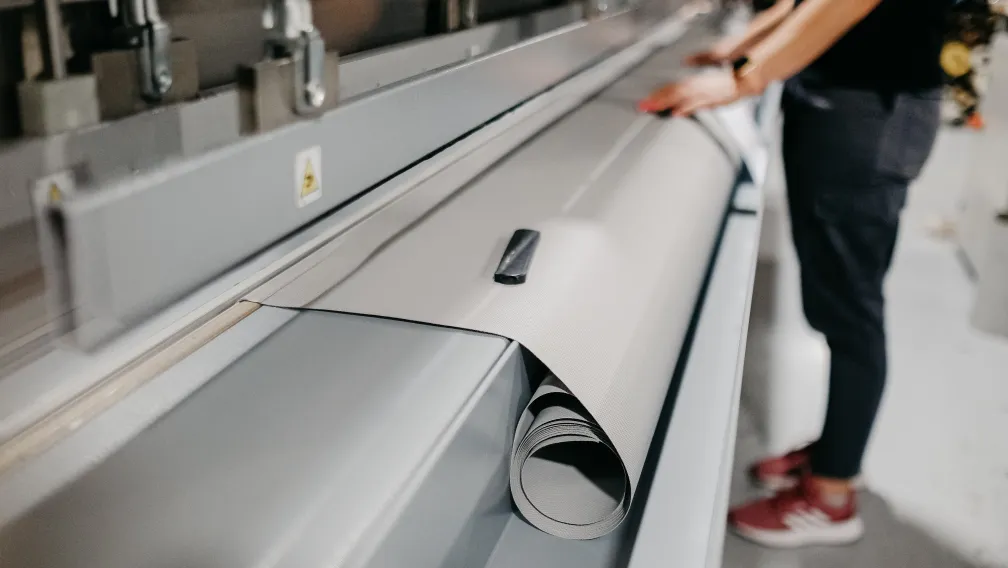
Dimensional stability is the defining metric of quality in industrial curtain manufacturing. The thermal stabilization process dictates how a fabric will behave under consumer use, determining its resistance to shrinkage, wrinkling, and edge curling after repeated washing or prolonged exposure to sunlight. Achieving uniform polymerization and structural memory in synthetic and blended textiles relies entirely on the precision of the heat setting equipment. Any deviation in temperature consistency, airflow distribution, or mechanical tension during this phase results in irreversible material degradation and high rejection rates.
LINGZHI, utilizing over 23 years of applied engineering experience in smart home-textile manufacturing, establishes that equipment degradation is the primary cause of dimensional inconsistencies. Standardizing curtain heat setting machine calibration and implementing rigorous preventive maintenance protocols are mandatory operational requirements. This technical document outlines the systematic procedures for maintaining thermal accuracy, mechanical synchronization, and post-process quality verification to ensure maximum throughput and uncompromising product integrity.
Core Principles of Curtain Heat Setting Machine Calibration
Thermal processing requires absolute uniformity across the entire width and length of the fabric web. Calibration is the process of verifying that the digital parameters displayed on the Human-Machine Interface (HMI) correspond exactly to the physical conditions inside the heating chambers.
Thermal Accuracy and Sensor Verification
Modern heat setting machines utilize multiple heating zones, each controlled by independent Proportional-Integral-Derivative (PID) controllers and monitored by PT100 platinum resistance thermometers or industrial thermocouples. Over thousands of hours of continuous operation in high-temperature environments (typically 180°C to 210°C for polyester-based curtains), these sensors experience thermal drift. A drift of merely 3°C between the left and right sides of a single chamber causes differential shrinkage, resulting in a physical defect known as "bowing."
Strict curtain heat setting machine calibration protocols dictate bi-annual verification of all thermal sensors. Technicians must deploy a calibrated multi-channel temperature data logger (such as a DataPaq system) mounted on a specialized thermal barrier traversing through the machine alongside the fabric. This device records the exact ambient temperature at the fabric surface across all zones. Any discrepancy exceeding ±1.5°C between the data logger and the machine’s internal PT100 sensors requires immediate recalibration of the PID parameters or physical replacement of the degraded thermocouple.
Airflow Velocity and Distribution Balancing
Temperature alone does not guarantee effective heat setting; the thermal energy must be transferred to the fabric efficiently via forced convection. Blower motors and internal ducting systems distribute hot air through upper and lower nozzles. Accumulation of vaporized spinning oils, fabric lint, and condensed resins inside these ducts alters the aerodynamic profile, leading to uneven airflow velocity.
Calibration of the convection system involves using a high-temperature anemometer to measure air velocity at the nozzle exits across the entire working width. Variance in air velocity causes specific longitudinal sections of the curtain fabric to receive higher thermal transfer rates, leading to localized over-shrinkage. Maintenance schedules must mandate quarterly removal of nozzle plates for chemical cleaning to dissolve baked-on resin deposits, ensuring uniform aerodynamic pressure.
Mechanical Synchronization: Tension and Overfeed Systems
The mechanical handling of the fabric through the high-temperature zones is as critical as the thermal application. The overfeed and tensioning systems control the fabric's warp and weft dimensions, locking in the final physical structure of the curtain.
Overfeed Ratio Calibration
The overfeed mechanism feeds fabric onto the pin chains or clips at a speed slightly faster than the chain transport speed, allowing the fabric to shrink naturally in the warp direction under heat without developing internal stress. If the surface speed of the overfeed roller is out of synchronization with the stenter chain drive, the specified overfeed ratio (e.g., +3%) becomes inaccurate. Calibration requires a digital contact tachometer to measure the exact surface speed of the mechanical rollers and compare it against the encoder feedback on the drive motors. Drive parameters in the PLC must be adjusted to eliminate any mechanical slippage discrepancies.
Stenter Chain and Pin Plate Maintenance
The transport chains and pin plates operate under extreme thermal and mechanical stress. Worn chain links cause the left and right chains to travel at microscopically different speeds, inducing a skew defect in the fabric pattern. Furthermore, dull or bent pins fail to grip the fabric edge securely, causing the fabric to pull away during the widening process (tentering), resulting in un-set edges and massive material waste.
Routine maintenance must include continuous visual inspection of the pin plates using strobe lighting during operation. Any plates with bent pins must be marked and replaced during the next shutdown. Lubrication of the stenter chains requires specialized high-temperature synthetic polyurea grease. Operators must completely purge old, degraded grease before applying new lubrication, as mixing different synthetic bases often creates a solid carbonized residue that accelerates rail wear.
Integrating Fabric Inspection Maintenance for Comprehensive QA
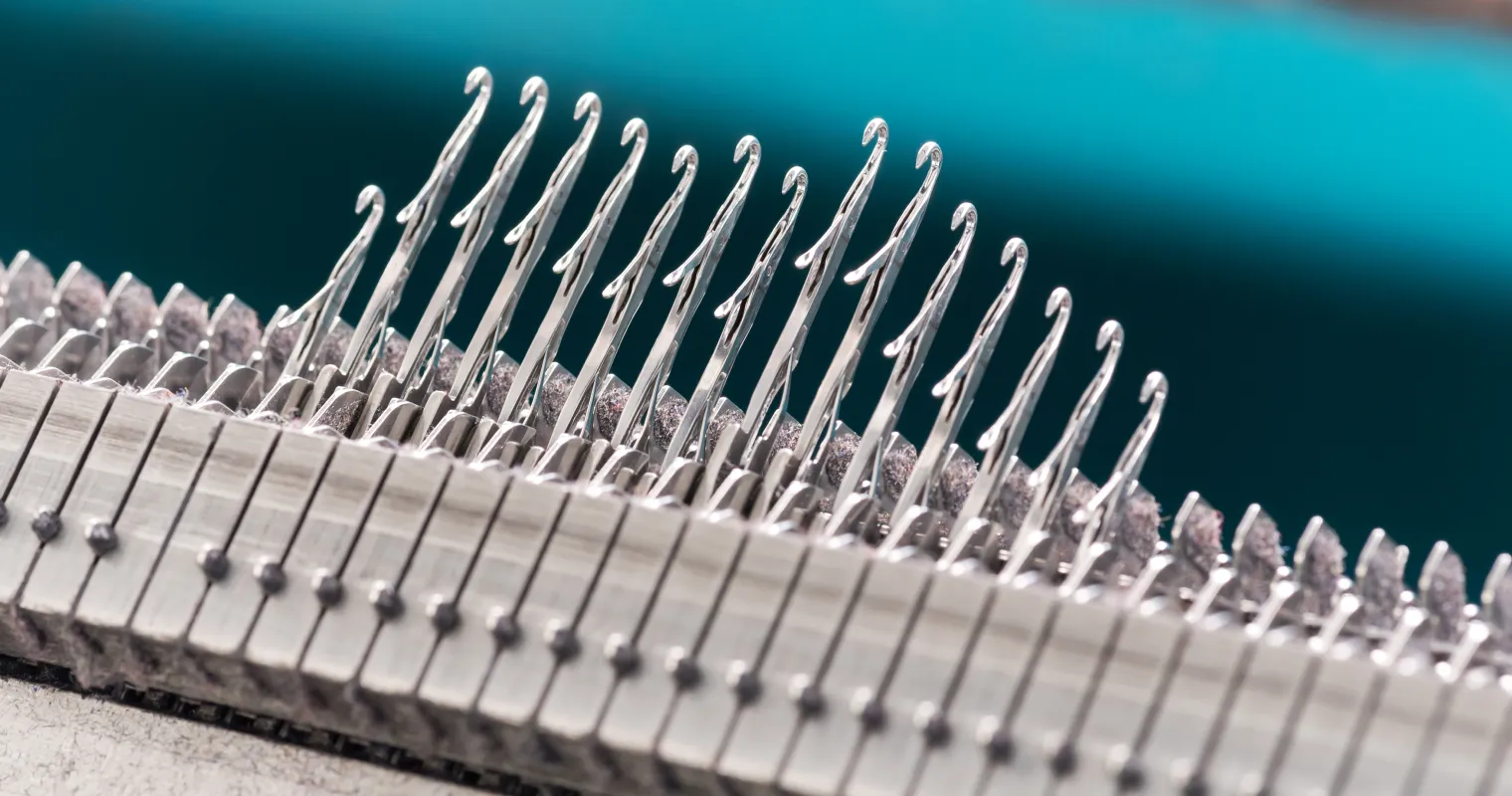
The quality assurance workflow does not end when the fabric exits the cooling zone of the heat setter. To verify the success of the heat setting parameters, the fabric must undergo immediate optical and dimensional evaluation. This highlights the absolute necessity of rigorous fabric inspection maintenance.
Optical Sensor and Illumination Calibration
A fabric inspection machine relies on precise lighting conditions to detect thermal defects such as yellowing (over-heating) or uneven dyeing (migration during setting). Standard commercial inspection requires D65 (daylight) standard illuminant tubes. Fluorescent and LED inspection lamps degrade in color temperature and lumen output over time. Fabric inspection maintenance protocols require measuring the lux output at the inspection board monthly using a calibrated lux meter. Lamps dropping below the factory-specified lux threshold or shifting in color temperature must be replaced simultaneously to maintain uniform detection standards.
Tensionless Winding Verification
Curtain fabrics that have just been heat-set are structurally stable but can still be distorted if subjected to extreme mechanical pulling before they are fully conditioned. Therefore, the load cells and dancer rollers controlling the winding tension on the inspection machine must be flawlessly calibrated. If the inspection machine applies excessive winding tension, it will artificially stretch the fabric, negating the dimensional stability achieved in the heat setter. Maintenance involves checking the pneumatic cylinders of the dancer rollers for air leaks and calibrating the electronic load cells with certified weights to ensure they read zero-tension accurately.
Systematic Troubleshooting of Common Heat Setting Defects
When defects are identified during the inspection phase, operators must trace the symptom back to a specific mechanical or thermal failure in the heat setting equipment. This diagnostic matrix accelerates root-cause analysis.
- Defect: Fabric Bowing (Curved Weft Lines). Root Cause Diagnosis: Differential speed between the left and right stenter chains, uneven airflow distribution between the upper and lower nozzles, or incorrect overfeed roller pressure. Corrective Action: Verify chain encoder synchronization and inspect upper nozzle ducts for lint blockages.
- Defect: Thermal Yellowing or Brittle Texture. Root Cause Diagnosis: Temperature overshoot in specific zones. Often caused by a fused Solid State Relay (SSR) supplying continuous power to the heating element, or a failed PT100 sensor reporting an artificially low temperature to the PLC. Corrective Action: Isolate the defective zone via the HMI, test SSR continuity, and recalibrate or replace the thermal sensor.
- Defect: Edge Curling or Scalloping. Root Cause Diagnosis: Inadequate pin penetration at the overfeed station, bent pin plates, or insufficient cooling air at the exit zone before the fabric is stripped from the pins. Corrective Action: Replace damaged pin plates, adjust the penetration brush pressure, and clean the cooling zone exhaust filters.
- Defect: Unwanted Oil Spotting. Root Cause Diagnosis: Over-lubrication of the stenter chains, or condensation of vaporized finishing oils dropping from the exhaust ceiling. Corrective Action: Adjust the automatic chain lubrication pump volume and schedule an immediate deep cleaning of the exhaust ducting and heat recovery system.
Conclusion
The operational lifespan and processing accuracy of industrial curtain manufacturing equipment are defined by the strict adherence to calibration and maintenance schedules. By treating curtain heat setting machine calibration as a non-negotiable metric and integrating rigorous fabric inspection maintenance into the downstream workflow, textile plants eliminate variable errors. These protocols prevent catastrophic material spoilage, reduce unscheduled downtime, and guarantee that every roll of fabric meets exact commercial specifications.
Optimize Your Production Line Today
LINGZHI provides comprehensive engineering support, industrial automation upgrades, and precise machinery designed for demanding production environments. Contact our technical engineering division to implement automated, zero-defect processing lines tailored to your specific textile manufacturing requirements.
Frequently Asked Questions (FAQ)
How often should curtain heat setting machine calibration be performed?
Thermal calibration should be conducted bi-annually using a traversing data logger to verify internal chamber temperatures against HMI readouts. Mechanical calibration, including overfeed ratios, chain speed synchronization, and exhaust airflow velocity, must be verified on a quarterly basis to prevent long-term production defects.
What is the optimal temperature tolerance for polyester curtain heat setting?
For standard polyester curtain fabrics, the internal chamber temperature must remain within a tolerance of ±1.5°C from the set point. Variances larger than this cause uneven polymerization, leading to localized shrinkage, fabric bowing, and inconsistent dye affinity.
Why is tensionless winding critical in fabric inspection maintenance?
After a fabric has been thermally stabilized, subjecting it to high mechanical pull during inspection can re-introduce stress and stretch the material. Tensionless winding relies on calibrated load cells and dancer rollers to roll the fabric cleanly without stretching, ensuring the dimensional stability achieved in the heat setter is preserved.
What mechanical failure causes fabric bowing during the heat setting process?
Fabric bowing is primarily caused by mechanical desynchronization. This occurs when the left and right stenter chains operate at microscopically different speeds due to chain wear, or when the overfeed roller applies uneven pressure across the fabric width, causing the center of the fabric to advance faster or slower than the pinned edges.
How do we prevent oil spotting on fabrics during heat setting?
Oil spotting is prevented by strict lubrication management. Use a precision micro-drip or closed-loop lubrication system for the stenter chains to avoid over-greasing. Additionally, the exhaust and ventilation ducts must be cleaned monthly to prevent vaporized spinning oils and resins from condensing on the ceiling and dripping back onto the moving fabric.
What are the daily maintenance requirements for optical sensors on an inspection machine?
Daily fabric inspection maintenance requires operators to use low-pressure compressed air to blow off fabric lint and dust from all optical sensors, edge-alignment photocells, and transmission light panels. Lenses should be wiped with a lint-free cloth and isopropyl alcohol to ensure zero false defect readings.
-

LINGZHI Engineering & Textile Team
R&D and Technical Application Division, LINGZHI
Backed by 23 years of manufacturing experience across our Shanghai and Tongxiang facilities, the LINGZHI Engineering & Textile Team comprises over 17 senior mechanical engineers and textile specialists. Holding 20+ national patents under ISO 9001 quality standards, our division focuses on automated sewing system integration, equipment calibration, and commercial fabric performance testing for global home-textile factories.