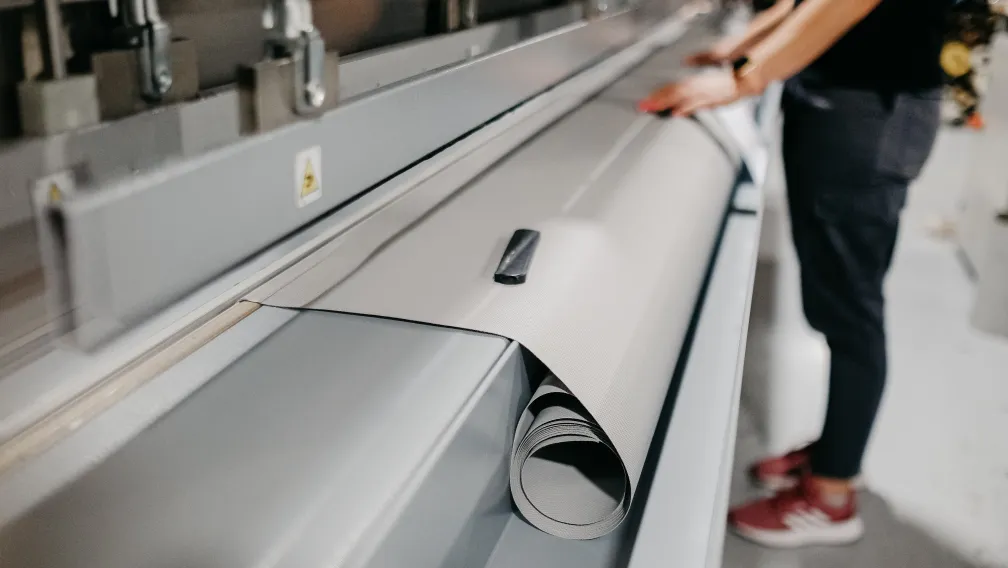
Scaling commercial home-textile manufacturing requires a rigorous transition from labor-intensive manual processes to highly synchronized automated workflows. In the production of custom and commercial drapery, the pleating stage historically represents the most significant bottleneck. Calculating pleat distances, manually folding thick fabrics, and sewing uniform tacks require skilled labor and extensive cycle times. As production volumes scale, maintaining dimensional consistency across thousands of panels becomes structurally impossible relying solely on human operators. To achieve industrial throughput capabilities, facilities must implement engineered solutions specifically designed to standardize the folding and sewing operations.
Leveraging over 23 years of expertise in smart home-textile manufacturing equipment, LINGZHI identifies the deployment of an automatic curtain pleating machine as the definitive catalyst for capacity optimization. This technical analysis explores the quantifiable productivity metrics of automated pleating infrastructure, examines the algorithmic calculation of pleat dimensions, and outlines the framework for evaluating automated hemming ROI (Return on Investment) in high-volume production environments.
Throughput Dynamics: Manual Processing vs. Automated Indexing
Evaluating factory productivity requires analyzing the standard Units Per Hour (UPH) generated at a specific workstation. Manual curtain pleating involves multiple distinct micro-actions: measuring the total fabric width, calculating the fullness ratio, marking pleat intervals with chalk, physically folding the fabric, pinning it in place, and finally routing it through a standard sewing head. A highly skilled operator processing standard pinch pleat curtains might complete a single wide-format panel in 20 to 30 minutes, severely restricting daily output and driving up per-unit labor costs.
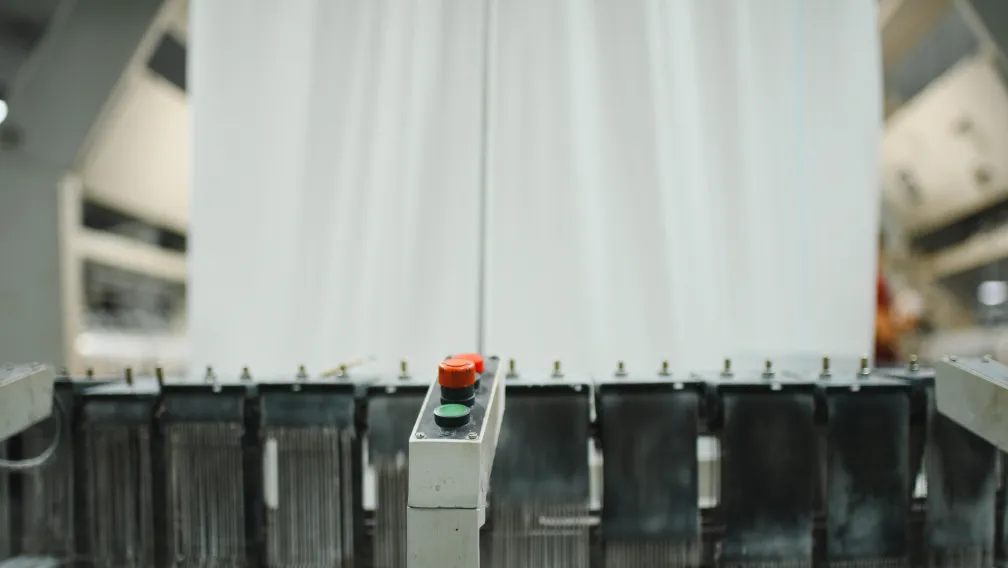
Automated pleating machines disrupt this linear time-motion constraint through simultaneous mechanical execution. Modern equipment utilizes servo-driven indexing systems and pneumatic folding arms. The operator simply feeds the leading edge of the hemmed fabric into the machine. The system automatically clamps, folds, and sews a complete pleat in a cycle time ranging from 4 to 7 seconds, depending on the complexity of the tack and the density of the fabric. This rapid cycle time translates to completing an entire commercial panel in under three minutes. In a standard eight-hour industrial shift, replacing manual stations with automated pleating architecture yields a throughput increase exceeding 500%, fundamentally altering the production capacity of the facility.
Algorithmic Pleat Calculation and Digital Interface Integration
The traditional calculation of pleat depths and intervals is highly susceptible to human error. A miscalculation of mere millimeters on the first few pleats compounds across a wide panel, resulting in a curtain that fails to meet the finished width specifications, leading to material rejection and costly rework.
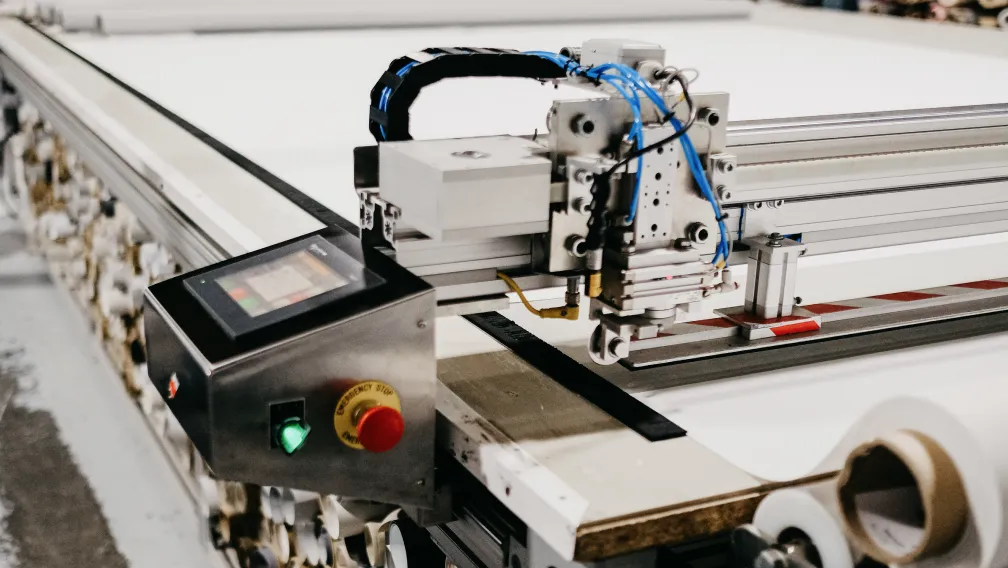
High-performance automated machines eliminate this variable entirely through integrated Programmable Logic Controllers (PLCs) and proprietary algorithmic software. The setup process is entirely digital. Production managers input the initial flat fabric width, the target finished width, and the desired number of pleats directly into the Human-Machine Interface (HMI) touchscreen. The onboard microprocessor instantly computes the exact mathematical distance required between each pleat and the precise depth of the fabric fold needed to achieve the target fullness ratio (e.g., 2.0x, 2.5x, or 3.0x fullness).
As the machine operates, optical sensors continuously monitor the fabric feed. The servo motors advance the fabric by the exact calculated micro-distance for each interval. This closed-loop digital control ensures mathematical perfection across the entire panel. Furthermore, the PLC can store hundreds of specific dimensional recipes. Transitioning from producing tight pencil pleat curtains for residential orders to deep pinch pleat drapes for hotel contracts requires only a single tap on the interface, eliminating mechanical retooling downtime and ensuring absolute standardization across multiple production shifts.
Mechanical Architecture for High-Stress Fabric Manipulation
Commercial window treatments often utilize rigid, multi-layered materials. Heavy velvet, double-lined blackout fabrics, and acoustic barrier textiles present massive physical resistance to folding and sewing. Standard equipment lacks the mechanical force required to manipulate these materials accurately.
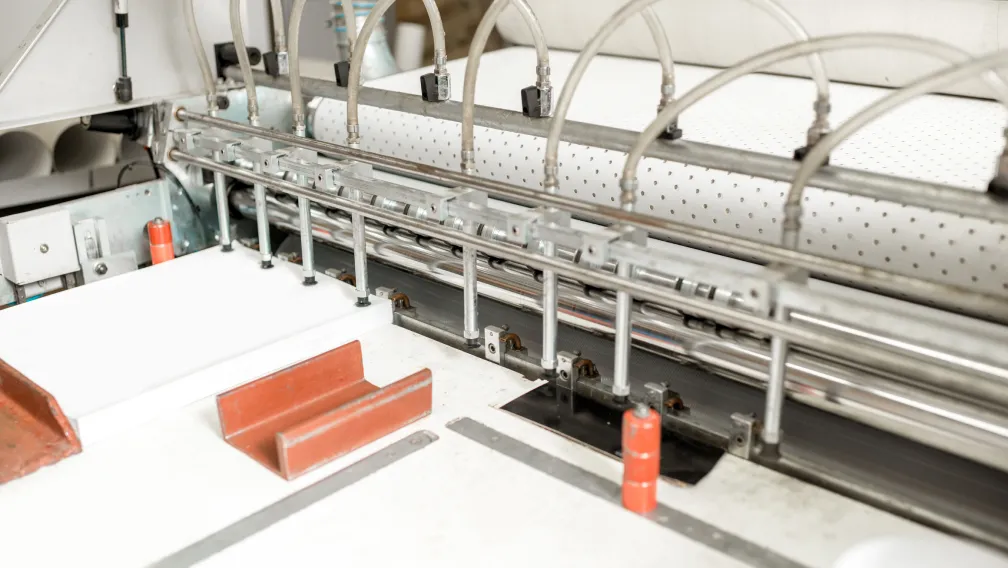
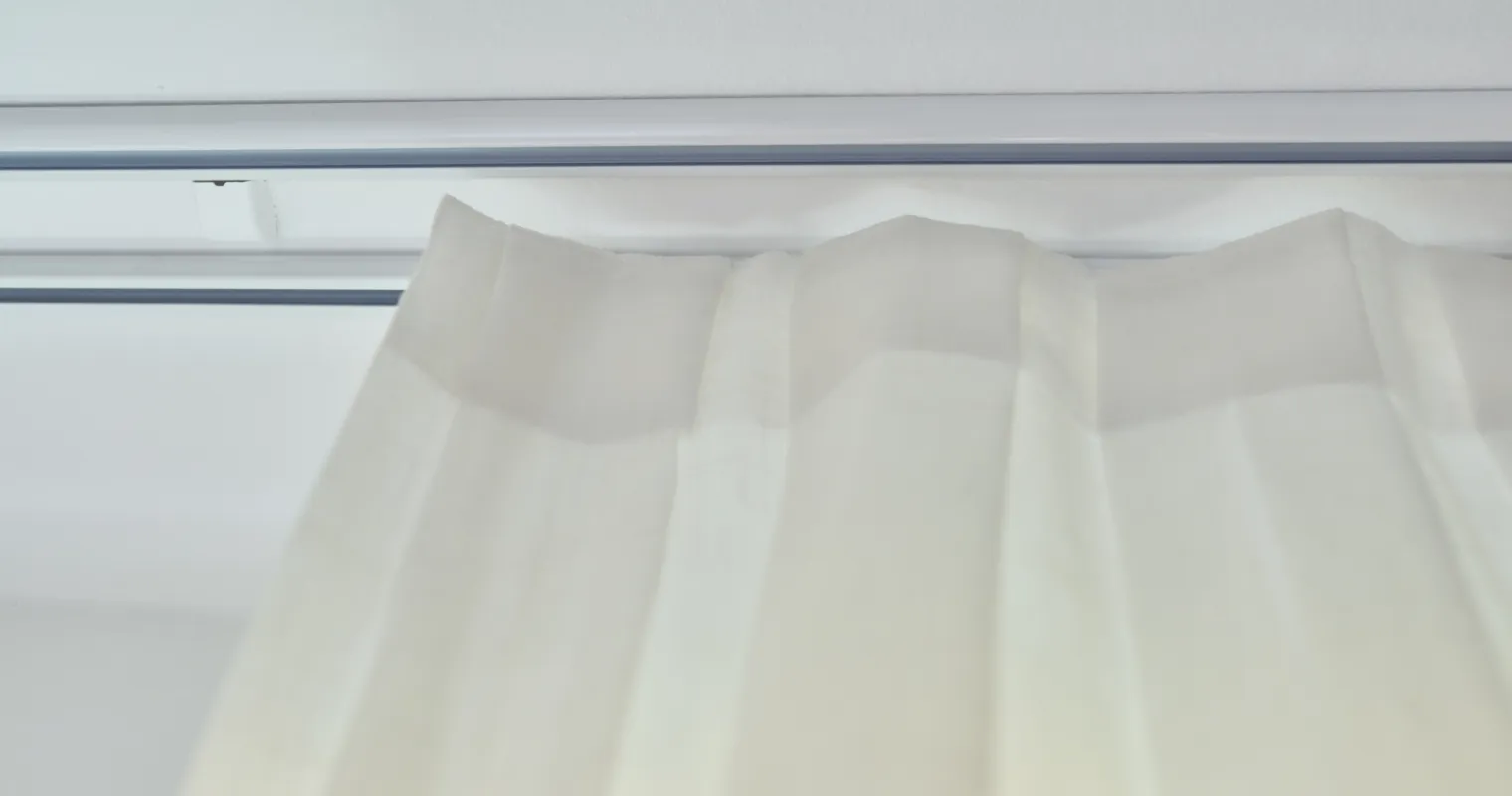
An industrial automatic curtain pleating machine is engineered with a heavy-duty pneumatic clamping matrix. When the fabric advances to the pleating station, high-pressure pneumatic cylinders drive steel forming blades into the fabric, forcing it into the programmed fold configuration (single, double, or triple pinch). The clamping force holds the rigid layers immaculately flat, preventing any material shifting or layer distortion.
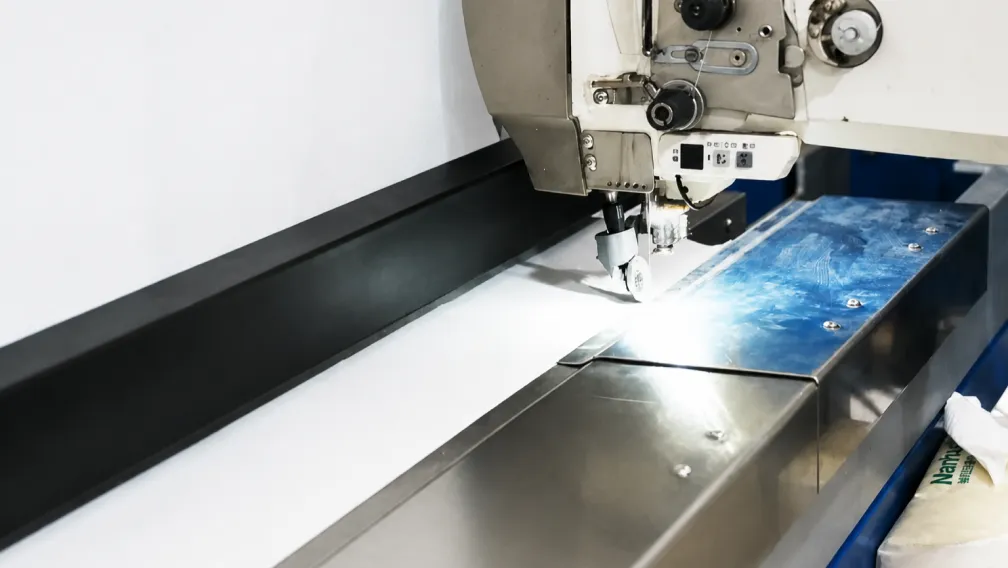
Once clamped, the integrated heavy duty sewing machine head executes the structural tack. To penetrate up to 9 layers of folded blackout fabric, these sewing modules are equipped with high-torque direct-drive servo motors (often exceeding 750W) and heavy-gauge titanium needles. The machine automatically sews a reinforced bartack, cuts the upper and lower threads using an electronic trimming knife, and releases the pneumatic clamp, all within a synchronized multi-second sequence. This robust mechanical architecture guarantees structural integrity, preventing needle deflection, thread snapping, and skipped stitches during high-speed continuous operations.
Quantifying Automated Hemming ROI and Capital Expenditure
Upgrading a production line with automated equipment represents a significant Capital Expenditure (CapEx). However, justifying this investment requires a comprehensive Operational Expenditure (OpEx) analysis to determine the automated hemming ROI and pleating amortization timeline.
The primary vector for ROI is direct labor cost reduction. A single automated pleating workstation operated by one technician effectively replaces the output of four to five manual skilled sewers. In regions with high industrial wage rates, the reduction in weekly payroll expenses provides rapid capital recovery. Secondly, automated machines drastically reduce reliance on highly specialized labor. Training a new employee to input dimensions into a touchscreen and guide fabric into an automated feeder takes hours, whereas training a seamstress to manually calculate and sew perfect pinch pleats takes months of apprenticeship. This deskilling of the operation insulates the factory from labor shortages and high turnover rates.
Beyond labor, automated ROI is heavily influenced by material yield optimization. Manual calculation errors result in scrapped panels. The algorithmic precision of the PLC ensures a zero-defect pleating process, virtually eliminating wasted fabric and reducing total material consumption costs. When combining labor savings, increased daily UPH throughput, and maximized material yield, high-volume textile facilities typically achieve a complete ROI on automated pleating equipment within 12 to 18 months of deployment.
Production Line Synergy and Upstream Integration
Optimizing throughput requires viewing the pleating machine not in isolation, but as a node within a continuous automated workflow. Bottlenecks simply shift if downstream or upstream processes cannot match the speed of the pleating station.
For maximum capacity utilization, the pleating machine must be fed by high-speed preparation equipment. Panels should first pass through an automatic fabric hemming machine to ensure perfectly parallel side and bottom hems before they reach the pleating phase. If producing extra-wide commercial drapery, the initial fabric rolls must be seamed together using an automated joining station to provide a continuous, flat substrate. By synchronizing the speeds of the hemming, joining, and pleating equipment, production engineers create a frictionless manufacturing pipeline where raw fabric rolls are transformed into finished, pleated drapery with minimal inter-station staging or manual material handling.
Conclusion
Capacity optimization in commercial home-textile manufacturing is entirely dependent on the elimination of manual variables. Throughput analysis clearly demonstrates that integrating an automatic curtain pleating machine provides exponential gains in daily production volume while simultaneously enforcing strict dimensional standardization. By utilizing algorithmic PLC calculations, high-torque servo indexing, and robust pneumatic folding mechanisms, manufacturers can process heavy commercial fabrics with absolute precision. The resulting automated hemming ROI—driven by massive labor reductions and zero-defect material yields—makes upgrading to automated infrastructure a mandatory strategic initiative for any facility seeking to scale operations profitably.
Accelerate Your Production Capacity
For over two decades, LINGZHI has engineered specialized automation solutions for the global home textile industry. Contact our automation engineering team today for a comprehensive throughput audit and discover how our advanced pleating and hemming machinery can rapidly maximize your facility's operational efficiency and ROI.
Frequently Asked Questions (FAQ)
How does an automatic pleating machine improve overall productivity?
An automatic pleating machine improves productivity by replacing manual measuring, folding, and sewing with a synchronized electro-pneumatic process. It reduces the cycle time for a single pleat to roughly 4-7 seconds. This allows a single operator to complete an entire commercial drapery panel in under three minutes, generating a throughput increase of over 500% compared to traditional manual workstation processing.
What is the typical ROI timeframe for automated curtain manufacturing equipment?
For high-volume production facilities, the automated hemming ROI and pleating ROI is typically achieved within 12 to 18 months. This rapid amortization is driven by a massive reduction in direct labor costs, the elimination of fabric waste caused by manual calculation errors, and the ability to fulfill larger commercial contracts due to significantly increased daily output capacity.
Can automated machines handle complex styles like pinch pleat curtains?
Yes, industrial automatic pleating machines are specifically engineered to handle complex configurations, including double and triple pinch pleat curtains, as well as standard pencil pleats. The machine utilizes interchangeable pneumatic folding blades and PLC programming to automatically gather the fabric into the precise structural fold before executing a reinforced bartack to secure the heavy layers.
How does algorithmic calculation eliminate material waste in pleating?
Manual pleating requires operators to use chalk and measuring tapes, where a millimeter error compounds across the panel, resulting in a curtain that fails to meet target dimensions and must be scrapped. Automated machines feature PLCs that take the flat fabric width and finished target width, instantly calculating the exact mathematical distance between pleats. Servo motors then index the fabric exactly to these micro-dimensions, ensuring zero defects and zero material waste.
What role does pneumatic clamping play in high-speed pleating throughput?
Commercial fabrics, particularly multi-layered blackout or acoustic drapes, are highly rigid and resist folding. Pneumatic clamping uses high-pressure air cylinders to drive steel forming plates, physically forcing the thick materials into a perfectly flat, compressed fold. This prevents layer shifting during the sewing phase and ensures the heavy-duty needle can penetrate the fabric without deflection or needle breakage.
How does automated pleating integrate with existing heavy-duty sewing lines?
Automated pleating serves as the final structural stage in a synchronized production line. For optimal workflow synergy, raw fabric is first processed through an automatic fabric hemming machine to ensure straight, tension-free side and bottom hems. The perfectly squared panel is then fed directly into the automated pleating station, creating a continuous pipeline that eliminates manual staging delays between production steps.
-

LINGZHI Engineering & Textile Team
R&D and Technical Application Division, LINGZHI
Backed by 23 years of manufacturing experience across our Shanghai and Tongxiang facilities, the LINGZHI Engineering & Textile Team comprises over 17 senior mechanical engineers and textile specialists. Holding 20+ national patents under ISO 9001 quality standards, our division focuses on automated sewing system integration, equipment calibration, and commercial fabric performance testing for global home-textile factories.