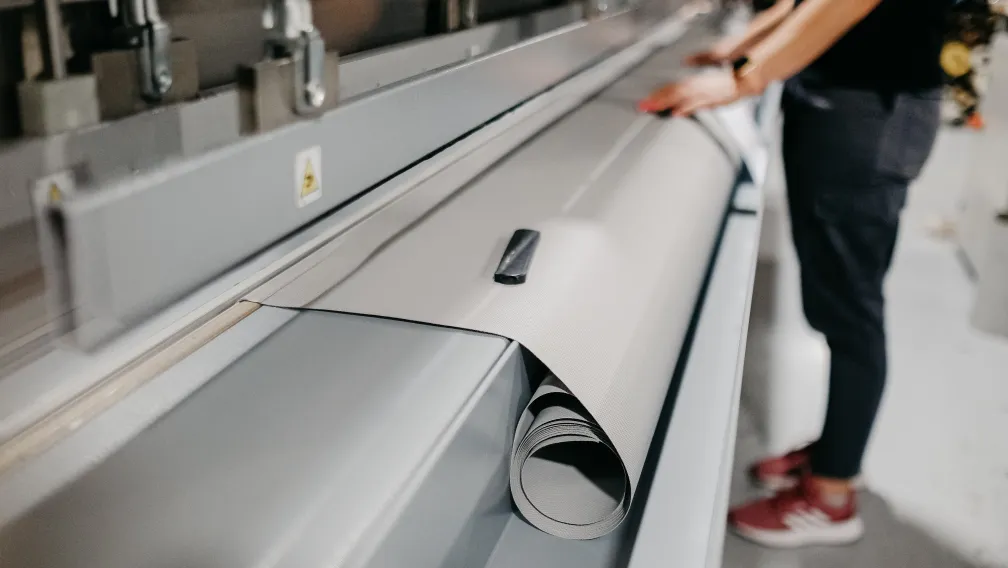
In the commercial and high-end residential window treatment sectors, Roman shades represent a premium product category characterized by structured, cascading horizontal folds. Unlike standard roller blinds that rely on a simple top-mounted tension tube, or drapery panels that fall in vertical pleats, a Roman shade is an engineered textile assembly. Its operational integrity depends entirely on a precisely spaced matrix of horizontal rib pockets (tunnels) and vertically aligned lifting rings. When a user actuates the shade, cords routed through these rings pull the fabric upward, forcing it to hinge exactly at the rib pockets.
Historically, fabricating these complex structures has been a highly labor-intensive process, highly susceptible to human error. Manual production requires technicians to measure and mark horizontal intervals with chalk, fold the fabric by hand, sew the structural pockets, and individually bartack or hand-sew dozens of lifting rings across the back of the panel. In a high-volume manufacturing environment, this manual sequence creates a severe production bottleneck. Furthermore, microscopic deviations in manual measurement compound across the length of the shade, resulting in uneven folds and immediate aesthetic rejection.
To achieve industrial scalability and absolute dimensional consistency, textile manufacturers are integrating the automated Roman shade making machine. This advanced infrastructure transitions Roman shade fabrication from a manual craft into a mathematically controlled, electro-pneumatic manufacturing process. This technical document examines the mechanical architecture required to automate rib pocket formation, the algorithmic spacing of fold intervals, and the critical integration of automated ring attachment systems.
Algorithmic Interval Calculation and Optical Alignment
The foundational requirement for a functional Roman shade is mathematically perfect spacing between the horizontal fold lines. If the distance between the first and second rib pocket is 200 millimeters, and the distance between the second and third is 203 millimeters, the resulting fabric fold will hang unevenly, destroying the geometric symmetry of the closed shade. When attempting to scale production utilizing manual measuring tapes and marking tools, maintaining zero-tolerance variance across hundreds of panels per shift is physically impossible.
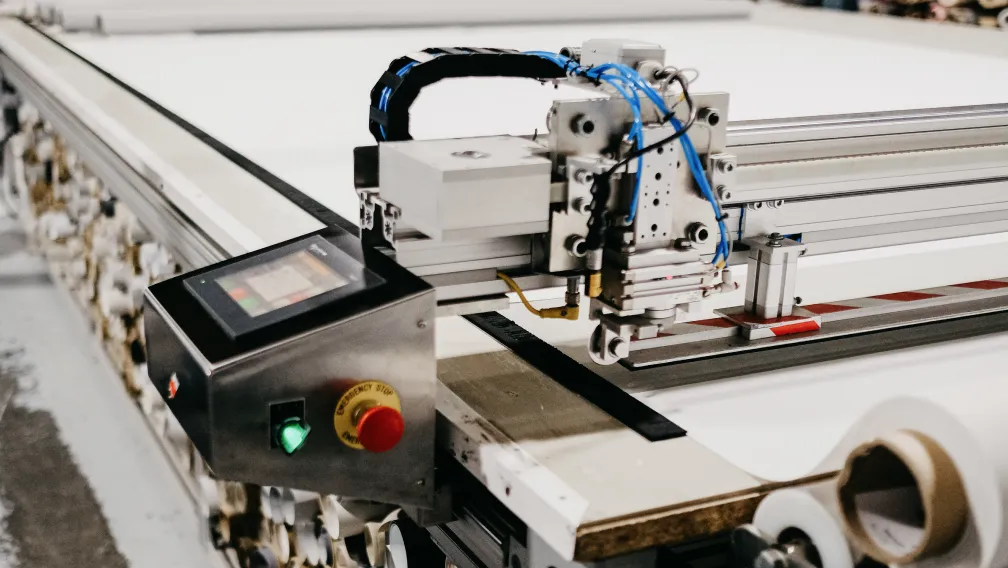
Automated manufacturing systems eradicate this variance through Programmable Logic Controller (PLC) integration and high-resolution servo indexing. The setup process bypasses physical measurement entirely. Production engineers input the total drop length of the finished shade and the desired number of folds directly into the Human-Machine Interface (HMI). The integrated microprocessor instantly executes the dimensional algorithm, determining the exact millimeter spacing required between each pocket to achieve equidistant folds.
During operation, the fabric is advanced across the flatbed working surface utilizing synchronized, servo-driven puller mechanisms. High-precision rotary encoders track the linear transit of the fabric. Once the material advances to the exact PLC-calculated coordinate, the feeding mechanism halts instantly. Laser projection modules project a high-visibility alignment matrix onto the fabric surface, ensuring the material is perfectly perpendicular to the sewing axis before the pneumatic clamping system engages. This closed-loop digital workflow guarantees that the geometric spacing is flawless across the entire production run, regardless of operator fatigue or shift changes.
Pneumatic Folding and Structural Pocket Formation
Creating the structural pocket for the dowel rod (the rib) requires folding a specific allowance of fabric and sewing a horizontal seam. In manual processing, operators must pinch and pin the fabric, attempting to maintain a consistent pocket depth (e.g., 15mm) across widths that can exceed three meters. Inconsistent pocket depths prevent the rigid dowel rods from sitting parallel, causing the shade to warp when suspended.
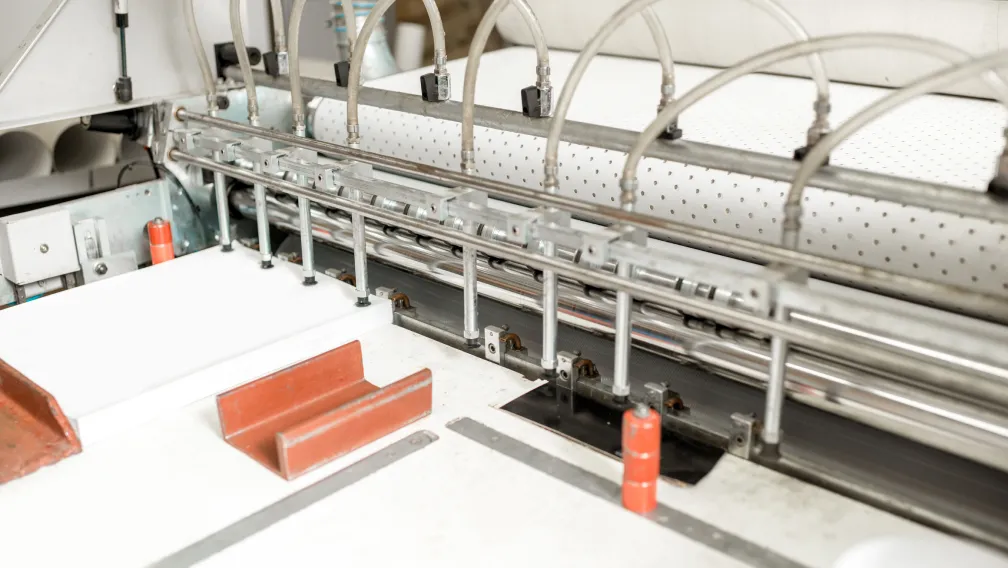
An industrial Roman shade making machine utilizes specialized electro-pneumatic folding architecture to execute this process seamlessly. When the fabric is indexed to the correct position, a high-pressure pneumatic clamping bar descends, securing the full width of the material against the worktable. Subsequently, a precision-machined folding blade actuates laterally, forcing a predetermined depth of fabric into a mechanical crevice.
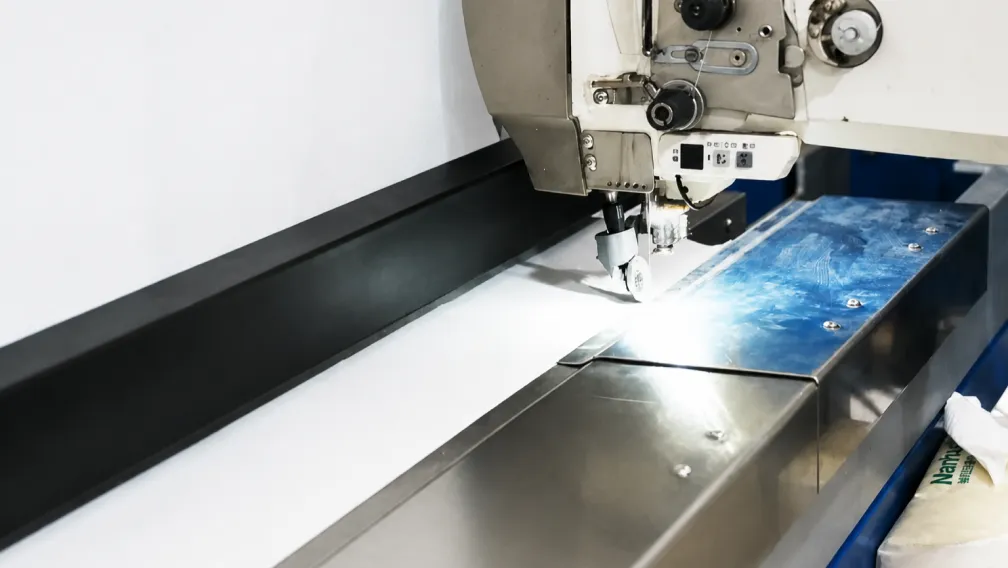
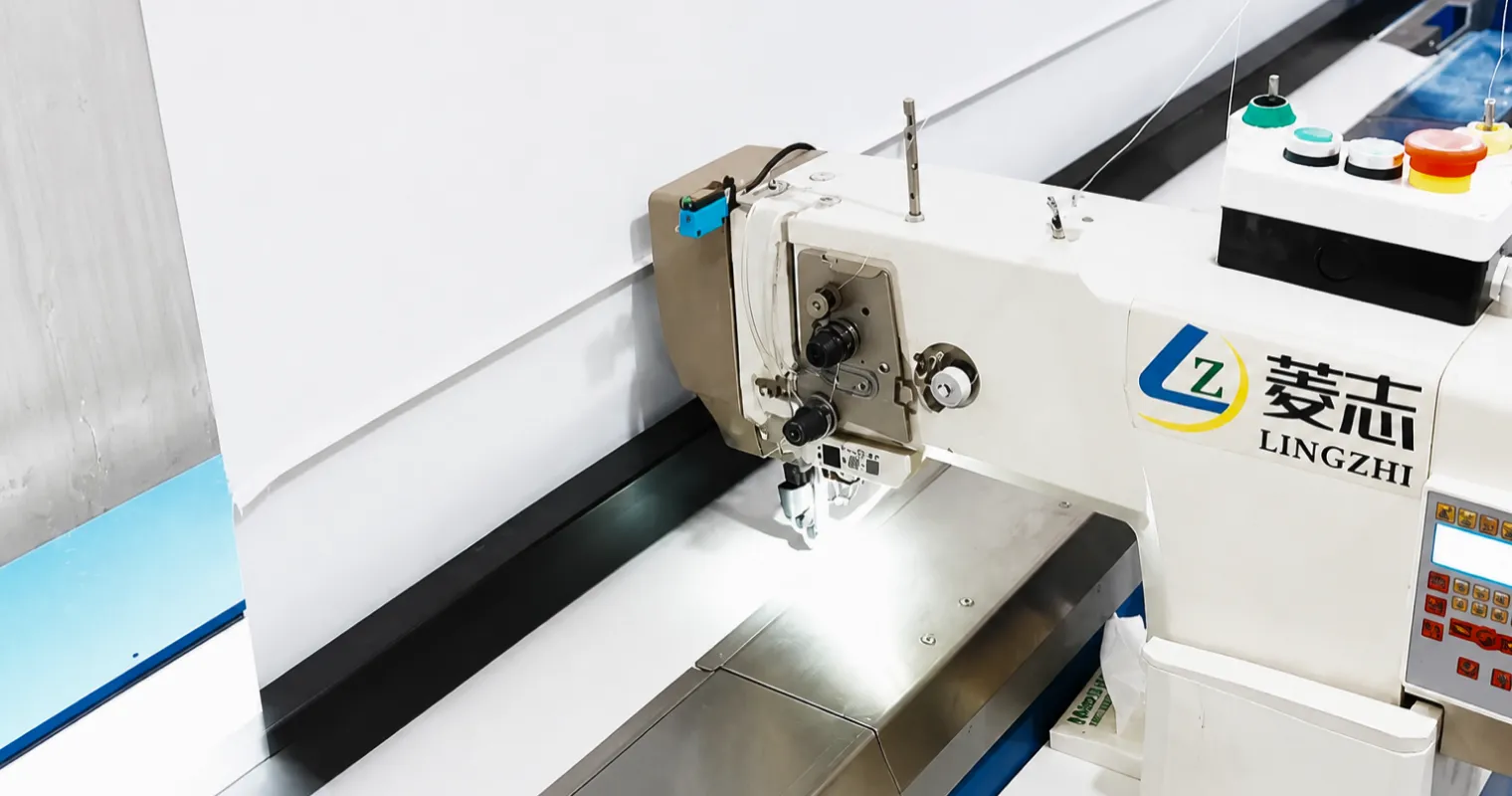
This automated folding sequence creates a perfectly uniform crease across the entire width of the panel in a fraction of a second. The depth of the pocket is mechanically governed by the tooling, ensuring that the resulting tunnel will accommodate the aluminum or fiberglass ribs with zero lateral variance. Once the fold is securely clamped, the synchronized sewing head traverses the width of the machine via a linear guide rail, executing a continuous, high-speed lockstitch to permanently form the pocket.
Simultaneous Lifting Ring Attachment via Automated Bartacking
The most time-consuming bottleneck in traditional Roman shade fabrication is the attachment of the lifting rings. These small plastic or metal rings must be secured at exact vertical intervals intersecting the horizontal rib pockets. If the rings are misaligned vertically, the lifting cords will pull diagonally, causing the shade to skew and jam during operation. Hand-sewing or manually aligning a standard bartack machine for each individual ring requires extensive labor hours and drastically reduces factory throughput (Units Per Hour).
Advanced automated systems resolve this by integrating automated ring dispensing and bartacking modules directly into the primary sewing carriage. As the machine forms and stitches the horizontal rib pocket, the operator or automated hopper loads the lifting rings into a positioning fixture. The PLC is programmed to know exactly where the vertical cord lines will run (e.g., every 400mm across the width).
When the traversing sewing head reaches these programmed coordinates, it momentarily halts the linear pocket stitch. A specialized electronic bartack mechanism descends, positions the ring over the fold, and executes a high-density zig-zag stitch directly through the ring's mounting loop and the multi-layered fabric. The system automatically trims the thread and resumes the linear pocket stitch until it reaches the next programmed ring coordinate. This simultaneous execution of pocket sewing and ring attachment condenses two completely separate, highly tedious manual operations into a single, continuous automated pass, yielding a throughput acceleration that frequently exceeds 400%.
Managing Multi-Layered Textiles with Compound Feed Architecture
Commercial Roman shades are rarely constructed from a single layer of material. To meet stringent thermal insulation and light-blocking requirements (such as those demanded by the hospitality sector), the decorative face fabric is typically bonded to or layered with heavy acrylic-coated blackout linings.
Sewing these disparate materials together presents a significant mechanical challenge. The face fabric may be a delicate silk blend, while the blackout lining is a rigid, high-friction polymer. If a standard drop-feed sewing head traverses this composite layer, the bottom feed dogs will pull the lining at a different rate than the static presser foot drags the face fabric. This differential feeding generates structural puckering along the entire horizontal pocket, destroying the flat visual aesthetic of the shade.
To prevent material shifting, the traversing sewing heads on industrial Roman shade equipment are equipped with compound feed mechanisms. Similar to the technology utilized in a heavy duty curtain sewing machine, a compound feed system synchronizes the movement of the needle bar, the inner presser foot, and the bottom feed dogs. This unison feed firmly clamps all layers of the composite textile, driving them past the needle simultaneously. By neutralizing the differential friction between the face fabric and the heavy lining, the compound feed architecture guarantees flawlessly flat seams, ensuring the panel hangs perfectly plumb upon installation.
Upstream Dimensional Prerequisites and Edge Squaring
It is vital to recognize that an automated Roman shade making machine relies entirely on the geometric accuracy of the input material. If the raw fabric panel is not perfectly square (i.e., the side edges are not perfectly perpendicular to the top and bottom hems), the machine's perfectly parallel horizontal rib pockets will sit at a diagonal relative to the edge of the shade. This results in a structurally compromised product that will not fit squarely within a standard window casing.
Therefore, maximizing the ROI of automated Roman shade fabrication requires rigorous upstream quality control and automated cutting. Before the fabric reaches the pocket sewing station, it must be processed through a high-precision curtain cutting machine. These automated cutting tables utilize XY-axis laser alignment and motorized rotary shears to trim the perimeter of the panel to mathematically perfect 90-degree angles. Feeding perfectly squared panels into the automated pocketing machine ensures that the final assembly operates with absolute mechanical precision, eliminating downstream rejection rates and material waste.
Conclusion
Automating Roman shade manufacturing represents a profound shift in production capability for commercial textile fabricators. By moving away from subjective manual measurement and hand-sewing, facilities can leverage PLC-driven algorithmic spacing, electro-pneumatic folding, and simultaneous ring bartacking to achieve unprecedented dimensional accuracy. The integration of compound feed sewing heads ensures that even the heaviest multi-layered blackout shades are processed without seam distortion. For manufacturers looking to scale their operations and fulfill large commercial window treatment contracts, upgrading to automated Roman shade infrastructure is not merely an efficiency upgrade; it is a fundamental requirement for maintaining strict quality assurance and competitive profitability in the modern textile market.
-

LINGZHI Engineering & Textile Team
R&D and Technical Application Division, LINGZHI
Backed by 23 years of manufacturing experience across our Shanghai and Tongxiang facilities, the LINGZHI Engineering & Textile Team comprises over 17 senior mechanical engineers and textile specialists. Holding 20+ national patents under ISO 9001 quality standards, our division focuses on automated sewing system integration, equipment calibration, and commercial fabric performance testing for global home-textile factories.