In commercial textile manufacturing, material quality directly dictates downstream processing efficiency and final product viability. Processing defective fabric through cutting and sewing phases results in compounded financial losses, including wasted labor, degraded machine throughput, and rejected commercial orders. Identifying weaving flaws, color inconsistencies, and structural damage at the initial staging phase requires robust diagnostic infrastructure. Relying on manual visual checks without controlled tension or adequate illumination frequently leads to missed defects, particularly in high-volume production environments handling thousands of meters of fabric daily.
Implementing an industrial fabric inspection machine establishes a standardized, highly controlled environment for material assessment. This infrastructure transitions quality control from a subjective, variable process into a quantitative, measurable workflow. By integrating precise tension regulation, variable frequency drives, and optimized illumination architectures, production facilities can identify sub-millimeter defects before the material enters the production line. This technical documentation details the mechanical and electro-optical frameworks that govern modern fabric inspection equipment and their impact on operational yield.
Mechanical Architecture and Operational Framework
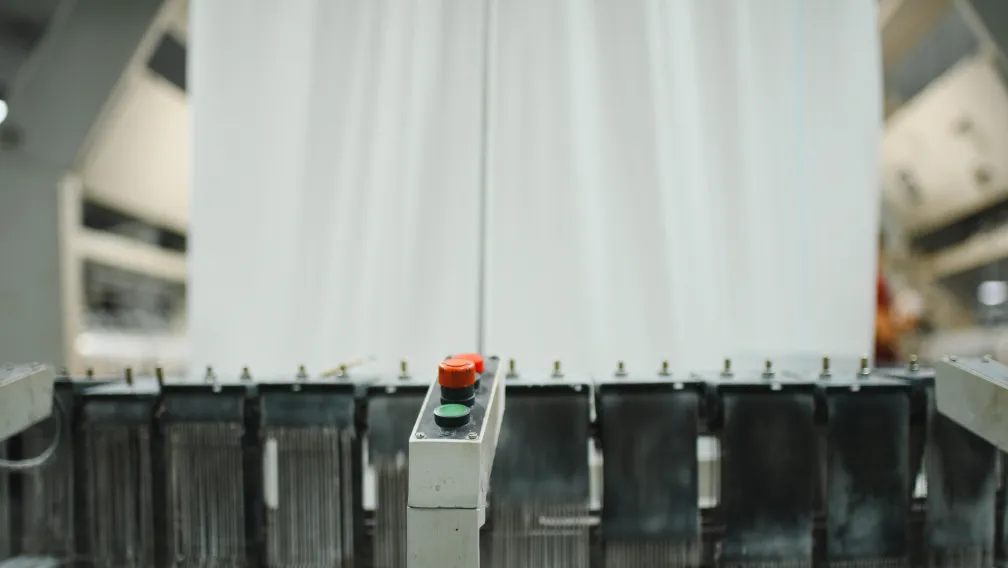
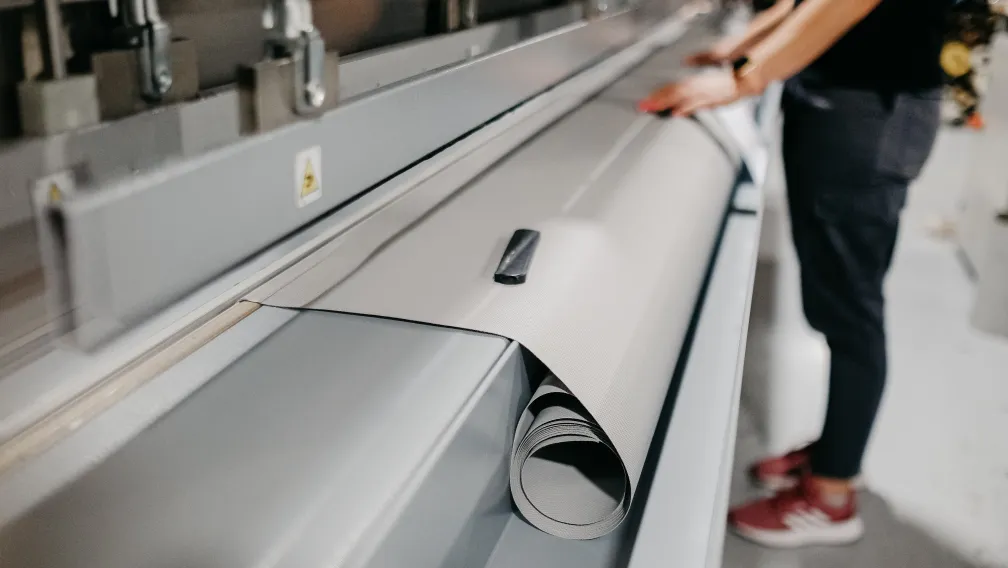
The primary function of inspection equipment is to transport textiles from an unwinding roll, across an illuminated viewing area, and onto a rewinding shaft at a controlled, uniform velocity. This requires a sophisticated mechanical framework capable of handling heavy commercial rolls, which often exceed several hundred kilograms in weight. The machine chassis is constructed from heavy-gauge structural steel to prevent vibrational resonance during high-speed winding operations.
Core mechanical transport relies on Variable Frequency Drive (VFD) motors. These VFDs allow operators to infinitely adjust the transit speed of the fabric across the inspection board. Different textiles require distinct inspection velocities; complex jacquard weaves or printed patterns may necessitate slower transit speeds (e.g., 15 to 20 meters per minute) to allow operators sufficient time to identify micro-defects, while solid-color plain weaves can be processed at speeds exceeding 45 meters per minute. The VFD system ensures smooth acceleration and deceleration, preventing sudden jerks that could tear delicate materials or misalign the fabric roll.
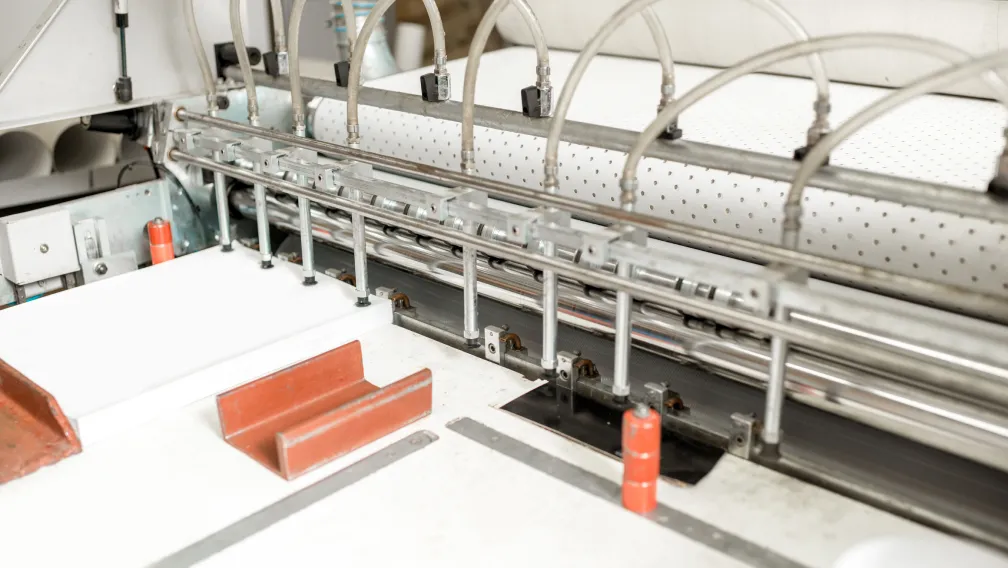
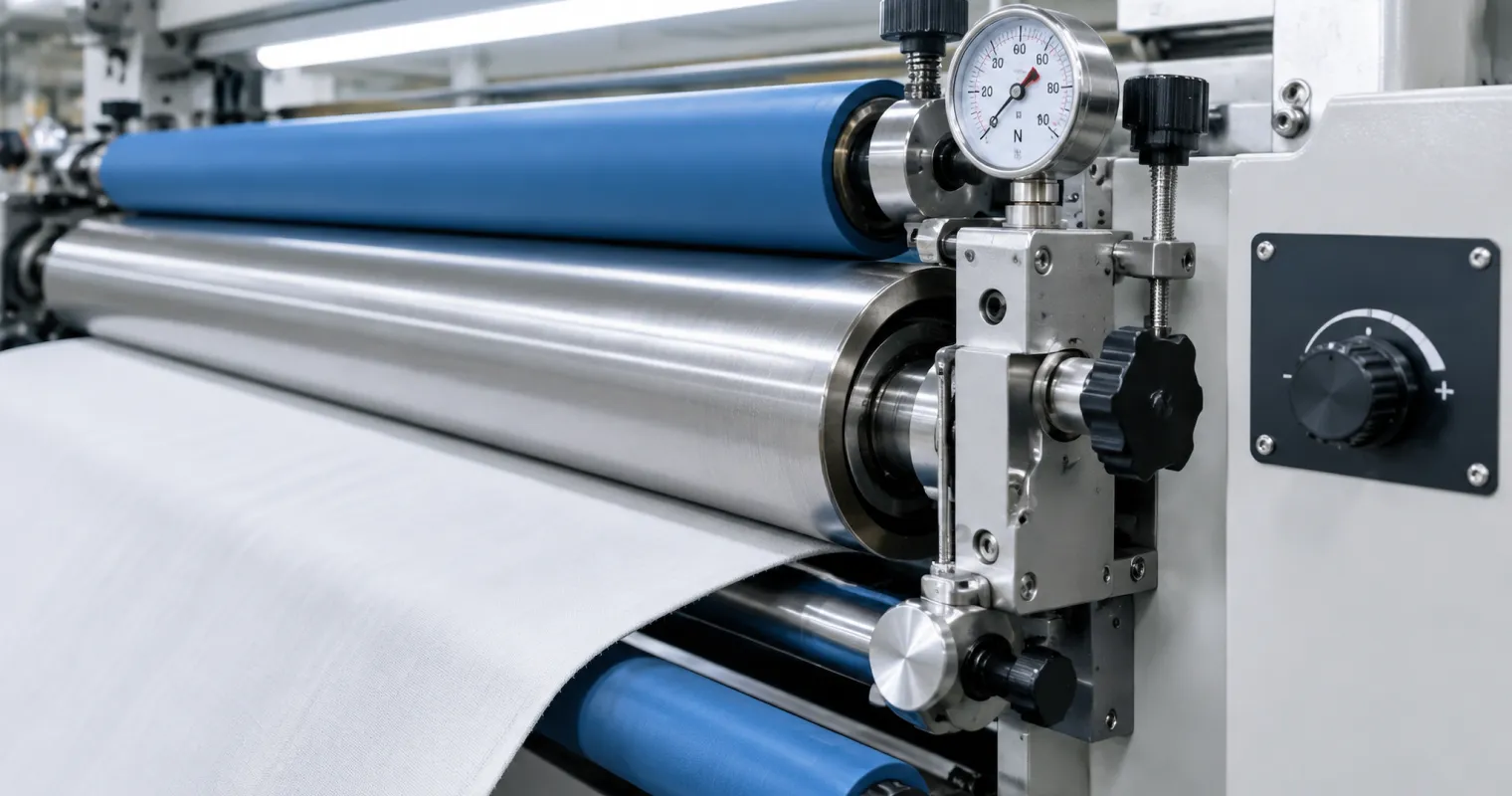
Furthermore, the transport rollers are typically coated with high-friction elastomeric materials or textured polyurethane. This prevents material slippage during transit, ensuring that the rotary encoders accurately measure the exact yardage passing over the inspection surface. The synchronization between the unwind motor, the central transport rollers, and the rewind motor is managed by a central Programmable Logic Controller (PLC), which maintains consistent linear speed regardless of the changing diameter of the fabric rolls.
Tension Regulation and Dimensional Stability
A critical engineering challenge in textile inspection is maintaining consistent material tension. Excessive tension causes elastic or knitted fabrics to stretch longitudinally, artificially inflating the recorded yardage and distorting the weave structure. Conversely, insufficient tension leads to sagging, folding, and inaccurate rewinding. Both scenarios compromise the integrity of the material and the accuracy of the inspection data.
Advanced inspection machines utilize a closed-loop tension control system. This system incorporates load cells and dancer rollers positioned along the fabric path. The dancer roller, often pneumatically loaded, physically rests against the fabric web. As tension fluctuates due to roll irregularities, the dancer roller moves, sending immediate analog signals to the PLC. The PLC then instantly adjusts the torque output of the magnetic powder clutches or servo motors on the unwind and rewind shafts.
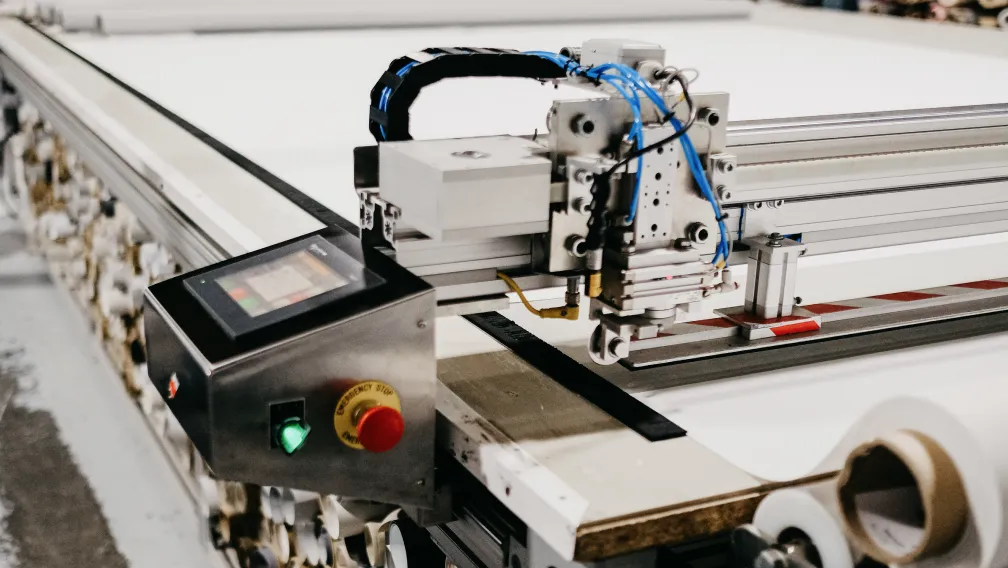
This continuous micro-adjustment isolates the fabric on the inspection board from the pulling forces of the winding mechanisms. The material is presented in a completely relaxed, dimensionally stable state. This is especially vital when preparing materials for precision downstream processes. If fabric is stretched during inspection and immediately processed through a curtain cutting machine, the material will eventually shrink back to its natural state, resulting in curtain panels that are shorter than the specified dimensions and leading to immediate rejection by commercial clients.
Illumination Architecture for Defect Identification
The efficacy of visual inspection is entirely dependent on the quality, angle, and intensity of the illumination system. Standard ambient factory lighting is insufficient for identifying structural textile flaws. Industrial inspection equipment utilizes dual-zone, high-luminance LED arrays designed specifically for textile diagnostics.
The primary inspection surface consists of a diffused, translucent acrylic board. Behind this board, a dense array of lower LED lights provides strong backlighting. Backlighting is critical for identifying structural defects within the weave, such as missing warp or weft yarns, pinholes, thin spots, and uneven yarn density. As the light penetrates the fabric, structural inconsistencies appear as high-contrast bright spots or dark lines, instantly drawing the operator's attention.
Simultaneously, top-mounted lighting fixtures cast direct illumination onto the fabric surface. This overhead lighting, often engineered to replicate specific color temperatures (e.g., D65 daylight standard), is essential for identifying surface-level defects. These include oil stains, dye inconsistencies, misprints, pilling, and surface abrasions. The operator can toggle between backlighting, top lighting, or a combination of both via the control panel, customizing the diagnostic environment based on the specific material characteristics being processed.
Single-Sided vs. Dual-Sided Inspection Frameworks
Different textile constructions require specialized inspection approaches. While standard translucent materials benefit from backlighting, opaque or heavily coated textiles block light transmission entirely. For materials like heavy blackout drapery, PVC-coated awning fabrics, or structured upholstery textiles, identifying defects relies heavily on surface examination.
In these applications, deploying a single-sided inspection machine is the optimal technical configuration. These machines are engineered without the translucent backlighting board, utilizing instead a solid, flat, or slightly angled inspection table. The illumination architecture is entirely concentrated overhead, utilizing high-intensity, angled LED arrays to create raking light across the fabric surface. Raking light casts micro-shadows, highly amplifying the visibility of surface texture anomalies, coating defects, and weave irregularities on the primary face of the material.
Single-sided configurations also frequently incorporate angled mirrors positioned to allow a single operator to view the reverse side of the fabric simultaneously, although the primary diagnostic focus remains firmly on the coated or finished face. This targeted approach streamlines the inspection of heavy-duty commercial textiles where internal structural flaws are less prevalent or entirely masked by thick polymer coatings.
Edge Position Control (EPC) and Rewind Alignment
A secondary, yet equally vital, function of the inspection machine is to repackage the fabric into a perfectly aligned roll. Telescoping or unevenly wound rolls cause severe mechanical feeding issues in subsequent automated processes. If an uneven roll is loaded into an automated cutting table, the material will feed diagonally, resulting in skewed cuts and massive material waste.
To ensure perfect rewind alignment, inspection machines are equipped with an Edge Position Control (EPC) system. The EPC utilizes ultrasonic or infrared photoelectric sensors positioned precisely at the edge of the fabric web. As the fabric travels toward the rewind shaft, these sensors continuously monitor the lateral position of the material edge.
If the fabric begins to drift laterally by even a few millimeters, the sensors transmit a signal to a pneumatic or hydraulic actuator. This actuator physically shifts the entire unwind carriage or a specialized steering roller to instantly correct the lateral drift. The result is a finished roll with perfectly flush, mathematically straight edges, optimized for seamless integration into the next phase of manufacturing.
Data Acquisition and Digital Measurement Integration
Modern quality assurance requires comprehensive digital documentation. Industrial inspection equipment utilizes high-resolution rotary encoders that press directly against the moving fabric or the drive rollers. These encoders calculate the exact linear yardage passing through the machine with sub-centimeter accuracy, eliminating the discrepancies inherent in manual measurement.
Advanced systems integrate this length data with digital defect tagging. When an operator identifies a flaw, they input the defect type via the Human-Machine Interface (HMI) touchscreen. The PLC logs the exact longitudinal position of the defect (e.g., "oil stain at 145.2 meters"). Upon completion of the roll, the machine generates a comprehensive diagnostic report. This data can be exported directly to the facility's Enterprise Resource Planning (ERP) system.
This digital mapping is invaluable for maximizing material yield. Production managers can utilize the defect map to plan their cutting layouts, programming automated systems to cut around the identified flaws. By knowing exactly where defects are located before the material reaches the cutting floor, facilities can dramatically reduce scrap rates and optimize the utilization of high-cost commercial textiles.
Synergy with Downstream Operations
The value of rigorous fabric inspection is fully realized when integrated into a holistic, automated manufacturing pipeline. Perfectly tensioned, straight-edged, and defect-mapped rolls act as the optimal input for high-speed automated production.
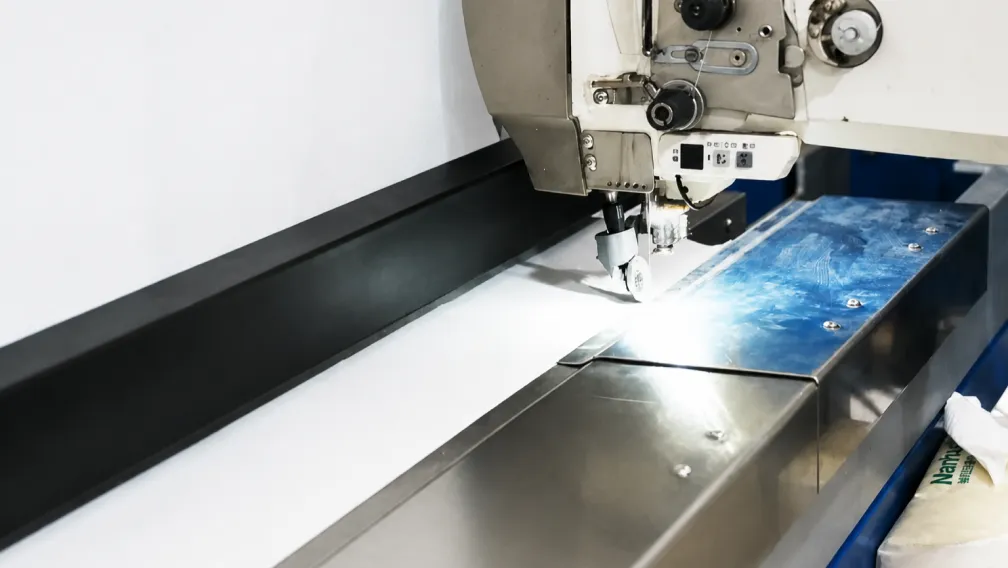
For example, when precision-inspected material is fed into an automatic fabric hemming machine, the EPC alignment ensures the fabric enters the hemming folders perfectly straight. This prevents the hems from twisting or puckering during the high-speed sewing process. Because the material was inspected under neutral tension, the finished hems remain dimensionally stable without post-sewing distortion. Ultimately, the inspection machine serves as the foundational quality gate, ensuring that only viable, mechanically optimized material progresses through the factory infrastructure.
Conclusion
Automated fabric inspection represents the critical first step in professional textile manufacturing. Moving beyond simple visual checks, these machines deploy variable frequency drives, closed-loop tension regulation, and precise edge position control to ensure absolute material stability. Whether utilizing dual-zone illumination for translucent weaves or employing a single-sided inspection machine for coated commercial fabrics, this equipment standardizes quality assurance. By integrating digital length measurement and defect mapping, facilities protect their downstream processes, ensuring that cutting and sewing operations operate at maximum efficiency with zero-defect materials, fundamentally improving the overall operational yield and profitability of the manufacturing plant.
-

LINGZHI Engineering & Textile Team
R&D and Technical Application Division, LINGZHI
Backed by 23 years of manufacturing experience across our Shanghai and Tongxiang facilities, the LINGZHI Engineering & Textile Team comprises over 17 senior mechanical engineers and textile specialists. Holding 20+ national patents under ISO 9001 quality standards, our division focuses on automated sewing system integration, equipment calibration, and commercial fabric performance testing for global home-textile factories.