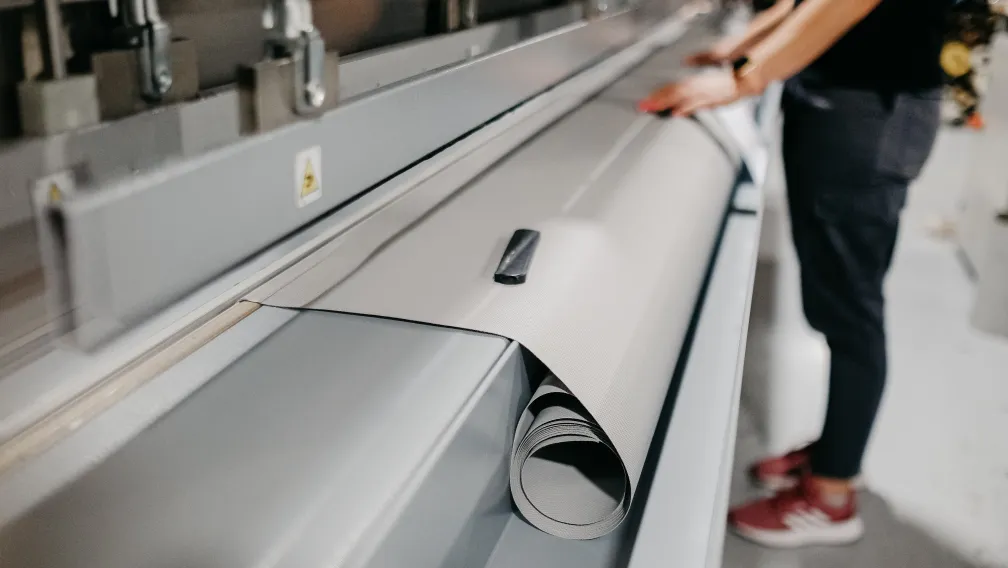
Procurement analytics across the commercial real estate sector in late October 2026 indicate a massive architectural shift toward modular smart office fit-outs, particularly within the Asia-Pacific and Middle Eastern markets. Facilities managers and architectural firms are heavily specifying automated roller blind systems engineered with advanced solar sunscreen fabrics to meet stringent LEED and BREEAM energy efficiency certifications. Fulfilling these high-volume commercial contracts requires textile manufacturers to process millions of square meters of rigid, high-tenacity composite materials under aggressive delivery schedules. This sudden demand surge has exposed critical structural vulnerabilities in legacy manual fabrication methods, compelling the industry to rapidly adopt specialized automated hemming and cutting infrastructure to eliminate production bottlenecks and guarantee zero-defect dimensional compliance.
The Material Science of High-Tenacity Sunscreen Composites
Modern commercial roller blinds utilize highly engineered technical textiles. To achieve precise Solar Heat Gain Coefficient (SHGC) reduction and glare control without eliminating exterior visibility, fabricators employ open-weave sunscreen fabrics. These materials typically consist of a high-tensile fiberglass or polyester core yarn that is heavily dip-coated in liquid polyvinyl chloride (PVC) prior to the weaving process. The resulting composite matrix delivers extreme physical rigidity, dimensional stability, and resistance to UV degradation.
Processing these rigid polymer composites introduces severe mechanical challenges on the factory floor. Fiberglass cores are highly abrasive and prone to micro-fracturing if folded improperly. The thick PVC coating generates immense friction against standard metal machine components. Attempting to manipulate, fold, and sew these stiff architectural membranes using conventional light-duty apparel sewing machines or manual workshop tools results in catastrophic defect rates, including shattered sewing needles, localized thermal melting of the PVC coating, and structural warping of the finished blind.
Mechanical Limitations of Manual Bottom Pocket Fabrication
The operational integrity of a roller blind depends entirely on the precision of the bottom hem pocket, which houses the weighted extruded aluminum bottom bar. This bar provides the necessary gravitational tension to pull the rigid fabric downward, ensuring the blind hangs perfectly flat against the glass facade.
In traditional manual fabrication, an operator measures the pocket depth, physically forces the stiff fabric into a fold, and runs the panel through a standard sewing head. Human hands cannot apply perfectly uniform pressure across a three-meter-wide span of rigid fiberglass. Consequently, manual folding inherently introduces micro-variations in pocket depth. If the left side of the pocket is 40mm deep and the right side is 42mm deep, the aluminum bottom bar will sit at an imperceptible diagonal angle. When the tubular motor retracts the blind, this minute diagonal weight distribution causes the fabric to spool unevenly around the top tube—a critical failure mode known as telescoping. Telescoping causes the edges of the fabric to grind against the mounting brackets, destroying the edge weave and immediately voiding commercial warranties.
Electro-Pneumatic Architecture in Automated Hemming
To enforce absolute geometric precision and eliminate the telescoping defect, high-volume manufacturers are transitioning to the specialized roller blind hemming machine. This equipment fundamentally replaces subjective human handling with Programmable Logic Controller (PLC) algorithms and electro-pneumatic actuation.
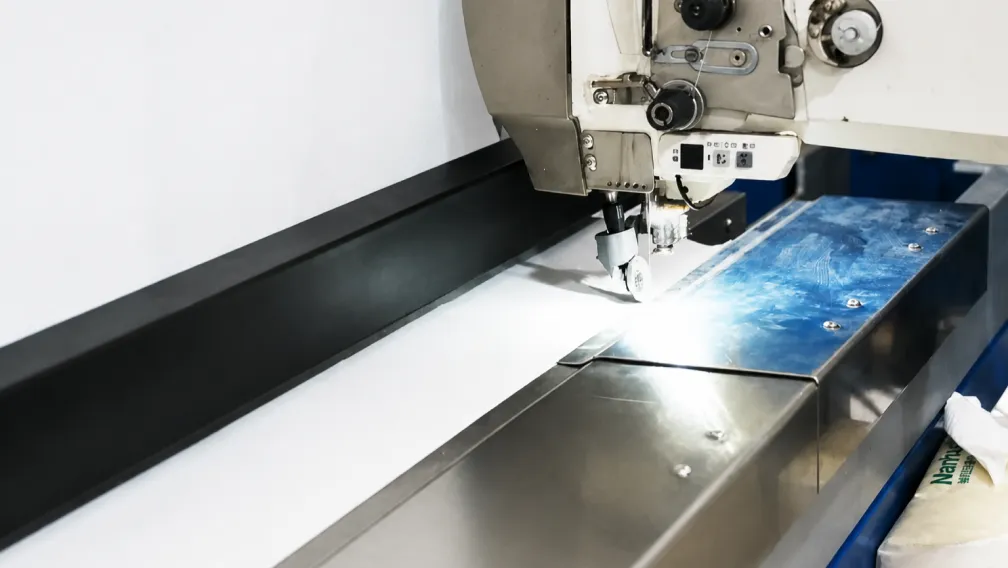
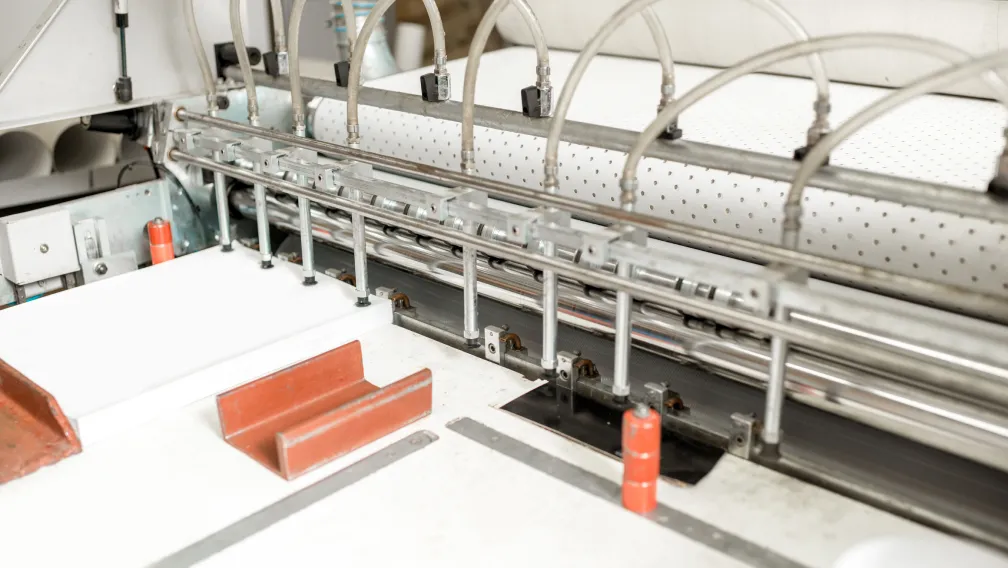
During the automated workflow, the operator feeds the raw cut edge of the sunscreen fabric into a full-width alignment guide. The PLC, programmed with the exact required pocket depth via the Human-Machine Interface (HMI), triggers a heavy-duty pneumatic folding bar. This specialized tooling descends and applies hundreds of kilograms of uniform, lateral pneumatic pressure across the entire width of the fabric simultaneously. This localized force creates a mathematically perfect, razor-sharp crease in the rigid PVC-fiberglass matrix without fracturing the internal core yarns.
Once the material is locked into this flawless fold geometry, a synchronized, high-torque sewing carriage traverses the width of the machine along linear guide rails. To combat the severe abrasive friction of the PVC coating, the sewing head utilizes a synchronized compound feed (walking foot) mechanism, pulling the multi-layered composite through the stitch zone at a completely uniform velocity. The deployment of this automated architecture guarantees that the resulting bottom pocket is perfectly parallel to the top edge, ensuring flawless spooling dynamics during automated retraction.
Friction Mitigation and Needle Cooling Technologies
Sewing through dense layers of PVC-coated fiberglass at high industrial speeds generates profound kinetic friction. In standard sewing configurations, the needle temperature can rapidly exceed the melting point of the thermoplastic coating. This causes molten PVC to adhere to the needle eye, stripping the sewing thread, skipping stitches, and leaving a highly visible, scarred seam line.
Industrial roller blind machinery mitigates this thermal failure through engineered modifications. The traversing sewing heads utilize specialized titanium-nitride (TiN) coated needles, which feature ultra-low friction coefficients and superior heat dissipation properties. Furthermore, advanced automated hemming stations frequently integrate active pneumatic needle cooling systems. These systems direct a continuous, microscopic blast of compressed air directly onto the needle shaft during the high-speed transit, stabilizing the ambient temperature and preventing polymer degradation. This mechanical synergy ensures pristine, structurally immaculate lockstitches across the most demanding commercial materials.
Upstream Dimensional Prerequisites: Laser-Guided Cutting
The flawless execution of an automated hem is entirely dependent on the geometric accuracy of the input panel. If the raw material is fed into the hemming machine with edges that are not perfectly perpendicular (i.e., not a true 90-degree rectangle), the resulting pocket will inherit that diagonal flaw, rendering the hemming precision useless.
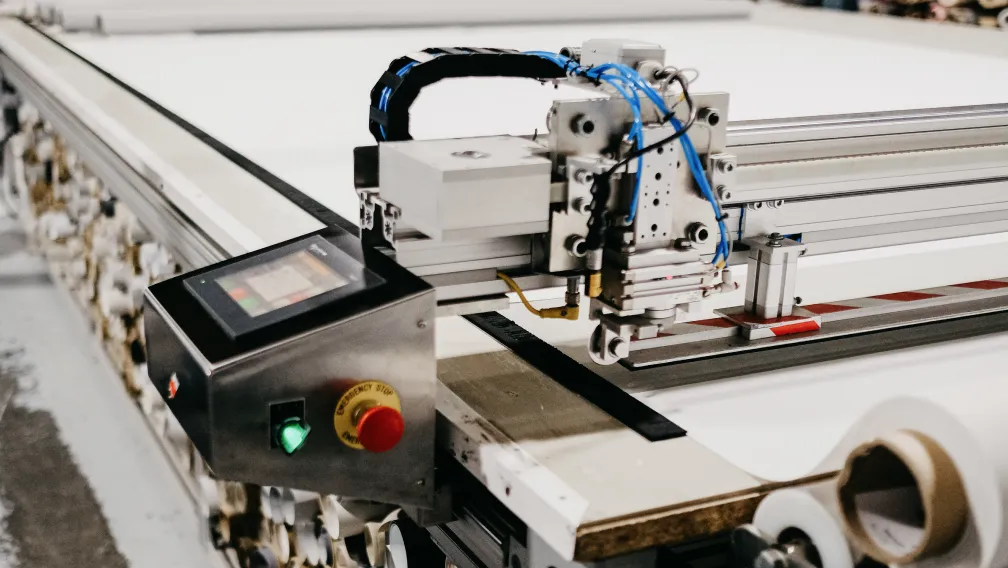
Optimizing factory yield necessitates upstream integration with a highly precise curtain cutting machine. Commercial facilities utilize expansive cutting tables equipped with XY-axis motorized rotary crush cutters and ultrasonic slitting heads. To process stiff fiberglass sunscreens, these tables deploy vacuum hold-down blowers that suck the fabric completely flat against the cutting surface, eliminating any residual waves or memory curl from the master roll. Integrated laser projection modules ensure the cutting path aligns perfectly with the woven grid of the fabric. This automated cutting infrastructure guarantees that the panels arriving at the hemming station are mathematically squared, locking in the geometric prerequisites for zero-defect roller blind assembly.
Defect Mapping and Upstream Quality Assurance
Commercial contracts penalize manufacturers heavily for visible material flaws. An oil spot, a missing warp yarn, or a localized dye inconsistency in an open-weave sunscreen becomes highly magnified when backlit by exterior sunlight. Discovering these defects after the panel has been cut, hemmed, and assembled results in total material scrap and wasted labor hours.
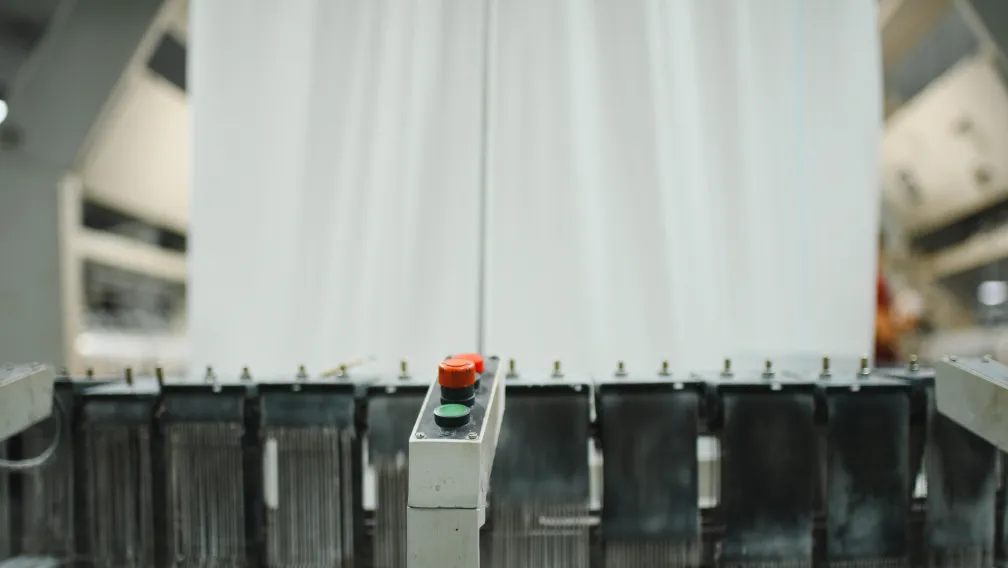
To protect operational margins, modern facilities implement a rigid quality gate utilizing an industrial fabric inspection machine immediately upon receiving raw master rolls from the textile mill. These machines unspool the heavy composite material under neutral, closed-loop tension control over a heavily illuminated acrylic inspection board. Operators map the exact linear coordinates of weaving flaws into the central ERP system before the roll ever reaches the cutting floor. This data-driven defect mapping allows production managers to optimize their automated cutting layouts, maneuvering the cut files around the identified flaws, thereby maximizing raw material yield and ensuring only pristine panels enter the automated hemming workflow.
Conclusion
The aggressive expansion of the smart commercial real estate market in late 2026 demands corresponding industrial scalability from window treatment manufacturers. Relying on manual measuring, folding, and standard sewing infrastructure to process modern, highly rigid sunscreen composites directly causes severe quality control failures, specifically the telescoping defect. By strategically upgrading to specialized automated infrastructure—integrating vacuum-assisted cutting tables, defect-mapping inspection systems, and PLC-controlled roller blind hemming machines—fabricators achieve absolute geometric standardization. This electro-pneumatic precision eliminates structural warping, neutralizes the mechanical friction of PVC composites, and provides the massive throughput capacity required to execute high-volume commercial contracts profitably.
-

LINGZHI Engineering & Textile Team
R&D and Technical Application Division, LINGZHI
Backed by 23 years of manufacturing experience across our Shanghai and Tongxiang facilities, the LINGZHI Engineering & Textile Team comprises over 17 senior mechanical engineers and textile specialists. Holding 20+ national patents under ISO 9001 quality standards, our division focuses on automated sewing system integration, equipment calibration, and commercial fabric performance testing for global home-textile factories.