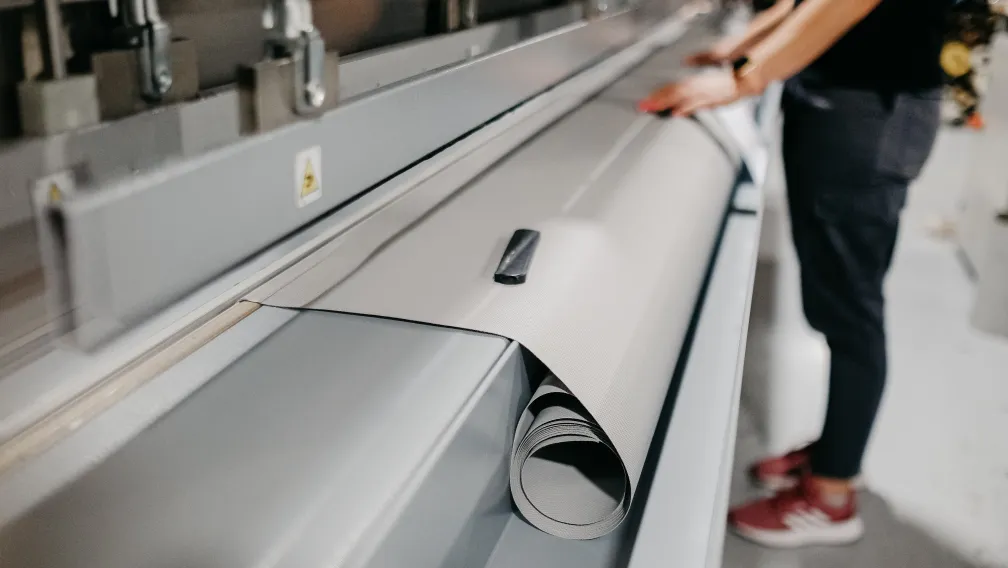
By the fourth quarter of 2026, the global awning and exterior shading sector has entered a highly accelerated growth phase, with market valuations projected to reach $8.3 billion. Procurement data across commercial hospitality development and luxury residential construction indicates a definitive architectural shift toward climate-adaptive, large-scale outdoor shading systems. As environmental regulatory bodies implement stricter energy efficiency mandates—specifically requiring aggressive Solar Heat Gain Coefficient (SHGC) ratings for new building permits—the structural requirements for outdoor textiles have fundamentally transformed. Fabricators must now process highly engineered, multi-layered acrylics, PTFE fiberglass, and dense PVC-coated membranes. This rapid material evolution creates a critical processing bottleneck on the factory floor, rendering legacy textile assembly methods structurally inadequate and forcing a massive industry-wide upgrade toward specialized heavy-duty manufacturing infrastructure.
The Material Science of 2026 Climate-Adaptive Textiles
Meeting the modern SHGC standards requires exterior shading fabrics to perform dual functions: absolute ultraviolet (UV) blockage and rigorous thermal insulation. To achieve these metrics, textile mills are producing heavier composite materials. A standard commercial awning fabric in 2026 typically features a solution-dyed acrylic core bonded with weather-resistant fluoropolymer coatings. These engineered composites exhibit extremely high friction coefficients and profound physical rigidity compared to standard indoor drapery fabrics.
When these rigid, coated membranes undergo the manufacturing process, they present massive mechanical resistance. Bending these materials to form a structural hem requires substantial pneumatic force. Piercing multiple layers of coated acrylic requires exceptional needle penetration power. Attempting to force these advanced composites through standard light-industrial sewing infrastructure inevitably leads to catastrophic failure rates, including shattered needles, snapped threads, and severe material abrasion that compromises the waterproof integrity of the finished awning before it even leaves the facility.
Mechanical Limitations and the Necessity of Compound Feed Architecture
The primary point of failure in traditional awning fabrication lies in the material feeding mechanism. Standard drop-feed sewing machines utilize bottom-mounted feed dogs to pull the fabric backward. When processing thick, high-friction awning materials, the bottom layer is aggressively pulled while the top layer drags against the static presser foot. This differential feeding causes profound seam puckering and structural misalignment across long spans. In exterior applications subjected to high wind loads, a puckered seam creates localized stress concentrations that eventually tear under atmospheric pressure.
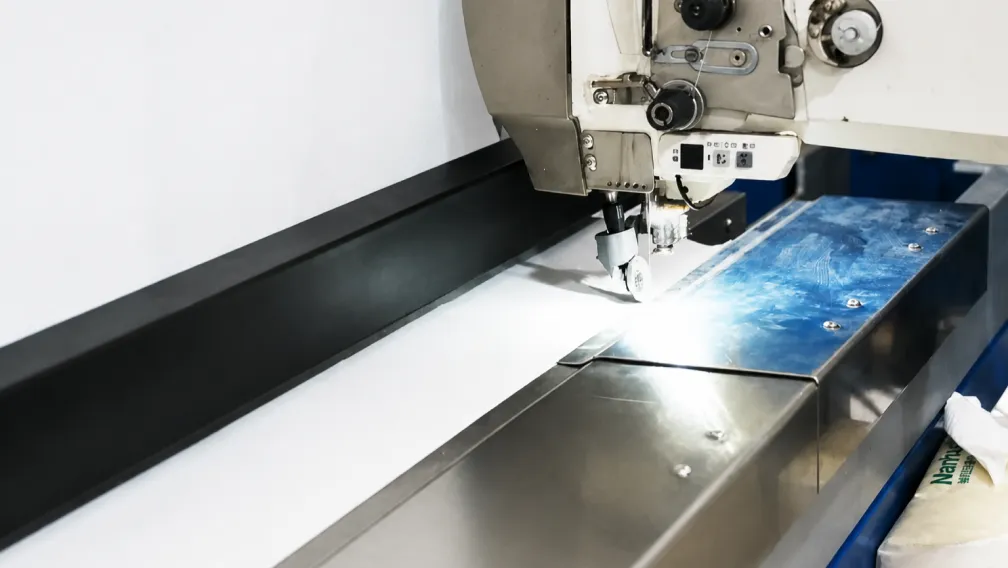
Commercial shading fabricators are solving this mechanical deficiency by deploying dedicated awning sewing machines engineered with synchronized compound feed systems. Often referred to as unison feed or walking foot architecture, this system synchronizes the movement of the needle bar, the inner presser foot, and the bottom feed dog. This three-point mechanical clamping ensures that all heavy fabric layers are locked together and advanced simultaneously through the sewing zone.
The integration of high-torque direct-drive servo motors (frequently exceeding 750W) provides the massive rotational force necessary to drive thick, titanium-coated needles cleanly through up to eight layers of PVC-coated acrylic without deflection. By utilizing compound feed architecture, manufacturers guarantee mathematically flat, structurally immaculate seams that maintain their integrity under extreme outdoor environmental stress.
Dimensional Tolerance Constraints in Smart Retractable Systems
The 2026 market expansion is heavily weighted toward motorized, smart-sensor retractable awnings. These automated systems are highly unforgiving regarding dimensional tolerances. A retractable awning relies on a precision-machined aluminum roller tube housed within a weather-tight cassette. If the fabric panel exhibits even a slight lateral curvature or unequal hem thickness, the material will spool unevenly during retraction.
This phenomenon, known as telescoping, causes the fabric to bunch against the side brackets of the cassette. Telescoping places immense strain on the tubular motor, leading to premature electrical failure, mechanical jamming, and costly warranty claims. Fabricating dimensionally perfect panels requires absolute edge uniformity, which is impossible to achieve through manual folding and guiding.
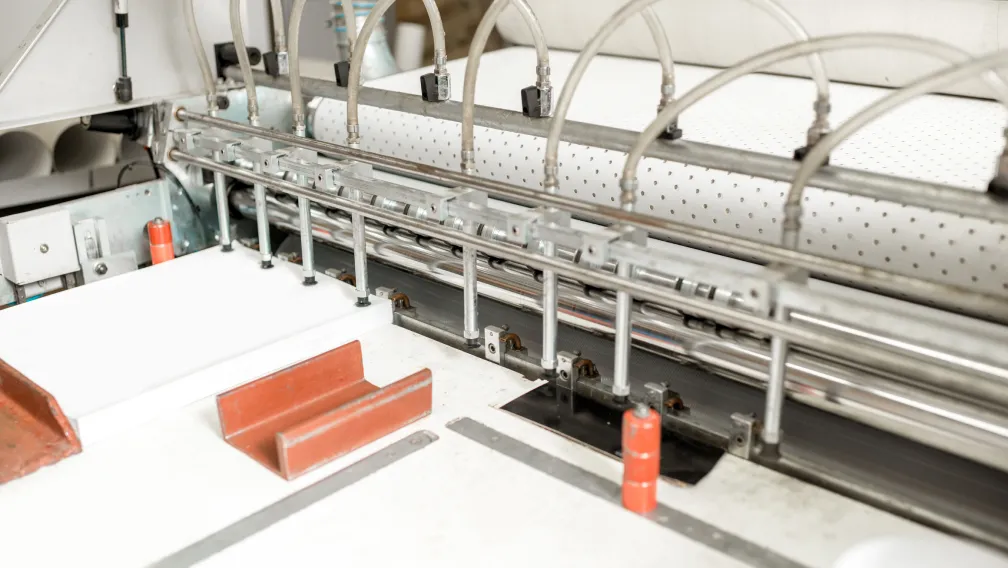
To enforce strict linear tolerances, high-volume production facilities utilize specialized awning hemming machines. These automated stations integrate heavy-duty pneumatic folders and synchronized puller rollers operating in tandem with the sewing head. The operator feeds the raw edge of the stiff canvas into the pneumatic folder, which mechanically forces the material into a perfectly uniform double-fold hem. The synchronized puller continuously applies rearward tension, preventing the heavy fabric from drifting laterally. This automated edge control ensures that the finished side hems are exactly parallel over lengths exceeding six meters, guaranteeing frictionless operation when integrated into motorized retractable hardware.
Managing Wide-Format Fabrication and Factory Throughput
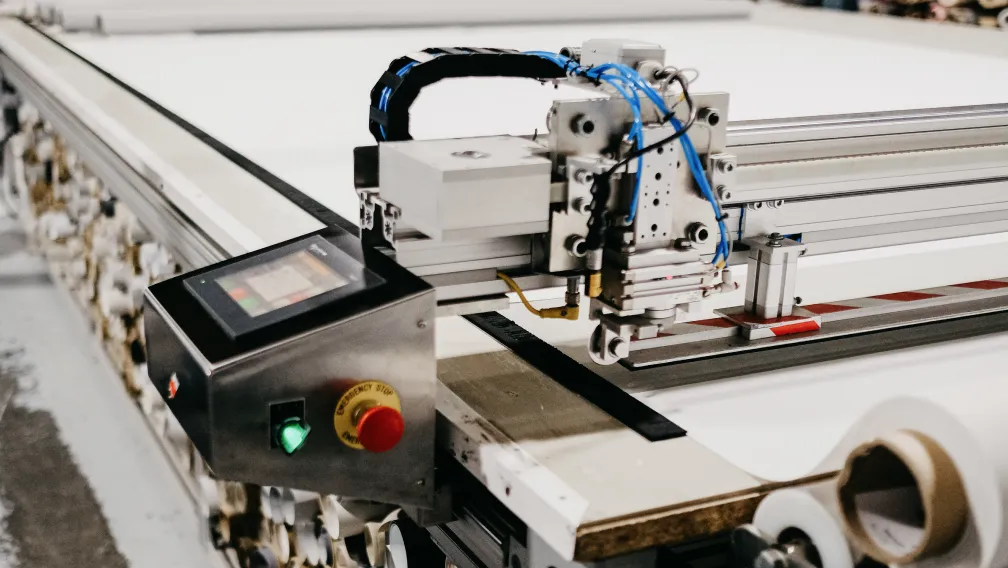
Commercial hospitality projects, such as luxury resort patios and high-end restaurant terraces, frequently specify continuous awnings with projection depths of four meters and overall widths exceeding ten meters. Fulfilling these wide-format contracts requires maneuvering hundreds of kilograms of rigid fabric across the factory floor. Managing this mass on standard flatbed tables results in severe operator fatigue and drastically reduced Units Per Hour (UPH) metrics.
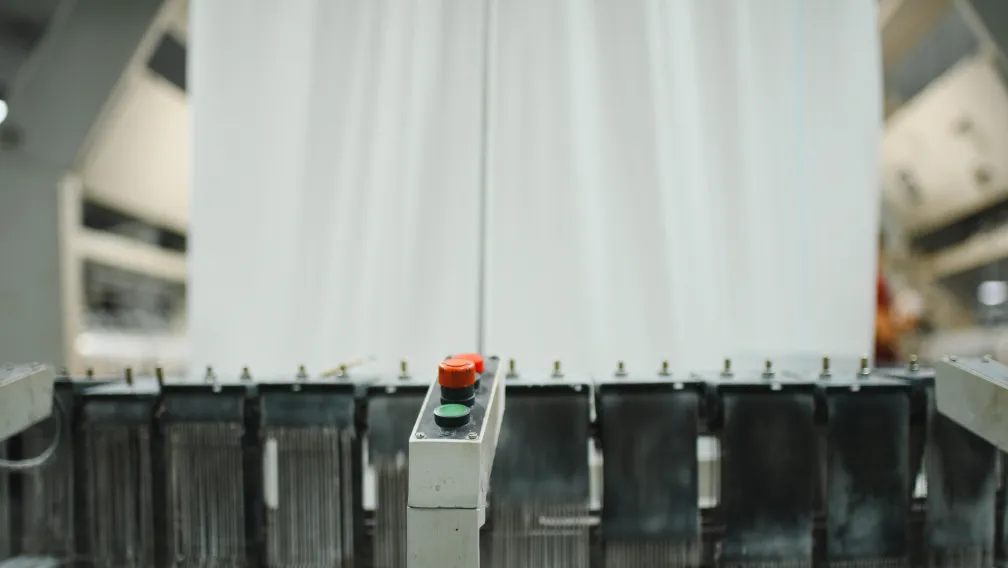
Scaling operations for these large commercial tenders requires integrating heavy-duty material transport systems. Many modern facilities pair their sewing heads with expansive conveyor tables and deploy heavy-duty clamping frames to support the fabric weight. By utilizing a heavy duty curtain sewing machine integrated with a synchronized conveyor belt, the gravitational drag of the fabric is entirely neutralized. The conveyor belt advances at the exact micro-speed of the sewing head, ensuring that the heavy material flows seamlessly through the workstation without requiring operators to manually wrestle the bulk canvas.
This integration of heavy-duty sewing heads with automated material handling dramatically reduces cycle times for joining multi-panel awnings. It allows a single operator to manage expansive, heavy-weight commercial shading assemblies with precision and efficiency, directly increasing the overall throughput capacity of the manufacturing plant.
Seam Sealing and Weatherproofing Optimization
Beyond structural integrity, exterior shading products must provide absolute moisture barriers. During the sewing process, the needle physically punctures the waterproof coating of the fabric. If these punctures are not properly sealed, capillary action will draw rainwater through the seam, leading to mold growth and product failure.
Modern awning manufacturing equipment is explicitly calibrated to mitigate this issue. The machinery is tuned to handle specialized bonded polyester or expanded PTFE (Teflon) sewing threads. PTFE threads are engineered to expand slightly when exposed to environmental heat and tension, effectively swelling to plug the needle puncture hole. Furthermore, high-end automated lines often incorporate secondary ultrasonic or hot-wedge welding stations immediately following the sewing phase to apply waterproof seam tape over the structural stitching, ensuring a completely hermetic seal.
Conclusion
The explosive growth of the 2026 global awning market presents a lucrative opportunity for commercial fabricators, provided their manufacturing infrastructure can handle the rigorous demands of modern climate-adaptive textiles. Legacy equipment simply cannot process the dense, rigid composites required for energy-efficient outdoor shading. By strategically upgrading to specialized compound-feed awning sewing machines and automated hemming systems, manufacturers immediately resolve critical processing bottlenecks. This heavy-duty infrastructure guarantees absolute seam integrity, eliminates dimensional warping in retractable systems, and provides the necessary throughput capacity to secure high-value commercial shading contracts in a rapidly expanding global market.
-

LINGZHI Engineering & Textile Team
R&D and Technical Application Division, LINGZHI
Backed by 23 years of manufacturing experience across our Shanghai and Tongxiang facilities, the LINGZHI Engineering & Textile Team comprises over 17 senior mechanical engineers and textile specialists. Holding 20+ national patents under ISO 9001 quality standards, our division focuses on automated sewing system integration, equipment calibration, and commercial fabric performance testing for global home-textile factories.