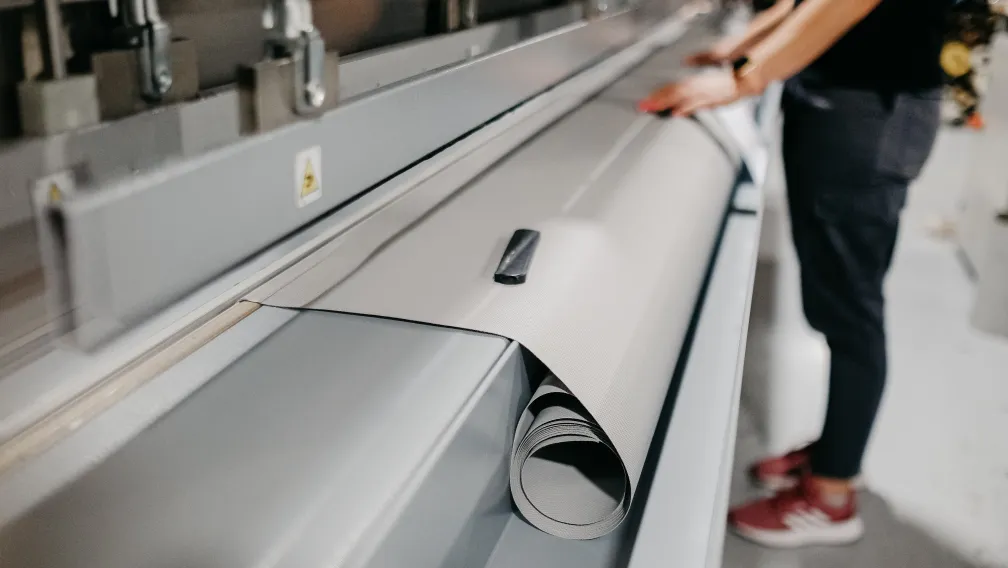
Procurement reports across international hotel development groups throughout September 2026 demonstrate a growing architectural preference for floor-to-ceiling, continuous-span window treatments. Commercial interiors increasingly specify continuous acoustic drapes and layered blackout assemblies reaching heights of four meters or more. Because standard textile mill rolls are produced in widths between 140 cm and 280 cm, fulfilling these wide-format contracts requires fabricators to seam multiple fabric widths and trim finished panels to exacting drop tolerances.
Seam Uniformity Challenges in Wide-Format Drapery Fabrication
Joining multiple fabric widths manually introduces persistent mechanical variables. When handling long, heavy fabric panels on conventional flatbed sewing machines, the operator must manually guide tens of meters of material. Slight variances in manual feeding tension inevitably cause puckering along the vertical seam. When installed against high-lux glass curtain walls or backlit hospitality suites, puckered seams become prominent visual defects that lead to client rejection.
Additionally, multi-layered blackout fabrics combined with delicate face textiles exhibit differential stretch coefficients. Standard feeding mechanisms fail to advance both layers synchronously, causing seam slippage and uneven bottom hems across wide spans.
Automated Joining Systems Standardize Seam Integrity
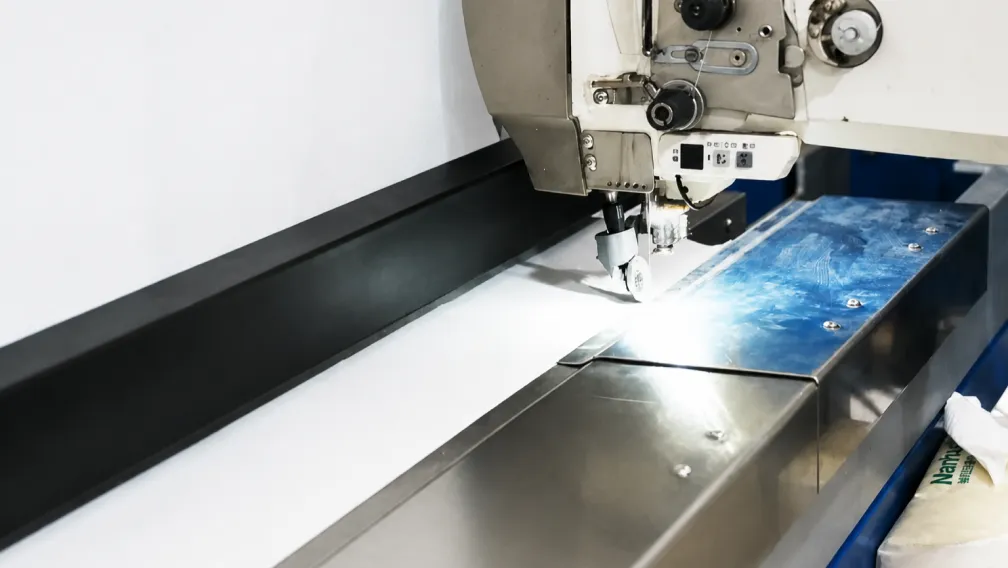
To satisfy rigorous hospitality brand compliance, high-volume contract fabricators are replacing manual workstations with purpose-built automatic curtain joining machines. These industrial systems integrate continuous conveyor tables with synchronized upper and lower puller assemblies.
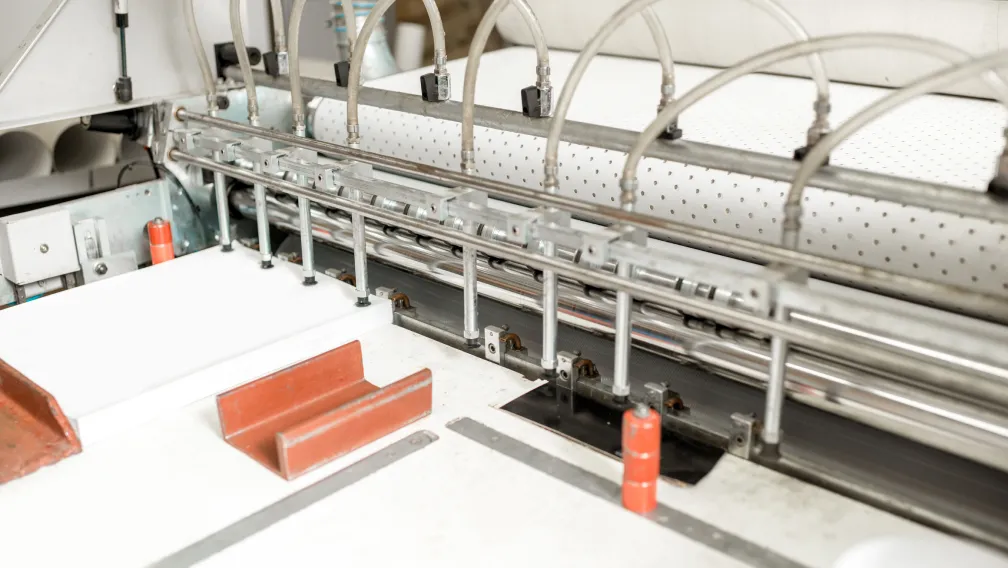
During operation, pneumatic clamping guides hold the fabric edges in fixed alignment while synchronized feeding rollers advance the panels through the sewing head at uniform tension. This automated sequence produces straight, flat seams across lengths exceeding six meters without localized stretching or puckering. By eliminating manual material bunching, cycle times for joining multi-drop assemblies are reduced by over 60% compared to standard workshop methods.
Vertical Cutting Eliminates Gravitational Distortion
Beyond seam joining, cutting extra-wide commercial drapery presents significant dimensional challenges. When long drapery panels are cut horizontally on flat tables, the fabric rests unstressed. However, once installed and suspended from a ceiling track, the structural weight of the fabric causes vertical elongation, resulting in uneven floor gaps or unwanted fabric dragging.
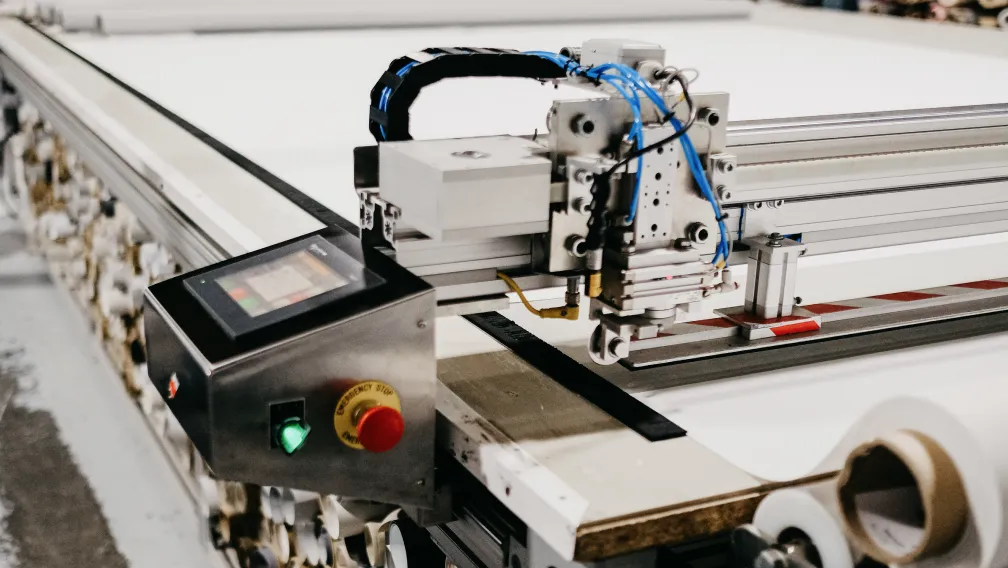
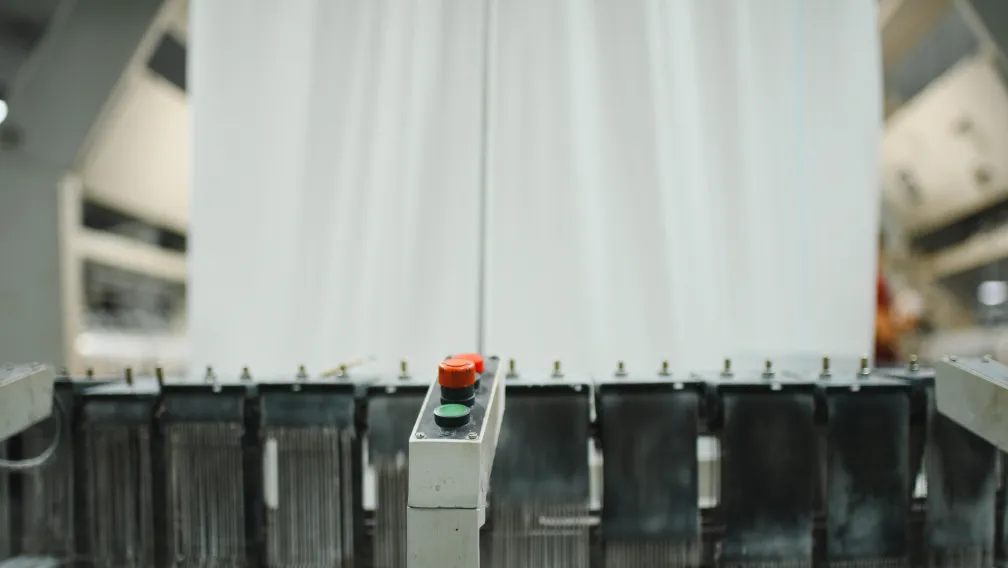
Commercial processors are resolving this variance by routing joined panels through specialized curtain cutting machines featuring vertical clamping frames and motorized rotary shears. Suspending the fabric vertically under controlled pneumatic tension replicates actual installation conditions. Laser projection guides align the cut path perfectly perpendicular to the vertical weave, allowing the motorized cutter to trim the bottom edge with millimeter accuracy. This eliminates post-installation alteration costs for contract fit-outs.
Operational Readiness for Large-Scale Commercial Tenders
As commercial renovation and hotel construction projects expand through late 2026, contract fulfillment depends heavily on automation. Facilities constrained by manual fabric joining and flatbed table cutting struggle with high scrap rates and inconsistent drop lengths. Integrating synchronized joining automation with tensioned vertical cutting systems provides commercial fabricators with the throughput capacity and dimensional precision required to secure high-value commercial tenders.
-

LINGZHI Engineering & Textile Team
R&D and Technical Application Division, LINGZHI
Backed by 23 years of manufacturing experience across our Shanghai and Tongxiang facilities, the LINGZHI Engineering & Textile Team comprises over 17 senior mechanical engineers and textile specialists. Holding 20+ national patents under ISO 9001 quality standards, our division focuses on automated sewing system integration, equipment calibration, and commercial fabric performance testing for global home-textile factories.